Personal Loan for Home Repairs: What to Know Before You Borrow
By Laurel C. Yazzie | Last reviewed: September 2026
Your roof starts leaking after a storm. The furnace dies in January. The water heater gives out with no warning. Home repairs rarely come at a convenient time, and they rarely come cheap. If you do not have enough savings to cover the cost, a personal loan for home repairs is one of the most accessible ways to get the money you need quickly.
Personal Loan for Home Repairs: An unsecured installment loan that you borrow in a lump sum and repay over a fixed term. You can use it to cover costs like a roof replacement, HVAC repair, plumbing, or appliances. No home equity is required, and the application process is typically faster than home equity products, which require an appraisal.
This guide explains how these loans work, when they make sense, and what to watch out for before you sign.
How a Personal Loan for Home Repairs Works
A personal loan is an unsecured installment loan, which means your home does not serve as collateral. You receive a fixed amount, repay it in equal monthly installments over a set term, and the interest rate stays the same throughout. According to the Consumer Financial Protection Bureau, personal loans can be used for almost any purpose, including home repairs and improvements.
In reviewing hundreds of loan applications over a decade in consumer lending, the detail most borrowers miss is that lenders look at your debt-to-income ratio just as closely as your credit score. A strong income with moderate existing debt can offset a credit profile that is not perfect.
- Loan amounts: Lenders set their own minimums and maximums. The right amount starts with getting a contractor estimate before you apply.
- Repayment terms: Repayment terms vary by lender. Ask each lender for their available term options before applying.
- Interest rates: Your creditworthiness and lender determine your APR. The Federal Reserve publishes average consumer credit rates at federalreserve.gov.
- Origination fees: Some lenders deduct a fee from your loan proceeds before disbursement. Always ask about this before you accept an offer.
Because no collateral is pledged, your home is not at risk if you fall behind on payments. That is a meaningful advantage over home equity loans and HELOCs, where a default can put your property in jeopardy.
What Repairs Can You Finance With a Personal Loan?
Personal loans for home repairs are flexible. There are very few restrictions on how you use the funds, which makes them suitable for a wide range of projects, from urgent safety issues to long-overdue upgrades.
- Roof repair or full replacement
- HVAC system repair or new installation
- Plumbing repairs and water heater replacement
- Electrical panel upgrades or rewiring
- Foundation or structural repairs
- Window and exterior door replacement
- Flooring, siding, or insulation
- Emergency appliance replacement
In practice, many borrowers turn to personal loans when a repair cannot wait. If you need to act fast, an unsecured personal loan typically funds faster than a home equity loan, which requires an appraisal and a longer underwriting period. Learn more about funding emergency home expenses with a personal loan.
When a Personal Loan for Home Repairs Makes Sense
Not every repair situation calls for the same financing tool. Use this decision framework to find the right fit before you apply:
| Your Situation | Best Option |
|---|---|
| Little or no home equity; repair is urgent | Personal loan |
| Substantial equity; large project; want the lowest possible rate | Home equity loan or HELOC |
| Small repair under $2,000 you can pay off within a few months | 0% intro APR credit card |
| Limited income; primary residence needs essential repairs | FHA Title 1 loan or HUD programs |
From a practical standpoint, personal loans work best when you need to move quickly and do not have significant equity built up. If you bought your home recently or your local market has seen flat appreciation, a home equity product may not be a realistic option yet. A personal loan puts funds in your hands without waiting for an appraisal or weeks of underwriting.
What If You Have Little or No Home Equity?
This is one of the most common situations borrowers face, especially those who purchased their home within the past few years. Lenders offering home equity products typically require you to retain a minimum equity stake after borrowing, which means newer homeowners may not qualify for enough to cover a major repair like a roof replacement or foundation work.
A personal loan sidesteps this entirely. Your eligibility is based on your credit profile and income, not on what your home is currently worth. That makes it a realistic option for homeowners who are earlier in their mortgage and still building equity. Understand more about how unsecured personal loans work and what lenders evaluate when there is no collateral involved.
How to Apply for a Personal Loan for Home Repairs
The application process is generally straightforward. Most lenders allow you to check your rate with a soft credit pull before you formally apply, so you can compare offers without affecting your score.
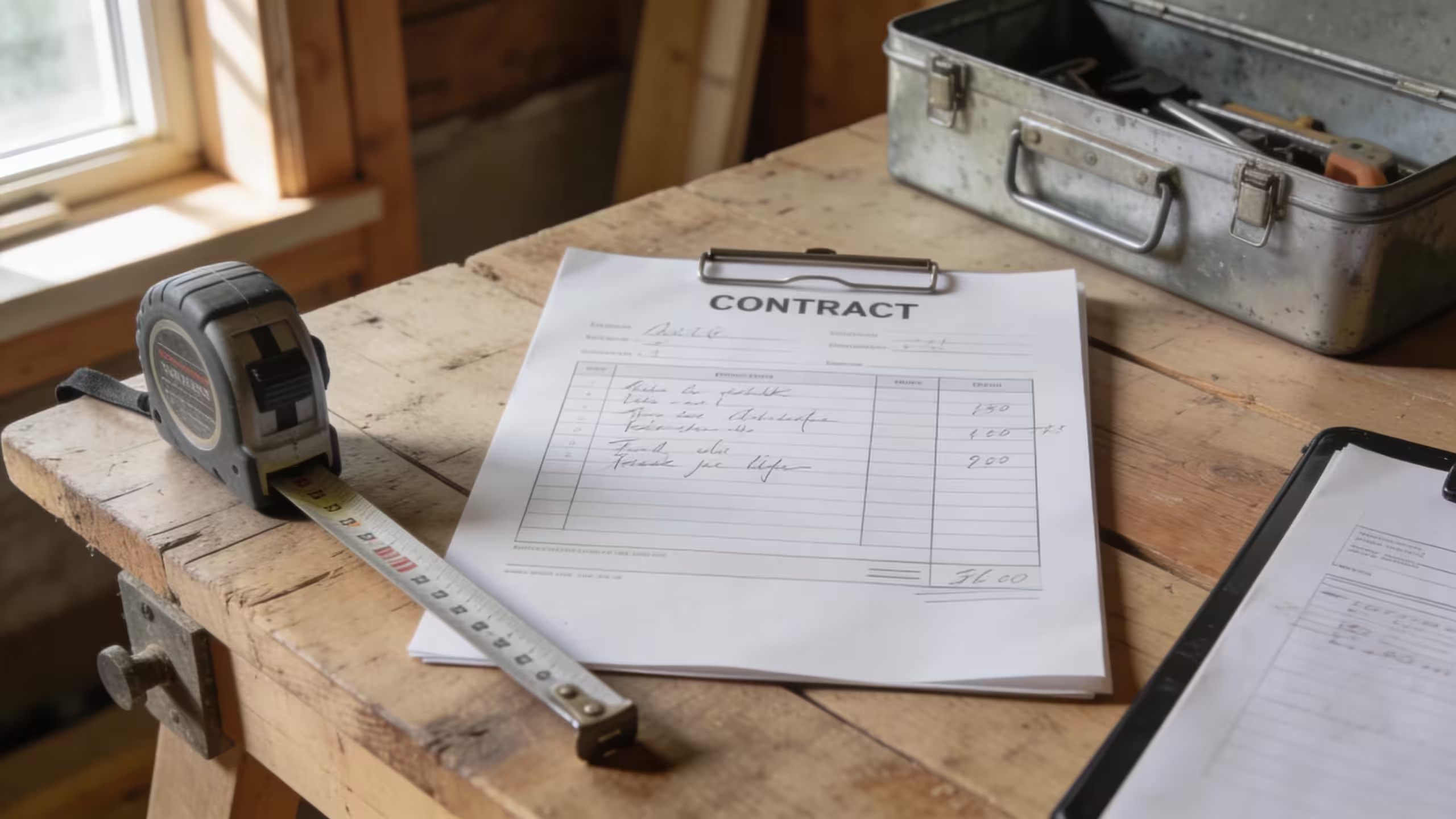
- Get a contractor estimate first. Know how much you need before you apply. A written repair estimate helps you request the right loan amount and avoids overborrowing.
- Check your credit report. Review your report at AnnualCreditReport.com before applying. Errors can lower your score and raise your rate, and disputing them is free.
- Compare at least three lenders. Banks, credit unions, and online lenders each have different rate structures. Prequalifying through soft pulls lets you compare offers without multiple hard inquiries on your credit file.
- Review the full loan terms. Look at the APR, any origination fee, and the total repayment amount. Never compare loans by interest rate alone.
- Submit your formal application. You will typically need proof of income, a government-issued ID, and basic personal information. Most lenders communicate a decision quickly after a complete application is submitted.
What most people miss when comparing loan offers is the difference between the interest rate and the APR. The APR folds in fees and gives you a true cost comparison across lenders. Always compare APRs, not just the advertised rate.
Alternatives to a Personal Loan for Home Repairs
A personal loan is not the only path. Depending on your equity, credit, and the scale of the project, one of these alternatives may cost less or be a better fit for your situation.
- Home equity loan: A secured loan that uses your home as collateral. Often offers lower rates than a personal loan, but takes longer to process and puts your home at risk if you default.
- HELOC (home equity line of credit): A revolving credit line tied to your equity. Flexible for phased or ongoing repairs, but many HELOCs carry variable rates that can make monthly budgeting harder.
- FHA Title 1 loan: A government-backed program through the U.S. Department of Housing and Urban Development, designed to help homeowners finance essential improvements when they have limited equity or credit. More information is available at hud.gov.
- Credit card: Can make sense for small repairs if you can pay the balance before interest accrues. Carrying a large balance over time will cost significantly more than a personal loan.
- Cash-out refinance: Replaces your existing mortgage with a larger one and puts the difference in your pocket. Potentially lowers your mortgage rate if rates have dropped, but comes with closing costs and restarts your loan term.
For a full overview of your borrowing options across different situations, see our personal loans overview.
FAQ: Personal Loan for Home Repairs
Tap any question to expand the answer.
Can I use a personal loan for any type of home repair?
Yes, personal loans are generally unrestricted in how you use the funds. You can apply them to emergency repairs like a burst pipe or damaged roof, major system replacements like HVAC or electrical panels, or cosmetic upgrades like flooring or windows. Unlike some government-backed programs, personal loans do not require you to prove the repair improves livability or energy efficiency. Always confirm with your specific lender that there are no use restrictions in the loan agreement before you sign.
What credit score do I need to qualify for a home repair personal loan?
Lenders set their own minimum credit score requirements and rarely publish them publicly. In general, a higher score gives you access to lower interest rates and more lender options. If your credit score is lower, you may still qualify with some lenders, but your APR will likely be higher to reflect the added risk. Checking your rate with multiple lenders through soft pulls before formally applying will not affect your credit score and lets you see real offers before committing to one.
How quickly can I receive funds from a home repair personal loan?
Funding timelines vary by lender, so ask before you apply rather than assuming a specific turnaround. Some online lenders and credit unions advertise faster decisions, but actual fund delivery depends on your bank, the day of the week, and how quickly you complete the application and identity verification steps. Home equity loans and HELOCs, by contrast, typically require a property appraisal and a longer underwriting period, which can stretch into several weeks. If your repair is urgent, make timeline one of the questions you ask during the comparison process.
Is a personal loan or a home equity loan better for home repairs?
It depends on your equity, credit profile, and how quickly you need the money. A home equity loan may offer a lower interest rate because it is secured by your home, but it takes longer to process and puts your property at risk if you default. A personal loan is unsecured, meaning your home is not on the line, and approval is generally faster. For homeowners with little equity, an urgent repair need, or who want to avoid pledging their home as collateral, a personal loan is often the better fit. For large planned projects where minimizing interest cost is the priority and you have strong equity, a home equity product may save more over time.