What Happens After a Car Insurance Claim: A Step-by-Step Guide
By Laurel C. Yazzie | Last reviewed: September 2026
Filing a car insurance claim is the easy part. What happens after a car insurance claim, from the investigation to the final payment, is where most people feel uncertain. Knowing what to expect at each stage can help you move through the process with confidence and avoid costly mistakes.
What happens after a car insurance claim: After you file, your insurer assigns an adjuster to review the incident, inspect the damage, and determine the payout. You will receive a settlement offer, sign a release, and receive payment. The full process typically takes a few days to several weeks, depending on the complexity of the claim.
What Happens After a Car Insurance Claim: An Overview
The claims process follows a predictable sequence, even if timelines vary by insurer and state. Understanding these stages ahead of time puts you in a stronger position to advocate for a fair outcome.
- Report the claim by phone, app, or your insurer’s online portal
- Adjuster assignment: your insurer assigns a licensed claims adjuster to your case
- Investigation: the adjuster reviews the police report, photos, and any witness statements
- Damage inspection: an appraiser inspects your vehicle and estimates repair costs
- Settlement offer: your insurer presents a payout based on the assessment
- Release and payment: once you accept, you sign a release and receive payment
Your Insurer Assigns a Claims Adjuster
One of the first things your insurer does after receiving your claim is assign a licensed claims adjuster. This person investigates the accident and determines how much your insurer will pay. Having worked directly with clients navigating auto insurance claims, the most common misconception I encountered was that the adjuster works for the policyholder. They do not. The adjuster represents the insurer’s interests, which is why knowing how your auto coverage works before the process starts is so valuable.
The adjuster will typically:
- Contact you within a few business days of the claim being filed
- Request photos, repair estimates, the police report, and any witness information
- Determine fault based on state law and the evidence gathered
- Review your policy terms to confirm which coverages apply
According to the National Association of Insurance Commissioners (NAIC), most states set deadlines for insurers to acknowledge a claim and respond to it. If your insurer is slow to communicate, contact your state’s insurance department to understand your rights under state law.
The Damage Inspection and Repair Estimate
After the investigation, an appraiser, sometimes the same person as the adjuster, inspects your vehicle to estimate the cost of repairs. This may take place at a repair shop, a drive-in inspection center, or through photos you submit via your insurer’s app. The estimate becomes the basis for your settlement offer, so review it carefully.
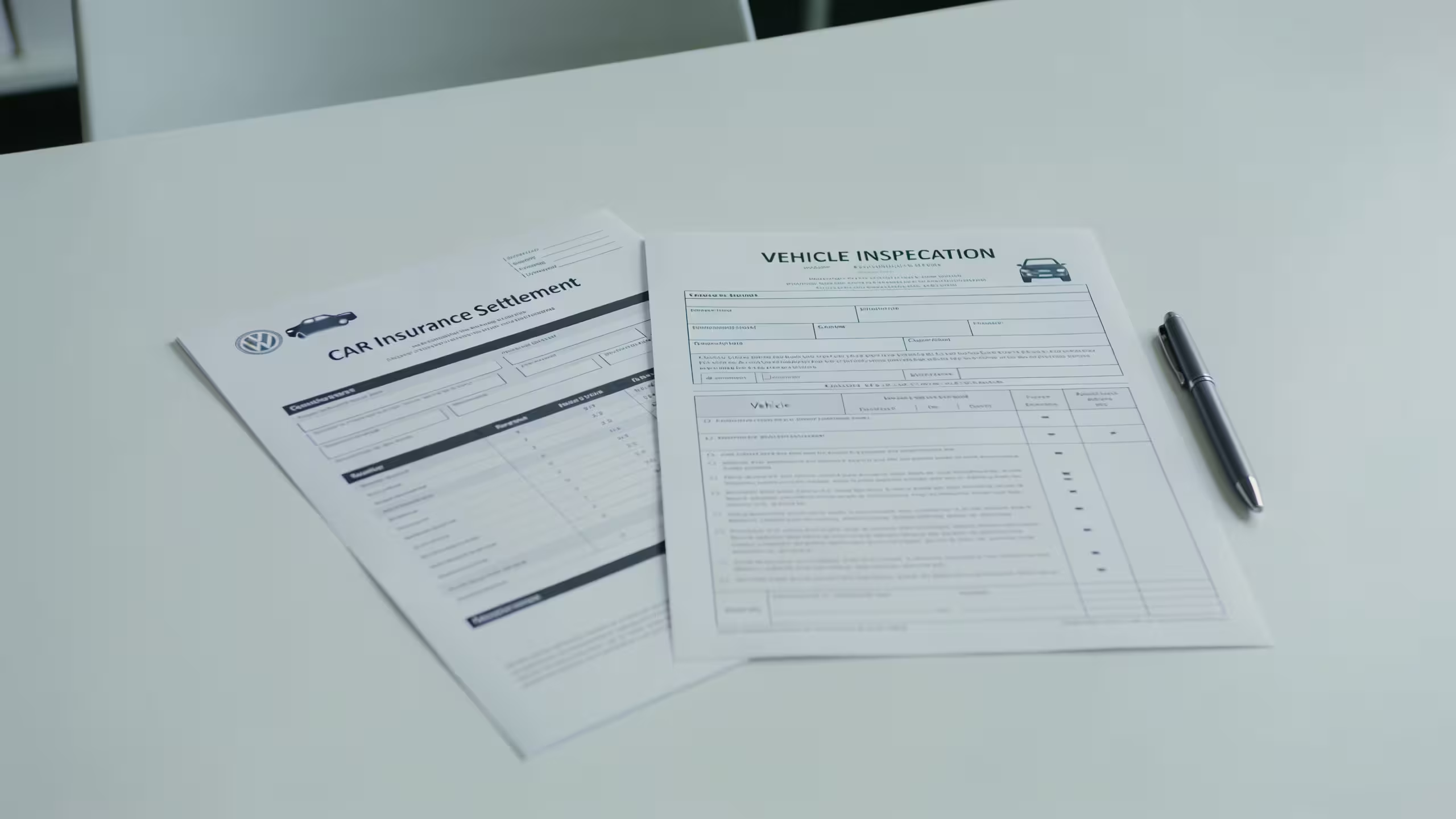
During the inspection, the appraiser typically looks at:
- Visible collision damage to the body, frame, and glass
- Hidden mechanical or safety-system damage revealed during closer assessment
- Pre-existing damage that will be separated from the current claim
From a practical standpoint, getting an independent repair estimate from a shop you trust gives you a useful comparison point. If your insurer’s figure is lower than what a certified mechanic quotes, you have grounds to ask for a written explanation of the difference.
If Your Car Is Declared a Total Loss
If the cost to repair your vehicle approaches or exceeds its actual cash value (ACV), your insurer may declare it a total loss. In that case, the payout is the ACV of the vehicle before the accident, minus your deductible. Understanding how your deductible is applied matters here, since it directly reduces what you receive. If you believe the ACV is too low, you can submit documentation such as recent sale listings for comparable vehicles to support a higher valuation.
Reviewing Your Settlement Offer
Once the inspection is complete, your insurer will present a settlement offer. This is the amount they agree to pay, minus your deductible. Review it carefully before accepting, because signing a settlement release is generally final and closes the claim.
Settlement Decision Framework
- If the offer covers your repair costs and reflects a fair vehicle value: accept it and proceed to the release and payment step.
- If the offer is lower than independent repair estimates or the car’s documented value: request a written explanation from the adjuster and submit your supporting evidence before signing anything.
- If you cannot reach an agreement: most states allow you to file a complaint with your state insurance commissioner, and many policies include an appraisal or arbitration clause that provides a formal dispute path without going to court.
What to Do If You Disagree With the Settlement Amount
Many policyholders do not realize they can dispute a settlement offer. If the payout seems too low, start by submitting written evidence: repair quotes from licensed shops, or vehicle sale listings showing comparable cars priced higher than the offered ACV. Your policy may also include an appraisal clause, which provides a structured process for resolving valuation disputes through independent appraisers. Check your declarations page or ask your adjuster whether this option applies to your situation.
If the dispute involves a third-party claim, your insurer may also pursue subrogation, seeking reimbursement from the at-fault party’s insurer after paying you. This happens in the background, but if it results in a recovery, you may receive a refund of your deductible. Ask your adjuster whether subrogation applies to your claim.
How a Claim Affects Your Insurance Rates
One of the most common concerns after filing a claim is the effect on your premium. The answer depends on who was at fault, the type of claim, your state’s laws, and your insurer’s own surcharge schedule.
| Scenario | Likely Rate Impact |
|---|---|
| At-fault accident with claim | Rates often increase at next renewal |
| Not-at-fault accident with claim | May or may not increase, depending on state law and insurer policy |
| Comprehensive claim (theft, weather, animal strike) | Typically smaller impact than collision claims |
| First claim with a clean prior record | Some insurers offer accident forgiveness, which may prevent a surcharge |
A surcharge for an at-fault accident typically remains on your record for three to five years, though the exact duration varies by insurer and state. Reviewing your insurer’s surcharge schedule before filing a minor claim can help you decide whether paying out of pocket makes more financial sense.
Does a Not-at-Fault Claim Raise Your Rates?
Some states prohibit insurers from increasing premiums after a not-at-fault accident. Others allow it. If your rate rises at renewal following a claim where you were not at fault, contact your state insurance department to understand your options. The NAIC’s consumer resources at naic.org can help you locate your state’s regulator.
How Long the Claims Process Takes
Most straightforward claims, those with clear liability, minor damage, and no disputes, resolve faster than complex ones involving injuries, multiple parties, or total-loss determinations. Delays are most common when fault is contested or when additional investigation is needed.
- Simple property damage claim: often resolved within one to two weeks
- Total loss determination: may take two to four weeks after the vehicle is inspected
- Claims involving injuries: can take months, especially if medical treatment is ongoing
- Disputed liability claims: may require extended investigation or a formal appraisal process
For a full look at how different coverages apply at every stage of ownership, see our auto insurance overview.
FAQ: What Happens After a Car Insurance Claim
Tap any question to expand the answer.
How long does a car insurance claim take to process?
Most straightforward property damage claims are resolved within one to two weeks. Complex cases involving injuries, multiple parties, or disputed liability can take months, particularly when medical treatment is still ongoing at the time of the claim. Your insurer is generally required by state law to communicate with you at set intervals during the process. If you feel the process is stalling, contact your state insurance department to ask about your rights and any applicable response deadlines.
Will filing a car insurance claim raise my rates?
It depends on the type of claim and who was at fault. At-fault accidents typically result in a rate surcharge at your next renewal, while not-at-fault claims may or may not affect your premium depending on your state’s laws and your insurer’s surcharge schedule. Some insurers offer accident forgiveness for a first claim, which can prevent a rate increase. Before filing a small claim, it is worth asking your insurer for the projected premium impact so you can compare it against the cost of paying out of pocket.
What should I do if the insurance settlement offer is too low?
You are not required to accept the first offer. Request a written explanation of how the settlement was calculated, then submit your own documentation: independent repair estimates from licensed shops, or recent sale listings for comparable vehicles if the claim involves a total loss. Most auto insurance policies include an appraisal or arbitration clause that provides a formal dispute process without going to court. Check your declarations page or call your insurer to confirm whether this option is available under your policy.
Do I have to use my insurer’s preferred repair shop?
Generally, no. Most insurers offer a network of preferred or direct-repair shops, and using one may speed up the process since those shops have pre-negotiated rates and a direct billing relationship with the insurer. However, you typically have the right to choose any licensed repair facility. If you use a shop outside the insurer’s network, you may need to manage the payment process more directly and verify that the final repair bill aligns with the insurer’s approved estimate.
What is subrogation and does it affect my claim?
Subrogation is the process by which your insurance company, after paying your claim, seeks reimbursement from the at-fault party’s insurer. This happens in the background and generally does not require active involvement on your part. If your insurer recovers money through subrogation, you may receive a refund of your deductible. Ask your claims adjuster whether subrogation applies to your situation and what you can expect if a recovery is made.