Does Auto Insurance Cover Hitting a Deer?
By Laurel C. Yazzie | Last reviewed: June 2026
Deer collisions happen in an instant, and the damage to your vehicle can be significant. If you have just hit a deer, or if you are trying to understand your coverage before it happens, the answer to whether auto insurance pays depends entirely on which types of coverage are on your policy. Not every auto insurance policy covers a deer strike, and knowing the difference before you file a claim matters.
Does auto insurance cover hitting a deer: Yes, if you have comprehensive coverage on your policy. Comprehensive insurance covers damage to your vehicle caused by events outside your control, including collisions with deer and other animals. Liability-only and collision coverage do not pay for deer damage to your own vehicle.
The Short Answer: Comprehensive Coverage Is What Pays
Hitting a deer is classified as a non-collision event under standard auto insurance rules. That means it falls under what a standard auto policy covers as comprehensive coverage, not collision coverage. Comprehensive is the portion of a policy designed for damage caused by events that are sudden, unexpected, and outside the driver’s control.
Having worked directly with clients on auto coverage decisions, the most common misconception I encountered was that “collision” insurance would cover a deer strike. It sounds logical, but deer accidents are legally and contractually treated the same way as a falling tree branch or a hailstorm.
The table below shows exactly how each coverage type handles a deer collision:
| Coverage Type | Covers Direct Deer Strike? | Covers Swerve + Hit Another Object? |
|---|---|---|
| Comprehensive | Yes, subject to your deductible | No |
| Collision | No | Yes, subject to your deductible |
| Liability only | No | No – covers damage to others, not you |
| MedPay / PIP | Covers medical bills only, not vehicle damage | Covers medical bills only, not vehicle damage |
Does Auto Insurance Cover Hitting a Deer If You Only Have Liability?
No. Liability insurance is required by law in nearly every state, but it only pays for damage you cause to other people and their property. It does not pay to repair your own vehicle after a deer strike.
If you carry only the state minimum liability policy, a deer collision leaves you paying all vehicle repair costs out of pocket. This is one of the most significant gaps in standard auto coverage that drivers discover only after an accident has happened.
- Liability only: No coverage for your vehicle damage or your own medical bills after a deer strike.
- Liability plus collision only: Still no coverage for a direct deer strike. Collision applies when your vehicle hits another car or a fixed object, not an animal.
- Liability plus comprehensive: Your vehicle damage from hitting a deer is covered, after your comprehensive deductible.
- Full coverage (liability + collision + comprehensive): Maximum protection for deer strikes and for any secondary damage if you swerve and hit something else.
What If You Swerve to Avoid a Deer and Miss?
This scenario catches many drivers off guard, and it is where coverage rules get genuinely complicated. If you swerve to avoid a deer, do not make contact with the animal, and then strike a guardrail, another vehicle, or a ditch, that damage falls under collision coverage, not comprehensive.
Why This Distinction Matters
From a practical standpoint, the coverage type affects two things: whether you are covered at all, and how the claim may affect your rates. Some drivers carry comprehensive without collision, or vice versa, so an incorrect assumption about which policy applies can mean a denied claim. Collision claims can also carry a different rate impact than comprehensive claims with certain insurers.
If you are unsure which type of claim to file, tell your insurer exactly what happened and let the adjuster make the coverage determination. Do not guess or assume.
Should You File a Claim After Hitting a Deer?
A comprehensive claim for a deer strike is generally treated as a no-fault incident and rarely causes a significant rate increase on its own. But that does not mean filing is always the right move. If the repair cost is close to your deductible, filing a claim may produce little or no payout while still adding an entry to your claims history.
File the claim if: The estimated repair cost is meaningfully higher than your comprehensive deductible. If repairs cost $2,000 and your deductible is $500, your insurer covers $1,500 — worth filing.
Pay out of pocket if: The repair cost is at or near your deductible amount. If damage is $600 and your deductible is $500, the insurer pays only $100, and the incident still goes on your claims record.
Watch for multiple claims: A single comprehensive claim rarely raises rates. But several claims in a short period — regardless of fault — can prompt a rate review with some carriers. Ask your insurer about its policy before filing.
Your comprehensive deductible is the amount you pay out of pocket before your insurance pays the remainder. Choosing the right deductible when you buy your policy directly affects how much each claim benefits you.
Steps to Take Immediately After Hitting a Deer
What you do in the minutes after a deer collision affects both your safety and the outcome of your claim. Follow these steps in order:
- Move to safety. If the vehicle is driveable, pull off the road and turn on your hazard lights.
- Stay away from the deer. A frightened or wounded animal is unpredictable and can cause serious injury. Do not approach it.
- Call the police. Report the incident, especially if the deer is blocking traffic or your vehicle is not driveable. Some states require a report for animal collisions; a police report also supports your claim.
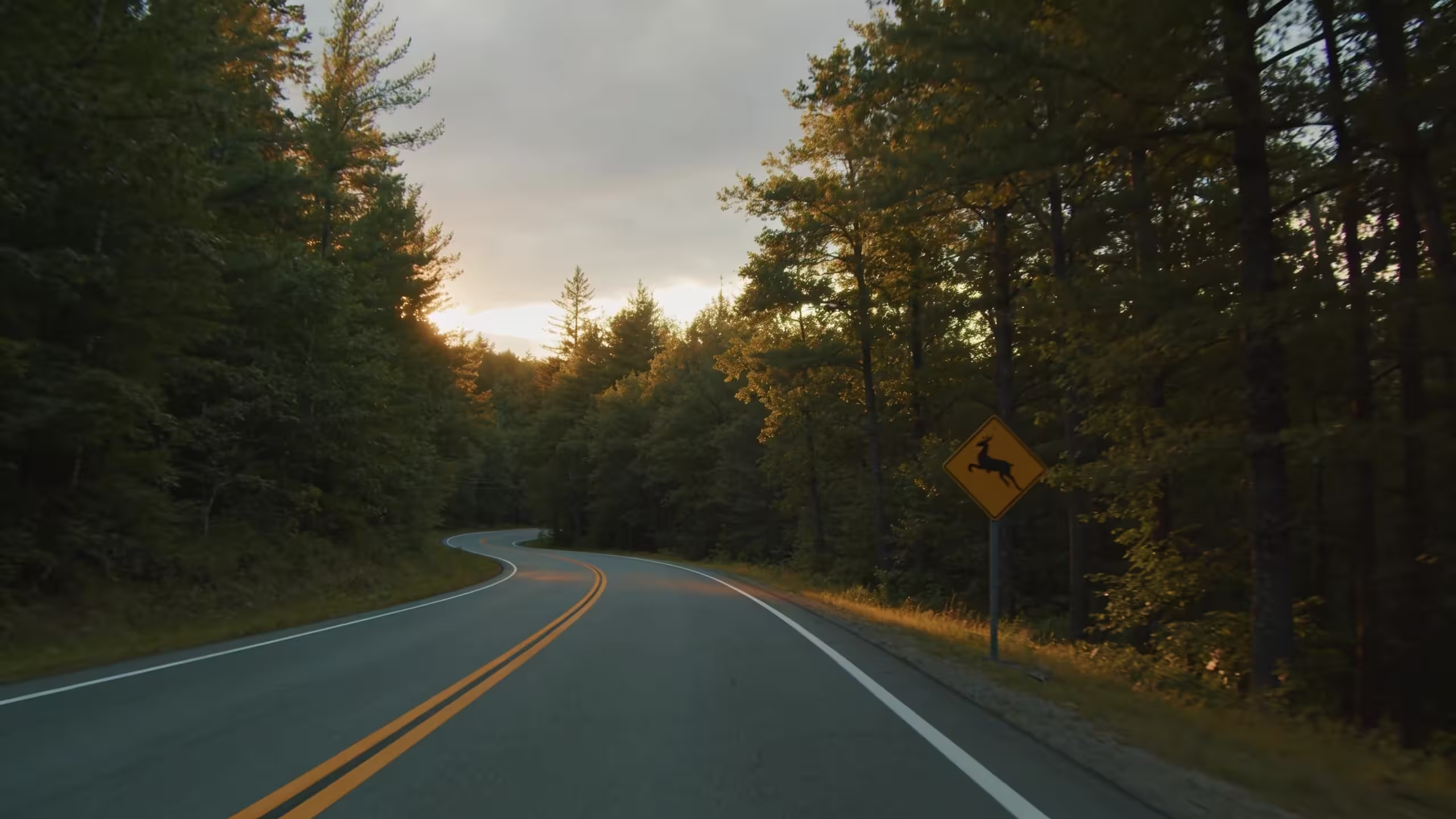
- Document the scene. Photograph your vehicle damage, the road, deer crossing signs if present, and any blood, fur, or other evidence of animal contact.
- Inspect your vehicle carefully. Check for leaking fluids, broken lights, or damage that makes the car unsafe to drive before attempting to continue.
- Contact your insurer. Report the incident as soon as you are safe and begin the comprehensive claims process. Have your policy number and photos available.
What to Tell Your Insurance Company
When you call to report the claim, state clearly that your vehicle made direct physical contact with the deer. Provide the time, location, direction of travel, and describe how the animal entered the road. If you have a police report number, include it. Accurate, specific details speed up the adjuster’s review and reduce the chance of a dispute over coverage type.
Will Hitting a Deer Raise Your Insurance Rate?
In most cases, a single deer collision claim does not raise your premium. According to the Insurance Information Institute, deer and other animal collisions account for roughly 1.7 million auto insurance claims per year in the U.S., and insurers broadly treat them as no-fault events. Comprehensive claims are not processed the same way as at-fault collision claims, and most insurers do not apply a surcharge for a single animal strike.
That said, every insurer and every state handles this differently. Some states explicitly prohibit surcharges on comprehensive claims. Others give insurers more discretion. If you are concerned about your specific policy, call your insurer and ask before you file.
A deer accident also does not go on your driving record the way an at-fault accident does. Animal strikes filed under comprehensive are broadly treated as non-chargeable incidents, meaning they are handled differently from at-fault collision claims for rating purposes. The claim appears in your claims history, but it is not the same as a moving violation or an at-fault collision.
For more on how your coverage types work together, see our auto insurance overview.
FAQ: Does Auto Insurance Cover Hitting a Deer?
Is hitting a deer covered by comprehensive or collision insurance?
Hitting a deer is covered by comprehensive insurance, not collision. Comprehensive covers damage from events outside your control, including animal strikes, while collision applies only when your vehicle hits another car or a fixed object. If you swerve to avoid a deer and hit something else without making contact with the animal, that separate damage falls under collision instead.
What happens if I only have liability insurance and I hit a deer?
If you carry only liability coverage, your insurer will not pay for any vehicle damage from a deer collision. Liability insurance covers damage you cause to other drivers and their property, not damage to your own car. You would be responsible for the full cost of repairs out of pocket. To have your deer strike covered, you need comprehensive coverage on your policy.
Do I need a police report to file a deer damage insurance claim?
Requirements vary by state. Some states require you to report an animal collision to authorities, especially if the deer is blocking traffic or there is significant property damage. Even where it is not legally required, a police report strengthens your insurance claim by establishing an official record of the incident. Your insurer may accept photographic evidence in lieu of a formal report for minor damage, but calling authorities is always the safer choice.
Will my insurance pay if the deer damage is enough to total my car?
Yes, if you have comprehensive coverage. When repair costs exceed the actual cash value of your vehicle, most insurers will declare it a total loss and pay you the vehicle’s market value, minus your deductible. Keep in mind that actual cash value accounts for depreciation, so the payout reflects what your car was worth before the accident, not what it would cost to buy a new equivalent vehicle. Some policies offer new car replacement coverage as an add-on if this is a concern.
When are deer collisions most likely to happen?
Deer season generally runs from October through December, when deer migration and mating patterns significantly increase how often deer cross roads. The highest-risk periods within any day are dusk and dawn, when deer are most active and visibility for drivers is at its lowest. Drivers in states with high deer densities face a particularly elevated risk during these months, check your state’s transportation authority for local data.