What Does Auto Insurance Not Cover? A Clear Breakdown
By Laurel C. Yazzie | Last reviewed: June 2026
Your auto insurance policy can feel like a complete financial safety net, but it has real holes in it. Most drivers discover those holes only after filing a claim and hearing the word “denied.” Knowing what does auto insurance not cover before something goes wrong is one of the most practical steps any car owner can take.
What does auto insurance not cover: Standard auto insurance policies do not cover intentional damage, normal wear and tear, mechanical breakdowns, or personal belongings stolen from your car. Driving for a rideshare or delivery service without commercial coverage also falls outside most personal policies. Flood and earthquake damage require separate coverage regardless of your plan.
What Does Auto Insurance Not Cover?
Auto insurance has two types of limits. The first is a dollar limit: how much the insurer will pay per incident. The second is a coverage limit: situations the policy simply will not pay for, no matter how long you have been a customer or how much you have paid in premiums. Coverage limits are the ones that catch most drivers off guard.
According to the Insurance Information Institute, a standard auto policy is made up of several distinct coverage types, and each one carries its own exclusion list. A claim that falls outside every coverage type on your policy will not be paid.
- Intentional acts and criminal damage
- Normal wear, tear, and mechanical breakdowns
- Personal items stolen from inside your vehicle
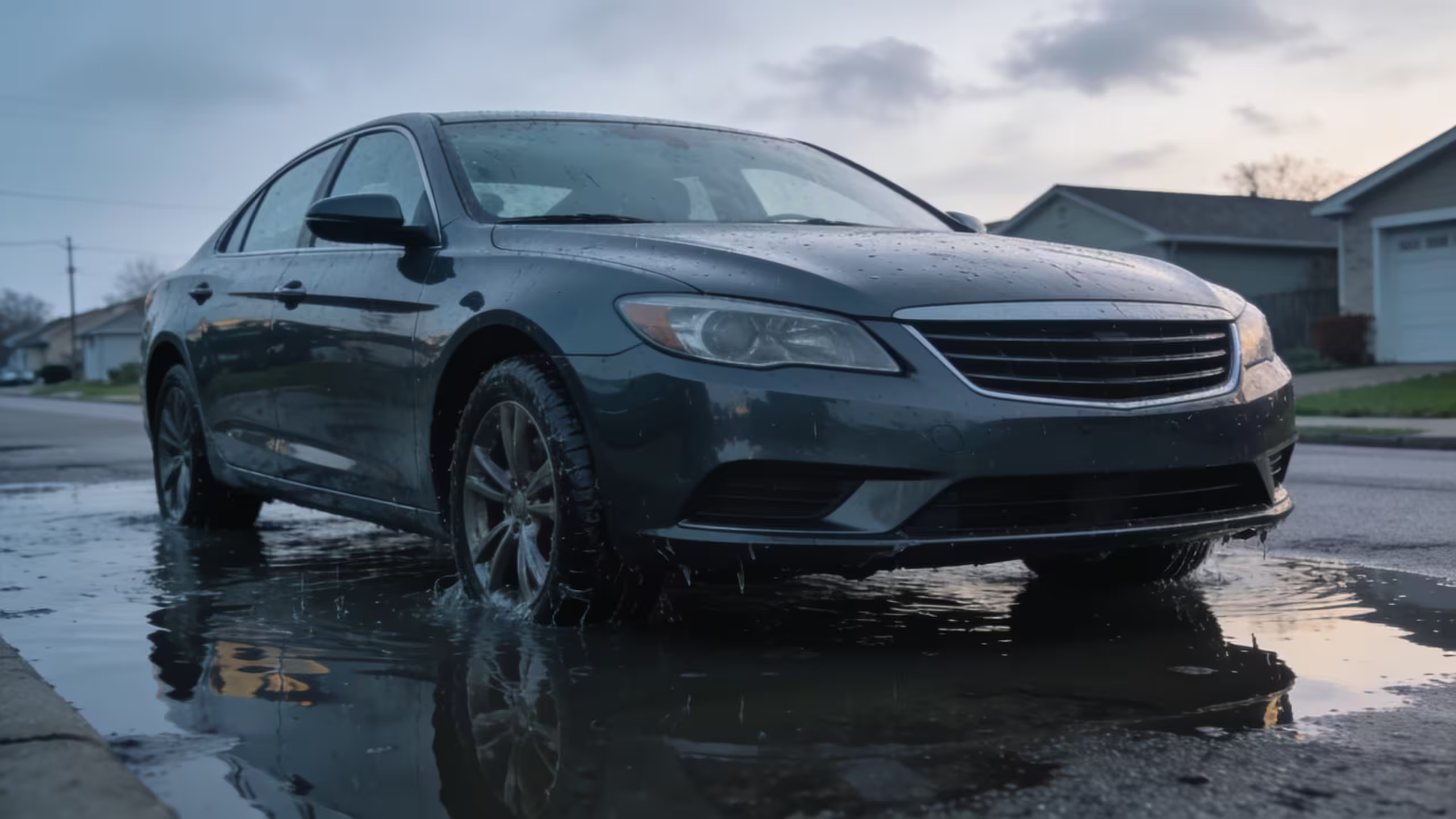
- Flood, earthquake, and some weather events (without comprehensive coverage)
- Business or rideshare driving without commercial coverage
- Damage caused by a driver you have excluded from your policy
- The remaining loan balance after a totaled car (without gap insurance)
- Injuries to the driver caused by their own drunk or impaired driving
Absolute Exclusions: What No Auto Policy Will Pay For
Some exclusions are not optional add-ons you missed. They are built into every standard auto policy and cannot be waived or purchased away. These are the situations where no upgrade will help.
- Intentional acts — damage you deliberately cause
- Mechanical wear — parts that fail due to age or lack of maintenance
- Personal property — belongings inside the car are not vehicle property
Intentional Damage and Criminal Acts
If you intentionally damage your own vehicle, or anyone else’s, your insurer will not pay the claim. This includes staging an accident to collect a payout. Insurers classify these as fraud, and attempting it can result in policy cancellation and criminal charges. The same applies to any damage that occurs while using your vehicle to commit a crime.
Normal Wear, Tear, and Mechanical Failure
Auto insurance covers sudden, unexpected events. It does not cover the gradual deterioration that comes with normal vehicle use. Worn brake pads, a failing transmission, rust, or a battery that simply dies are all maintenance issues, not insurable losses. If your engine seizes on the highway, your auto policy will not pay for the repair. That is what a vehicle service contract, often called an extended warranty, is designed to address.
What most people miss when reading their policy is that even a “sudden” mechanical failure, such as a blown head gasket, is still excluded because the failure originated from wear rather than an accidental external event.
Personal Belongings Inside the Car
Your auto insurance does not cover a laptop, camera, or cash stolen from your car. Those items are classified as personal property, and auto policies do not include personal property coverage. If you carry a renters or homeowners policy, that coverage may extend to personal belongings stolen from your vehicle, usually up to a sub-limit. Check your declarations page before assuming you are protected under either policy.
Coverage Gaps You Can Fill With Add-On Policies
Not every gap is permanent. Some exclusions only apply because a driver chose a basic policy and skipped optional coverages. These gaps can be addressed, typically at an additional premium cost.
- Natural events — coverable by adding comprehensive coverage
- Total loss balance — coverable with gap insurance
- Rideshare driving — coverable with a rideshare endorsement
Flood, Hail, and Other Natural Events
Flood and earthquake damage are not covered under a liability-only policy. However, comprehensive coverage is an optional add-on that does cover weather events including hail, falling trees, and storm-related flooding. According to the National Association of Insurance Commissioners, comprehensive is the component of an auto policy that handles non-collision events. Drivers in flood-prone or hail-prone areas who carry only liability coverage have no protection for storm damage to their vehicle.
Rental Car Costs and Gap Coverage
If your car is totaled, your standard policy pays the actual cash value of the vehicle, which accounts for depreciation. If you still owe more on your loan than the car is worth, you are responsible for that remaining balance out of pocket. Gap insurance covers exactly that difference. It is typically available as an add-on from your insurer or through your lender at the time of vehicle purchase. For specific situations involving rental vehicles, see our guide on whether auto insurance covers rental cars.
Rideshare and Delivery Driving
Driving for a rideshare or delivery service puts your personal auto policy in a gray area. Most personal auto policies exclude coverage during the period when you are logged into the app and available to accept rides but have not yet accepted one. Once you accept a trip, the platform’s commercial coverage may apply, but there is often a gap between those two states. Some insurers offer rideshare endorsements that bridge this window. Without one, an accident during that period may result in a full claim denial.
When Coverage Disappears Based on Policy Conditions
Beyond standard exclusions, certain situations can void coverage that would otherwise apply. These are often the most surprising denials, because the driver assumed they were covered.
- An excluded household member drives your car and causes an accident
- You use your personal car for business deliveries or client visits
- A lapsed payment causes your policy to be inactive at the time of a claim
Excluded Drivers Listed on Your Policy
If you have formally excluded a household member from your policy, coverage does not apply when that person drives your car. This arrangement is common when a high-risk driver lives in your home and you want to keep premiums lower. The tradeoff is clear: any accident they cause becomes entirely your financial responsibility, with no insurer to absorb the cost.
Using Your Car for Business Without Commercial Coverage
Delivering food, making client visits in your personal vehicle, or transporting goods for pay generally falls outside personal auto coverage. From a practical standpoint, many drivers assume their personal policy covers all driving they do in their own car. It does not. Any consistent commercial use without a business auto endorsement or a commercial policy creates a coverage gap that can result in a complete claim denial.
What If You Use Your Personal Car for a Side Business?
This is the scenario most coverage articles skip entirely. If you use your personal vehicle occasionally for a side business, such as making periodic deliveries or transporting equipment, your insurer may deny a claim if the accident occurred during that business use. The defining factor is not how often you do it, but why the vehicle was being used at the moment of the accident: was it a commercial purpose? Even a single business-use trip can trigger a denial under a personal policy.
The safest approach is to ask your insurer about a business-use endorsement for occasional commercial use, or a commercial auto policy if the business use is regular. The Insurance Information Institute’s guide on commercial auto coverage explains the key distinctions between personal and commercial policy triggers.
How to Find the Gaps in Your Own Policy
Having worked directly with clients on auto policy reviews, the most common misconception I encountered was that a higher premium automatically means broader coverage. It does not. Your premium reflects your personal risk level. It does not remove exclusions.
Use this decision framework to audit your own situation:
| Situation | Hard Exclusion? | Gap You Can Fill? |
|---|---|---|
| Mechanical breakdown or engine failure | Yes — no auto policy workaround | Vehicle service contract (separate product) |
| Flood or hail damage | Only without comprehensive coverage | Add comprehensive to your auto policy |
| Personal belongings stolen from car | Yes for auto policy | Renters or homeowners policy (check sub-limits) |
| Rideshare app-open period | Partial — depends on trip phase | Rideshare endorsement from your insurer |
| Remaining loan balance after total loss | Yes under standard coverage | Gap insurance (via insurer or lender) |
| Business-use driving without endorsement | Yes for commercial-purpose trips | Business-use endorsement or commercial policy |
| Intentional damage or fraud | Yes — absolute exclusion | No |
Understanding exclusions is only half the picture. To build a complete view of your coverage, review what auto insurance actually covers alongside what it does not. You can also visit the auto insurance hub for a full breakdown of policy types, terms, and coverage decisions.
FAQ: What Does Auto Insurance Not Cover?
Does auto insurance cover a blown engine or transmission failure?
No. Auto insurance covers sudden, accidental events, not mechanical failures that result from normal use or wear over time. A blown engine, failed transmission, or seized timing belt are all treated as maintenance issues by insurers, regardless of how unexpectedly they occur. If you want protection against costly mechanical repairs, a vehicle service contract, sometimes called an extended warranty, is the product designed for that purpose.
If someone breaks into my car and steals my laptop, does auto insurance pay for it?
Auto insurance does not cover personal belongings stolen from your vehicle. Items like laptops, cash, cameras, and clothing are considered personal property, which falls outside the scope of any standard auto policy. Your renters or homeowners insurance may cover these items under its personal property protection, often subject to a deductible and a sub-limit for items stolen away from the home. Check your renters or homeowners declarations page to confirm what off-premises theft coverage you carry.
Does auto insurance cover flood damage to my car?
Flood damage is only covered if you carry comprehensive coverage on your policy. A liability-only policy, which is the minimum required in most states, does not cover damage to your own vehicle from any event, including flooding, hail, or a falling tree. Comprehensive coverage is an optional add-on that specifically covers non-collision events. Drivers in areas prone to flooding, hail storms, or wildfires should confirm whether comprehensive is included in their current policy.
My car was totaled but I still owe money on the loan. Will insurance pay off the full balance?
No. A standard auto policy pays the actual cash value of your vehicle at the time of the loss, which reflects depreciation. If you owe more on your loan than the car’s current market value, you are responsible for that difference out of pocket. Gap insurance is the product designed to cover exactly that shortfall. It is typically available as an add-on through your auto insurer or through your lender at the time you finance the vehicle.
Am I covered by my personal auto insurance while driving for a food delivery app?
Not fully. Most personal auto policies exclude coverage when the vehicle is being used for commercial purposes, and food delivery qualifies as commercial use. The delivery platform’s coverage may apply once you have accepted an order and are actively on a delivery, but a gap often exists between when you log in and when you accept a trip. Without a rideshare or delivery endorsement added to your personal policy, an accident during that gap period is likely to be denied. Contact your insurer to ask specifically about a rideshare or delivery endorsement before your next shift.