Best Payday Loan Alternatives: 7 Safer Ways to Get Emergency Cash
By Laurel C. Yazzie | Last reviewed: October 2026
When a surprise expense hits and your next paycheck is still days away, a payday loan might seem like the fastest fix. The truth is that the best payday loan alternatives are often just as fast, and they cost far less. Several of the options in this guide can put money in your account the same day, without the triple-digit interest rates that payday lenders charge.
In reviewing hundreds of loan applications over a decade in consumer lending, the detail most borrowers miss is this: the right alternative depends on just two things, how fast you need the money and what your credit history looks like. Once you know those two answers, the list below narrows to one or two clear choices.
Why Payday Loans Are Worth Avoiding
Payday loans are short-term loans, typically due in full on your next payday, usually within two weeks. According to the Consumer Financial Protection Bureau (CFPB), the fees charged on payday loans often translate to an annual percentage rate (APR) of 400% or more. That is not a typo.
The cost alone is a problem. But the bigger danger is the rollover trap. When a borrower cannot repay on time, the loan is extended with a new fee added. The principal does not shrink. Here is what makes a payday loan so much riskier than the alternatives below:
- Very short repayment window: usually two weeks, not months
- Flat fees that translate to triple-digit APRs: most credit cards charge well below 30% APR by comparison
- No credit building: most payday lenders do not report on-time payments to the credit bureaus, so borrowing never improves your score
- Rollover risk: each rollover adds a new fee without reducing what you owe
- Lump-sum repayment: the full amount plus fees comes due at once, leaving little room if your next paycheck is already stretched
Every alternative in this guide solves at least one of these problems, and most solve all of them.
The 7 Best Payday Loan Alternatives Compared
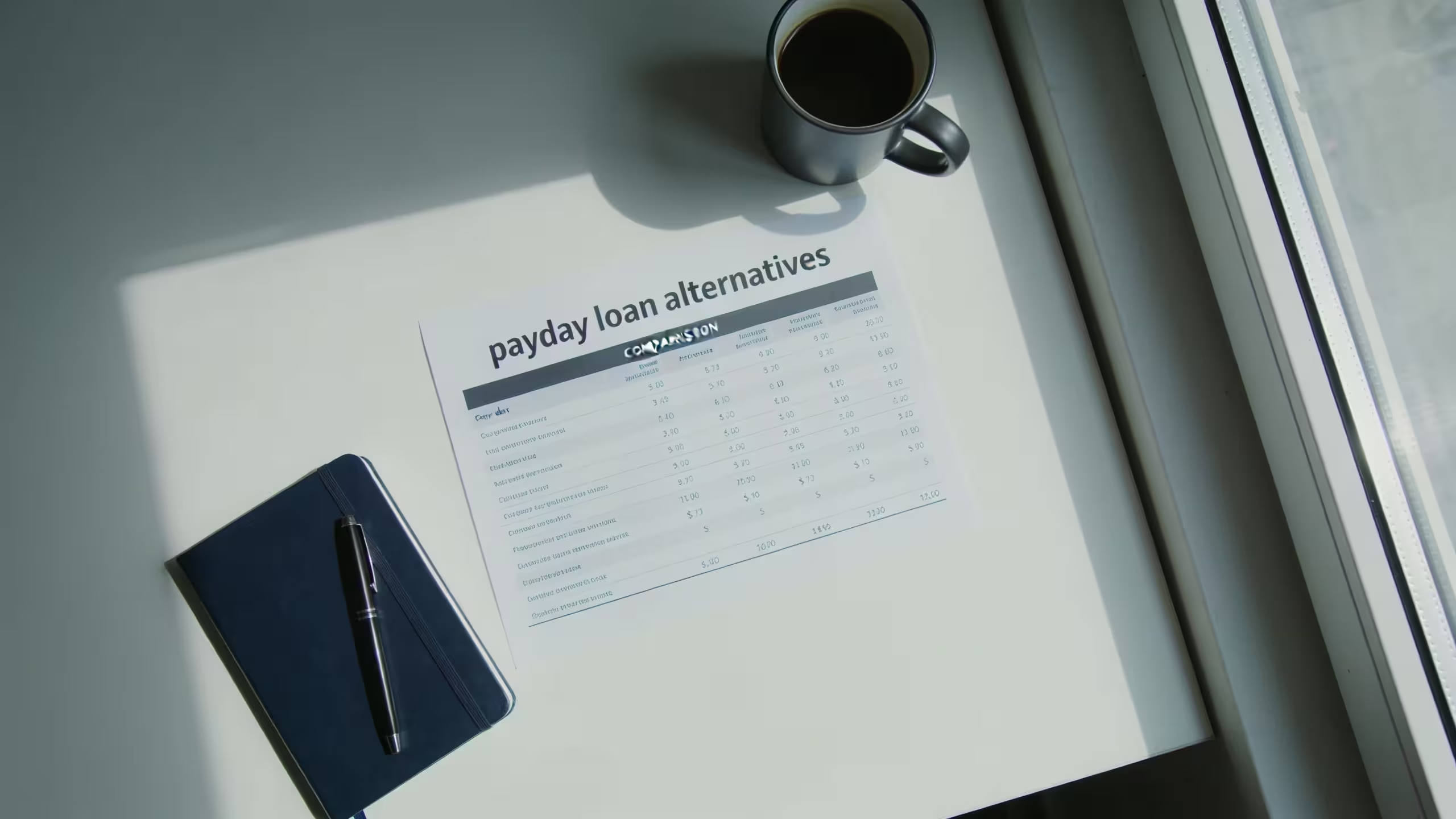
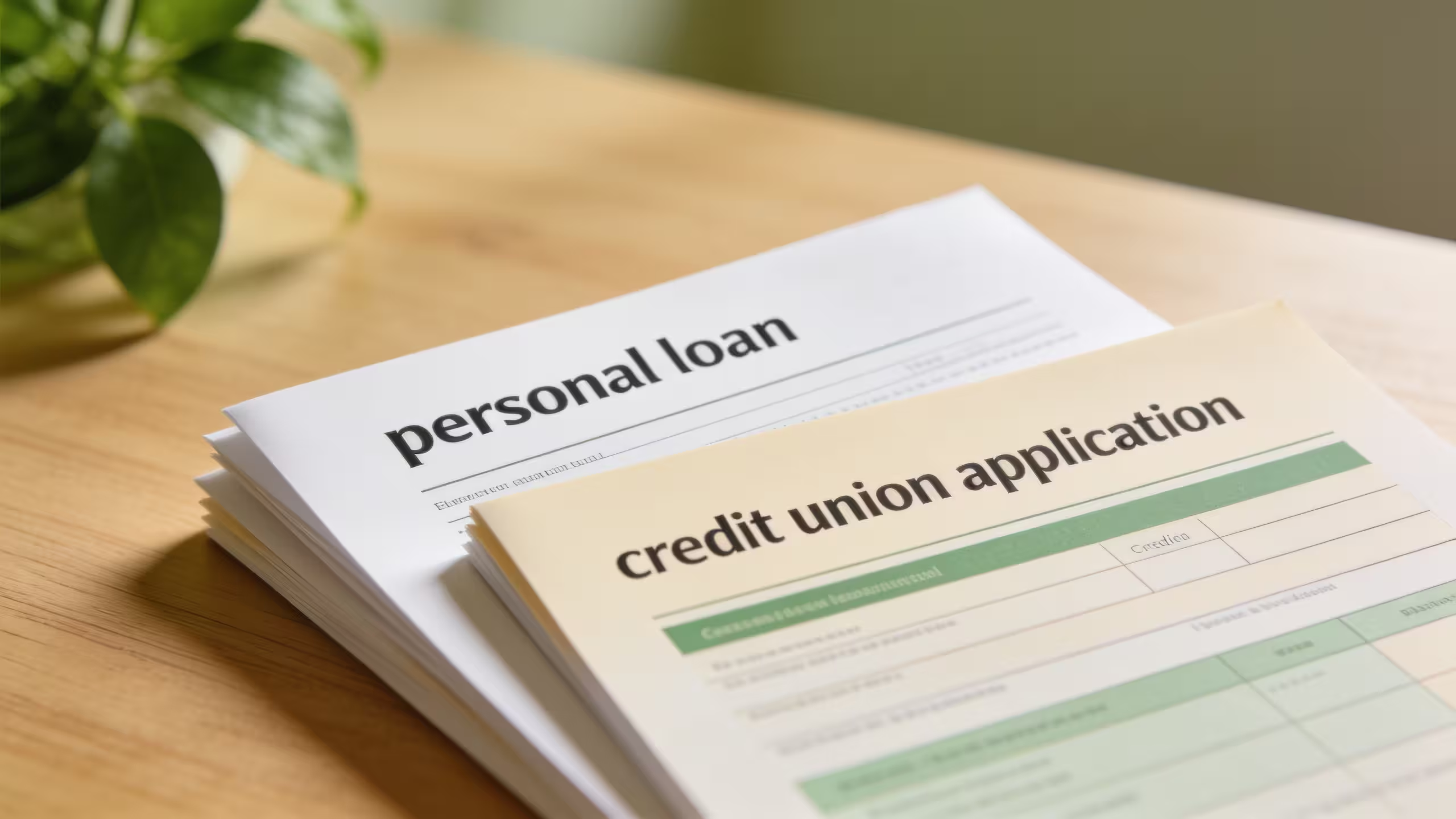
The table below compares the seven most accessible options by speed, cost, credit requirements, and the situation each fits best. Detailed explanations follow.
| Alternative | Speed | Relative Cost | Credit Check? | Best For |
|---|---|---|---|---|
| Credit Union PAL | 1–3 business days | Low (APR capped at 28% by NCUA) | Soft / membership review | Credit union members who can wait 1–3 days |
| Personal Loan | 1–7 days | Low to moderate (varies by credit) | Yes (hard pull) | Fair to good credit; amounts over $1,000 |
| Cash Advance App | Same day to next day | Very low (small fee or optional tip) | None | Small shortfalls under $500 |
| Employer Paycheck Advance | Same day | Free or very low fee | None | Employed borrowers with direct deposit |
| Credit Card Cash Advance | Immediate | Moderate (still lower than payday loans) | None (if you have a card) | Existing cardholders with available credit |
| Nonprofit / Community Aid | 1–5 days | Free | None | Utility, rent, or food emergencies |
| Family or Friend Loan | Immediate | Free (if terms are agreed) | None | Trusted relationships; smaller amounts |
1. Credit Union Payday Alternative Loans (PALs)
A Payday Alternative Loan, or PAL, is a small loan offered by federally chartered credit unions specifically to give borrowers a safer option than payday lenders. According to MyCreditUnion.gov, the National Credit Union Administration (NCUA) caps the APR on PALs at 28%. PAL I loans range from $200 to $1,000 with repayment terms of one to six months. PAL II loans allow up to $2,000 with terms up to 12 months.
The main requirement is credit union membership. Some credit unions also require you to have been a member for at least one month before applying for a PAL I. If you are not yet a member, joining now and applying later is still a better path than repeating payday loan cycles at 400% APR.
2. Personal Loans
A personal loan from a bank, online lender, or credit union is often the most cost-effective option for borrowers with fair to good credit. These are installment loans with fixed monthly payments spread over months or years, giving you far more breathing room than a two-week payday loan. The Federal Reserve publishes average consumer loan interest rates so you can benchmark what a competitive offer looks like before you apply.
Lenders set their own minimum credit score requirements, which they rarely publish publicly. Checking your rate with multiple lenders through a soft credit pull will not affect your score. For a full cost breakdown, see our guide on personal loans vs payday loans.
3. Cash Advance Apps
Cash advance apps let you access a portion of your earned wages before your actual payday arrives. Most charge a small optional tip or a low subscription fee rather than interest. No credit check is required because the advance is based on income you have already earned. Apps in this category include EarnIn, Dave, and Brigit, among others.
In practice, many borrowers find these apps solve the most common emergency: the gap between when a bill is due and when the paycheck lands. Advance limits are lower than most personal loans and grow with consistent use. For a direct side-by-side comparison, see how cash advance apps vs payday loans.
4. Employer Paycheck Advance
Some employers offer direct paycheck advances through HR or through a payroll-linked app as an employee benefit. Because this is an advance on wages you have already earned, it typically carries no interest and no formal credit check. Repayment is deducted automatically from your next paycheck.
Not every employer advertises this benefit. Check with your HR or benefits department, especially if you work for a mid-size or larger company. Some employers partner with earned wage access platforms that make funds available on demand, even if the program is not widely promoted internally.
5. Credit Card Cash Advance
If you have a credit card with available credit, a cash advance gives you immediate access to cash at a cost that is still significantly lower than what a payday lender would charge. The APR on credit card cash advances is high compared to regular purchases, but it is a fraction of payday loan territory.
One important detail: cash advances on credit cards begin accruing interest immediately, with no grace period, and most cards also charge a transaction fee. Check your card’s terms before using this option so the full cost is clear upfront.
6. Nonprofit and Community Assistance Programs
If your emergency involves a specific bill such as rent, utilities, or groceries, a nonprofit or government assistance program may be able to cover the cost directly at no charge to you. Visit 211.org or dial 2-1-1 to be connected with local programs in your area. This approach can eliminate the need to borrow at all for many common financial emergencies.
Community Action Agencies, faith-based organizations, and local charities often maintain emergency funds for qualifying residents. Contact them as early as possible if a bill deadline is approaching, since processing times vary by organization.
7. Borrowing from Family or Friends
An informal loan from someone you trust can be interest-free and available immediately. The risk is relational rather than financial. To protect the relationship, put the terms in writing, even briefly, and make repayment a priority. A text confirming the amount and repayment date creates clarity for both parties without requiring a formal document.
Which Alternative Is Right for Your Situation?
The right choice depends on three things: how fast you need the money, how much you need, and your current credit situation. This decision framework helps narrow it down before you apply anywhere:
- Need money within hours, no credit check required: Cash advance app or employer paycheck advance. Both can fund the same day and require no credit pull.
- Need $200 to $2,000 and already belong to a credit union: Apply for a PAL. The NCUA’s 28% APR cap makes this one of the best-value short-term options available anywhere.
- Have fair to good credit and can wait 1 to 7 days: A personal loan from a bank or online lender will almost always be cheaper than any other short-term option, with repayment spread over months.
- Already have a credit card with available credit: A cash advance is immediate and costs less than a payday loan. Check the APR and transaction fee on your specific card first.
- Emergency is a specific bill (utility, rent, food): Call 2-1-1 before borrowing anything. A grant or assistance program may cover the bill at no cost.
- Have a trusted person willing to help: A personal loan with agreed-upon written terms is free and available immediately.
What most people miss when comparing loan offers is that one or two factors, like having direct deposit set up or already being a credit union member, can completely change which option is the cheapest and fastest. Check those details first before applying anywhere else.
What to Do When Your Credit Is Poor or Nonexistent
Several of the options above do not require a credit check at all. If your credit is poor or you have no credit history, work through these in order before turning to a payday lender:
- Employer paycheck advance: no credit check, free or very low cost, same-day funding
- Cash advance app: no credit check, same-day access, works for smaller amounts
- Credit union PAL: uses a membership review rather than a hard credit pull; minimal credit requirements compared to traditional personal loans
- Nonprofit or community aid: free if your specific emergency qualifies
- Family or friend loan: immediate, no credit check, interest-free if terms are agreed
Borrowers who need a larger amount and have poor credit should also look for small-dollar installment loan programs at community development financial institutions (CDFIs) or nonprofit lenders. These programs are designed for borrowers with limited credit and, importantly, they report on-time payments to the credit bureaus. A payday loan almost never does that.
If You Are Already Stuck in a Payday Loan Cycle
A credit union PAL can sometimes be used to pay off an existing payday loan, replacing the high-fee debt with a lower-cost installment structure. Contact your nearest credit union to ask whether this is possible before your next rollover fee hits. Many borrowers find that this single step breaks a cycle that would otherwise repeat for months. If you are also struggling with the rollover fees themselves, the CFPB provides guidance on payday loan debt at consumerfinance.gov.
Build a Small Emergency Buffer to Avoid Borrowing Next Time
The best long-term alternative to any short-term loan is a small cash reserve. Even a modest amount in a separate savings account can cover the kind of unexpected gap that pushes people toward payday lenders. Starting small is fine. Consistency matters more than the amount you save each time.
- Open a free savings account and label it specifically for emergencies
- Set up an automatic transfer of any amount each payday, even a small one
- Treat the balance as untouchable except for genuine emergencies
- Over time, aim for enough to cover one to two months of essential bills
For a broader overview of everything covered in the payday loans space, visit our complete payday loan resource guide.
FAQ: Best Payday Loan Alternatives
Tap any question to expand the answer.
What is the best alternative to a payday loan if I need money today?
If you need money today with no credit check, a cash advance app or an employer paycheck advance are your fastest options. Both can fund within hours if you have direct deposit set up. Cash advance apps like EarnIn and Dave do not require a credit pull and charge a small fee or optional tip rather than interest. If your emergency is a specific bill like rent or utilities, call 2-1-1 first, since a local nonprofit program may cover the cost at no charge.
Can I get a payday loan alternative with bad credit?
Yes. Several payday loan alternatives require no credit check at all, including cash advance apps, employer paycheck advances, credit union PALs (which use a membership review rather than a hard credit pull), and borrowing from family or friends. If you need a larger amount and have poor credit, look into small-dollar installment loans from nonprofit lenders or community development financial institutions (CDFIs), which often have more flexible requirements than banks and also report on-time payments to the credit bureaus.
How does a credit union PAL compare to a payday loan?
A credit union Payday Alternative Loan (PAL) is a direct, federally regulated alternative to a payday loan. The National Credit Union Administration caps the APR on PALs at 28%, according to MyCreditUnion.gov. Payday loans frequently carry APRs of 400% or more by comparison. PALs also give you longer repayment terms, ranging from one to twelve months depending on the PAL type, rather than demanding full repayment in two weeks. The main limitation is that you must be a credit union member to apply.
Do payday loan alternatives hurt your credit?
It depends on the alternative. Personal loans and credit union PALs typically involve a credit check, and most lenders report payment history to the credit bureaus, meaning on-time payments can actually help your credit score over time. Cash advance apps, employer paycheck advances, and borrowing from family or friends generally do not affect your credit at all since no credit bureau reporting occurs. Payday loans, by contrast, usually do not report on-time payments but can appear on your credit report if they go to collections, damaging your score without ever helping it.
Find Your Best Payday Loan Alternative
Answer 3 quick questions to see which option fits your situation.
1. How soon do you need the money?
2. Are you a credit union member?
3. How much do you need?