Can You Use Student Loans for Living Expenses?
By Laurel C. Yazzie | Last reviewed: June 2026
Student loans are designed to help you pay for college, and that includes more than just tuition. Rent, groceries, utilities, and transportation are all part of the real cost of getting a degree. If you are wondering whether you can use student loans for living expenses, the answer is yes, but the rules are more specific than most students expect.
Can You Use Student Loans for Living Expenses: Yes. Both federal and private student loans can be used for living expenses within your school’s cost of attendance (COA). Eligible costs include rent, food, utilities, transportation, and personal essentials. Loan funds are first applied to tuition and fees, and any remainder is refunded to you for approved living costs.
What Living Expenses Student Loans Can Cover
Both federal and private student loans are tied to your school’s cost of attendance (COA), a budget your school sets each year that estimates the total cost of attending for one academic year. The COA is more than just tuition. According to the U.S. Department of Education’s Federal Student Aid Handbook, schools are required by federal law to include a food and housing allowance in the COA for all students enrolled at least half-time.
Expenses you can generally use student loan funds to pay for include:
- Housing: On-campus dorms, off-campus rent, and utilities such as electricity, water, and internet
- Food: Campus meal plans and off-campus grocery purchases
- Transportation: Gas, parking, bus passes, and vehicle maintenance costs for commuting to class (not the purchase of a car)
- Books and supplies: Required textbooks, lab materials, and course-specific supplies
- Personal computer: A laptop or device needed for coursework, if your school includes it in the COA
- Childcare: If you are a student parent, dependent care costs may be eligible; confirm with your financial aid office
- Disability-related expenses: Specialized equipment or services required to complete your program
What Student Loans Cannot Be Used For
Student loan funds are not a blank check. Here are the types of purchases that fall outside the rules:
- Buying a car (you can pay to maintain a car you need for school, but not to purchase one)
- Vacation and spring break travel
- Dining out at restaurants
- Entertainment: streaming subscriptions, concerts, sporting events
- Paying off existing debt such as credit cards or a car loan
- Down payments on a home or other property
- Investments or contributions to savings accounts
The School Test: A simple decision framework for borderline expenses
Before spending your student loan refund on anything questionable, ask yourself three questions:
- Is this expense directly tied to attending or completing my classes?
- Would my school include this type of cost in a typical student budget?
- Would I have this expense if I were not enrolled in school?
If you can answer yes to at least two of these, the expense is likely eligible. If you answer no to all three, it is not an appropriate use of student loan funds.
What If Your Actual Living Costs Are Higher Than the COA?
How the Cost of Attendance Limits What You Can Borrow
Your school’s COA sets the ceiling on how much total financial aid you can receive in a given academic year. According to the Consumer Financial Protection Bureau, you cannot borrow more than your COA minus any other financial aid you have already received. That means grants, scholarships, and work-study funds all reduce the amount available to borrow through loans.
According to Federal Student Aid (FSA), a school’s COA typically includes:
- Tuition and fees
- Housing and meals (room and board)
- Books, course materials, supplies, and equipment
- Transportation expenses
- Personal and miscellaneous expenses
- Loan fees, when applicable
Each school sets its own COA and may calculate separate amounts depending on whether you live on campus, off campus, or at home with family. The COA is adjusted annually to reflect local cost-of-living changes.
What If Your Actual Living Costs Are Higher Than the COA?
In reviewing hundreds of loan applications over a decade in consumer lending, the detail most borrowers miss is that their school’s COA is an estimate, not a fixed limit tied to your personal circumstances. If your actual rent, childcare, or disability-related costs are higher than the standard budget your school published, you can formally request a COA adjustment.
To request one, contact your financial aid office directly. Submit documentation of your actual costs, such as a signed lease showing your monthly rent, childcare invoices, or medical expense records. Many schools will revise your COA upward, which can increase the amount of aid you are eligible to receive. Keep copies of all documentation and make the request in writing before the end of the academic term.
How Student Loan Disbursement Works
Understanding the flow of funds helps you avoid a cash gap at the start of each semester. Here is the typical process:
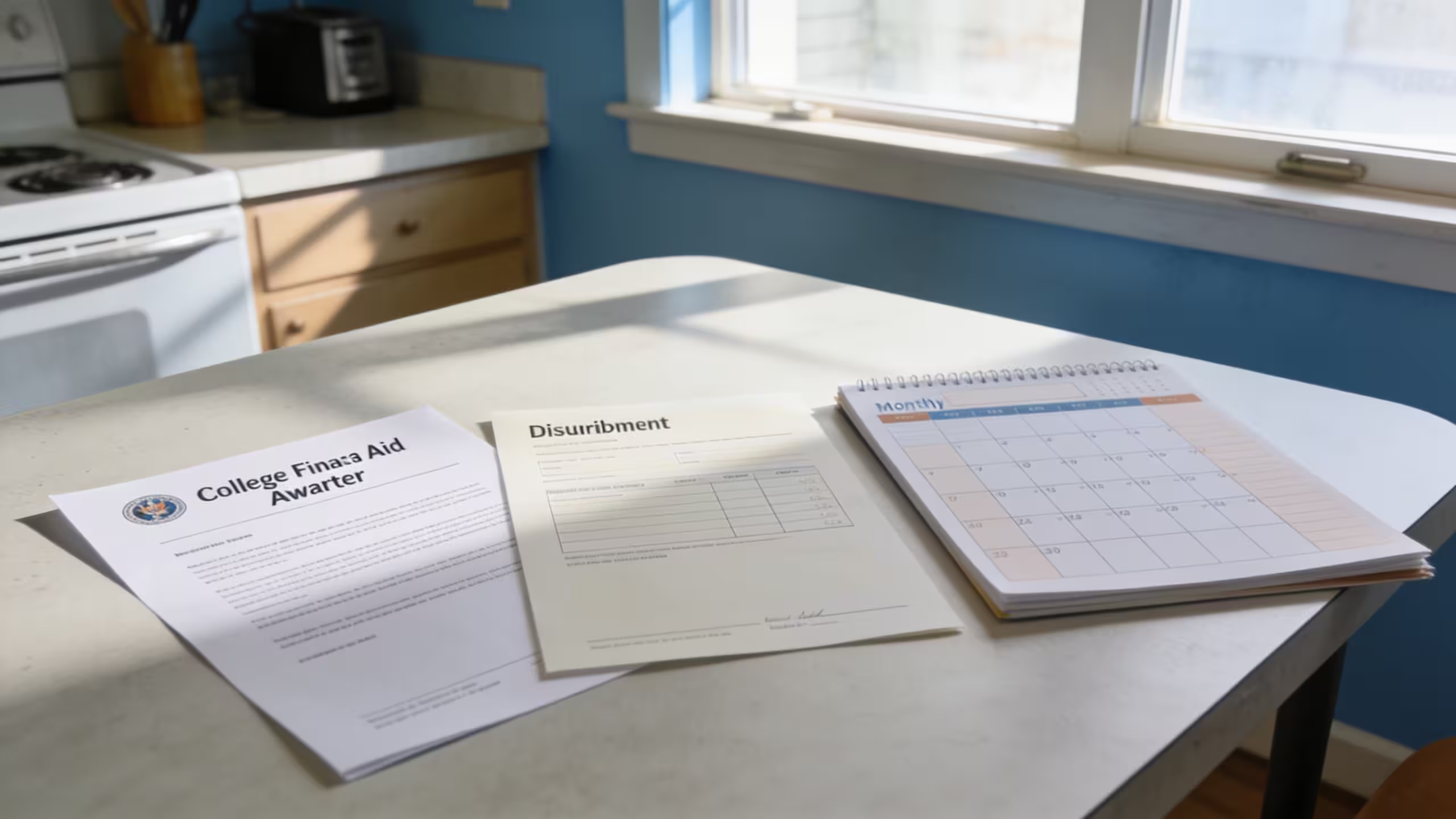
- Your lender sends funds to your school. Loan money goes directly to the school’s financial aid office, not to your bank account.
- Your school deducts direct charges. Tuition, required fees, and on-campus housing or meal plan charges are subtracted first.
- Remaining funds are refunded to you. Your school releases the leftover balance as a check or direct deposit, according to its own disbursement schedule.
In practice, many borrowers receive their refund weeks after the term begins, which means you need a short-term plan for rent and groceries before those funds arrive. Ask your financial aid office for the exact disbursement date before the semester starts so you can plan around that gap.
For a broader overview of how loan funds are processed, see our guide on how federal student loans work.
Federal vs. Private Student Loans for Living Expenses
Both federal and private loans can cover living expenses within your COA, but the protections and consequences differ significantly.
| Feature | Federal Loans | Private Loans |
|---|---|---|
| Can cover living expenses | Yes | Yes (up to COA) |
| Subject to COA borrowing cap | Yes | Yes |
| Income-driven repayment options | Yes | Rarely available |
| Loan forgiveness programs | Yes (PSLF, IDR forgiveness) | Not available |
| Credit check required | No (for Direct Subsidized and Unsubsidized) | Yes |
| Consequence of misuse | Potential federal prosecution and fines | Possible immediate default |
If you need to borrow for living expenses, exhaust your federal loan options before turning to private loans. Federal loans carry stronger consumer protections and repayment flexibility that private loans cannot match. For a more detailed look at using refund funds for housing, see our guide on using student loans to cover rent.
What Happens If You Misuse Student Loan Funds?
Most schools and lenders do not track refund spending dollar by dollar. But misuse carries real consequences.
- Federal student loans: Intentional misuse can be considered fraud under the Master Promissory Note you sign when borrowing. The U.S. Department of Education may refer serious cases for investigation or prosecution, and penalties can include substantial fines.
- Private student loans: Loan agreements generally restrict how funds may be used. If a lender determines funds were used improperly, it may declare the loan in default and require immediate repayment of the remaining balance.
The more practical risk is simpler: every dollar borrowed accumulates interest and must be repaid. Spending refund funds on non-essential items means paying interest on those purchases for years after graduation. From a practical standpoint, the best use of any leftover loan funds is to return them to your servicer before interest begins to accrue. Federal Student Aid allows cancellation of all or part of your loan within 120 days of disbursement with no interest or fees charged for that portion (see Federal Student Aid guidance on returning loan funds within 120 days).
For a complete picture of your borrowing options, visit our complete student loans guide.
FAQ: Can You Use Student Loans for Living Expenses?
Can you use federal student loans for off-campus rent?
Yes. Off-campus rent is an eligible expense under federal student loan rules, as long as it falls within your school’s cost of attendance budget for off-campus students. Your school sets a separate COA for students who live off campus. After your loan is disbursed and tuition is deducted, any remaining funds are refunded to you and may be used to pay rent and related housing costs such as utilities.
What happens to leftover student loan money after tuition is paid?
After your school applies your loan funds to tuition, fees, and any on-campus charges, the remaining balance is refunded directly to you by check or direct deposit. You may use that refund for eligible living expenses within your school’s cost of attendance, such as rent, groceries, and transportation. If you do not need the funds for living costs, the smartest option is to return them to your loan servicer before interest starts to build on that unused amount.
Is it legal to use student loan money for groceries and utilities?
Yes, groceries and utilities are permitted living expenses under federal student aid rules. The U.S. Department of Education’s Federal Student Aid Handbook requires schools to include a food and housing allowance in the cost of attendance for students enrolled at least half-time. This allowance covers both on-campus meal plans and off-campus grocery and utility costs. You should not use loan funds for restaurant meals or non-essential food purchases, as those fall outside the standard student budget.
What are the consequences of misusing student loan funds?
Misusing federal student loan funds is considered fraud under the Master Promissory Note you sign when you borrow, and the U.S. Department of Education can refer cases for federal prosecution. Consequences can include significant fines. For private student loans, a lender that discovers funds were misused may immediately call the full balance due, which can damage your credit and financial standing. Beyond the legal risk, any money spent on non-eligible items still accrues interest and must be repaid in full.
Can I request more loan money if my living costs are higher than my school estimates?
Yes. Your school’s cost of attendance is an estimate based on average student expenses, not your individual situation. If your actual rent, childcare, or disability-related costs are higher than the published COA, you can request a formal COA adjustment from your school’s financial aid office. You will need to provide documentation such as a signed lease or expense receipts. If approved, a higher COA can increase your eligibility for additional financial aid, including loans.