Can You Use Student Loans for Rent?
By Laurel C. Yazzie | Last reviewed: June 2026
If you are typing “can you use student loans for rent” into a search bar the week before your lease is due, you are not alone. Most first-time borrowers do not realize the loan money never lands directly in their bank account on day one, and that timing detail matters more than the yes-or-no answer itself.
Use Student Loans For Rent: Yes, you can use student loans for rent if your school includes housing in your official cost of attendance. Your school applies loan funds to tuition and fees first, then sends any remaining balance to you as a refund check or direct deposit you can use for off-campus rent.
Can You Use Student Loans for Rent?
Yes. Both federal and private student loans can be used for rent, as long as your housing costs fall within your school’s official cost of attendance. The money does not arrive as cash up front. It moves through your school first, then comes back to you as a refund for whatever is left after tuition and fees are paid.
Having worked directly with clients on loan applications for off-campus housing budgets, the most common mistake I saw was treating that refund check as a one-time bonus instead of a semester’s worth of rent money that has to stretch across several months.
- Your school applies your federal or private loan to tuition, mandatory fees, and any on-campus charges first.
- If your loan amount is larger than those charges, the school issues you the difference as a refund, usually by direct deposit or paper check.
- You then use that refund to pay your landlord, set up utilities, or cover other costs included in your cost of attendance.
How Cost of Attendance Decides How Much Rent Money You Get
Cost of attendance, often shortened to COA, is the figure that controls every dollar of financial aid you are allowed to receive, including aid that ends up paying your rent. According to the Consumer Financial Protection Bureau, the Higher Education Act defines cost of attendance as tuition and fees, room and board, books and supplies, transportation, and miscellaneous personal expenses, and your total aid cannot exceed that figure.
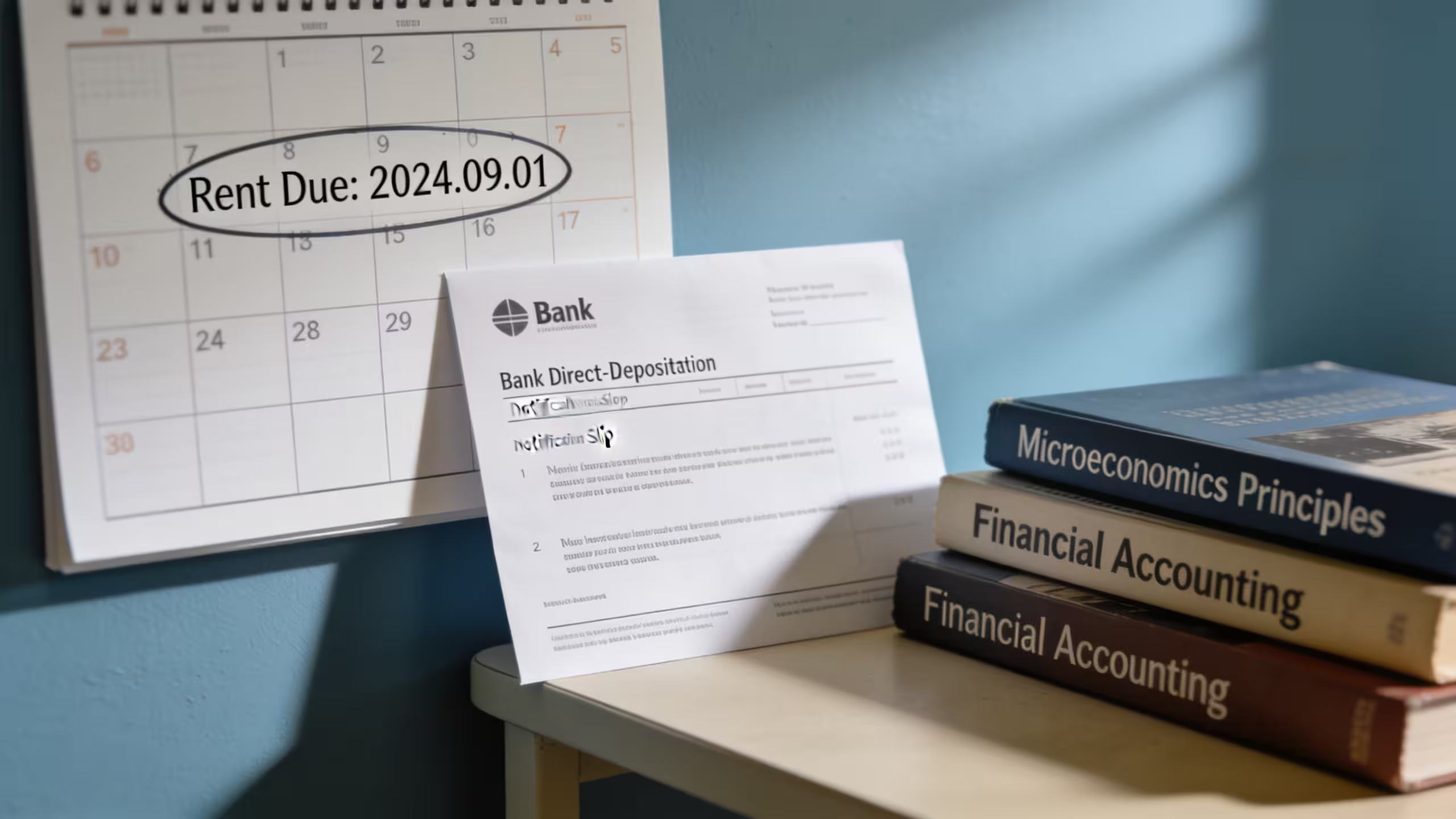
When reviewing loan applications, the cost of attendance figure, not the total loan amount you were approved for, is what actually determines how much rent money lands in your account.
| Cost of Attendance Component | What It Covers |
|---|---|
| Tuition and fees | Cost of enrollment, billed directly to your school account |
| Room and board | On-campus housing and meals, or an off-campus housing and food allowance |
| Books and supplies | Textbooks, course materials, required equipment |
| Transportation | Commuting costs or travel between home and school |
| Miscellaneous personal expenses | Phone, toiletries, and other day-to-day costs |
What Happens If Your Loan Refund Arrives After Your Rent Is Due?
Schools are not required to release every student’s refund on the first day of the term, and processing can take longer during the add or drop period. If your lease starts before your refund lands, ask your landlord whether a short grace period is possible, and ask your financial aid office whether an emergency disbursement or short-term advance is available for your situation. Building a small savings cushion before your first semester, even from a part-time summer job, removes most of the stress this timing gap causes.
Federal vs. Private Student Loans: Does the Type of Loan Change How Rent Money Reaches You?
The path your rent money takes is similar whether you borrow federal Direct Loans or a private loan from a bank or credit union. Both are sent to your school first and refunded to you afterward. The difference shows up in who controls the amount and the protections attached to it.
| Feature | Federal Direct Loans | Private Loans |
|---|---|---|
| Cosigner needed for most undergrads | No | Often yes |
| Who sets your borrowing limit | Cost of attendance set by your school | Cost of attendance, plus the lender’s own underwriting |
| Repayment flexibility if money gets tight later | Income-driven plans and deferment available | Set by individual lender, far more limited |
Should You Actually Use Loan Money for Rent? A Simple Way to Decide
Just because you can use student loans for rent does not always mean you should borrow the maximum your school allows. A simple framework helps separate a reasonable use of aid from unnecessary debt.
Decision framework:
If your refund comfortably covers your full lease term, set aside the rent for every remaining month before spending the rest on anything else.
If your refund falls short of your actual rent, talk to your financial aid office about a documented cost adjustment before you sign a lease you cannot otherwise afford.
What to Do With Money Left Over After Rent
A refund that is larger than expected is not free money. It is debt that accrues interest, often starting the day it is disbursed if your loan is unsubsidized. The Consumer Financial Protection Bureau recommends setting up direct deposit so your aid balance reaches your account faster than a paper check, and keeping leftover funds in a separate account earmarked for the months ahead rather than your everyday spending account.
Before You Sign a Lease: What to Check With Your Financial Aid Office
A few questions before move-in day can prevent a rent shortfall halfway through the semester.
- Confirm your off-campus housing allowance is officially included in your cost of attendance, not just assumed.
- Ask whether your school can adjust your budget for documented rent above its standard housing allowance.
- Set up direct deposit so your refund arrives as quickly as possible once it is released.
- Ask when the first disbursement of the term is scheduled, and compare that date to your move-in or rent due date.
These questions connect to the bigger funding picture. Our guide to how loan disbursement actually works walks through the full funding priority order, including why unsubsidized loan interest starts building the moment your rent refund is issued. A dedicated guide on using student loans for broader living expenses like groceries and transportation is also in development on this site.
For a complete look at federal and private student loans, including qualification, repayment, and what happens if payments are missed, see our complete student loan guide library.
FAQ: Can You Use Student Loans for Rent?
Can you use federal student loans to pay rent for an apartment off campus?
Yes, as long as your school’s cost of attendance includes an off-campus housing allowance. The loan is applied to your tuition and fees first, and any amount left over is refunded to you to cover rent, utilities, and other living costs included in that allowance.
Does the loan money get sent directly to my landlord?
No. Your loan funds go to your school first to cover tuition and fees. If anything is left over, your school sends that balance to you as a refund, usually by direct deposit or paper check, and you are responsible for paying your landlord yourself.
What if my cost of attendance does not cover my actual rent?
Contact your financial aid office before signing a lease you cannot otherwise afford. Many schools can perform a documented cost adjustment if your actual housing expense is higher than the standard allowance, though approval and the amount of any increase are decided case by case.
Can a Parent PLUS Loan cover my rent instead of my own student loans?
Yes, a Parent PLUS Loan follows the same cost of attendance limit and disbursement process as a student’s own federal loans. The refund can be issued to the parent borrower or, with the parent’s authorization on file with the school, released to the student instead.
Is it better to use student loans for rent or work a part-time job instead?
There is no universal answer, since it depends on your course load, your loan terms, and how much income a part-time job would realistically add. Borrowing less now generally means less interest over time, so it is worth weighing a smaller loan plus part-time income against borrowing the full amount your school allows.