Federal vs Private Student Loans: Key Differences That Actually Matter
By Laurel C. Yazzie | Last reviewed: July 2026
When it comes to paying for college, most students will need to borrow at some point. The central decision is almost always the same: federal vs private student loans. Federal loans come from the U.S. Department of Education. Private loans come from banks, credit unions, and online lenders. They work differently, cost differently, and protect you very differently when repayment becomes a challenge. Understanding those differences before you sign anything is one of the most important financial moves you will make.
If you are new to borrowing for school, our guide on how student loans work covers the foundational concepts before you dive into comparing loan types.
| Feature | Federal Student Loans | Private Student Loans |
|---|---|---|
| Issued by | U.S. Department of Education | Banks, credit unions, online lenders |
| Application | FAFSA (Free Application for Federal Student Aid) | Direct application with each lender |
| Credit check required | No (except PLUS loans) | Yes, required |
| Interest rate type | Fixed only | Fixed or variable |
| Rate determined by | Congress (same rate for all borrowers) | Lender (based on your credit profile) |
| Borrowing limit | Annual and lifetime caps set by law | Up to school’s full cost of attendance |
| Interest subsidy in school | Yes (Subsidized loans only) | No |
| Income-driven repayment | Yes (multiple plans, including new RAP) | Rarely available |
| Loan forgiveness programs | Yes (PSLF, IDR forgiveness, others) | No |
| Deferment and forbearance | Guaranteed options backed by law | Varies by lender, not guaranteed |
| Cosigner required | No | Often yes, especially for students |
What Are Federal Student Loans?
Federal student loans are issued by the U.S. Department of Education and accessed through the Free Application for Federal Student Aid, known as the FAFSA. Most undergraduate borrowers qualify with no credit check and no cosigner required. Interest rates are fixed by Congress each year and apply equally to every borrower, regardless of income or credit history.
Current federal loan types available to most students include:
- Direct Subsidized Loans: Available to undergraduates who demonstrate financial need. The government covers your interest while you are enrolled at least half-time, so your balance does not grow during school.
- Direct Unsubsidized Loans: Available to undergraduate, graduate, and professional students regardless of financial need. Interest accrues from the day the loan is disbursed and capitalizes if not paid during school.
- Parent PLUS Loans: Borrowed by parents of dependent undergraduates. A credit check is required. These loans cover costs beyond what the student receives in other aid, up to the school’s cost of attendance.
Important 2026 update: Federal student loan rules changed on July 1, 2026, under the One Big Beautiful Bill Act. The Grad PLUS Loan program was eliminated for new graduate borrowers. Parent PLUS loans are now capped at $20,000 per student per year, with a $65,000 lifetime limit per student. Undergraduate direct loan limits are unchanged. For current federal loan limits and annual interest rates, visit StudentAid.gov.
What Are Private Student Loans?
Private student loans come from banks, credit unions, and online lenders, not the federal government. Each lender sets its own interest rates, repayment terms, and eligibility criteria. Your rate depends on your credit score and income — or on a cosigner’s financial profile if you cannot qualify on your own.
Key characteristics of private student loans:
- No FAFSA required — you apply directly with the lender
- Interest accrues immediately, including while you are still in school
- Borrowing can go up to your school’s full cost of attendance
- Rates can be fixed or variable — variable rates can rise over time
- Repayment terms and hardship protections vary significantly by lender
- No guaranteed access to income-driven repayment or federal forgiveness
Do Private Student Loans Require a Cosigner?
Most students entering college have limited or no credit history, which makes qualifying for a private loan on their own difficult. Many private lenders require a creditworthy cosigner to approve the application or to offer a competitive rate. A cosigner shares full legal responsibility for the debt. If the primary borrower cannot pay, the cosigner is legally responsible for the full remaining balance.
If you want to explore borrowing without a cosigner, our guide on student loans without a cosigner walks through which loan types give you the most realistic options.
Federal vs Private Student Loans: Comparing the Key Details
The biggest practical difference between these two loan types comes down to protection. Federal loans carry built-in safeguards required by law. Private loans are governed by each individual lender’s policies, which can vary widely and which are not required to match federal standards.
What most people miss when comparing loan offers is that the interest rate is only one part of the total cost picture. Repayment flexibility, forgiveness eligibility, and what happens if you face financial hardship after graduation are equally important considerations. Federal loans hold an advantage on all three.
- Repayment flexibility: Federal borrowers can apply for income-driven repayment and reduce payments based on income. Private borrowers have no equivalent legal right.
- Forgiveness eligibility: Federal loans qualify for PSLF and income-driven repayment forgiveness. Private loans offer no forgiveness path of any kind.
- Hardship options: Federal deferment and forbearance are backed by statute. Private lender hardship programs are voluntary and can be discontinued at any time.
- Default consequences: Federal default has a structured resolution path including rehabilitation and consolidation. Private default proceeds like any consumer debt default.
In practice, many borrowers discover the true constraints of a private student loan only after graduation, when the repayment options they assumed existed simply are not there. A federal borrower who loses income after school can apply for income-driven repayment and reduce their payment to match what they can actually afford. A private borrower in the same situation has no equivalent legal right.
Interest Rates: Federal vs Private
Federal student loan interest rates are set by Congress and published annually by the U.S. Department of Education. Every borrower who takes out the same type of federal loan in the same year pays the same rate. It does not depend on your financial situation or credit history. Current rates for each loan type are listed at StudentAid.gov.
Federal loans also carry a small origination fee, deducted from the disbursed amount before funds are sent to your school. Most private lenders do not charge origination fees, though this varies by lender.
Private loan rates are set by each lender individually and tied directly to your creditworthiness. A borrower with a strong credit profile and a qualified cosigner may qualify for a rate lower than what federal loans currently offer. A borrower with limited credit or no cosigner will typically pay a higher rate. The Consumer Financial Protection Bureau recommends comparing multiple private lenders and reviewing all terms before committing, because rates, fees, and repayment protections differ from one lender to the next.
Key factors that determine your private student loan rate:
- Your credit score and length of credit history
- Whether you apply with a qualified cosigner
- Whether you choose a fixed or variable rate
- The repayment term you select (shorter terms often carry lower rates)
- The lender’s own pricing model and risk assessment criteria
Repayment Plans and Borrower Protections
Federal student loans offer several repayment options. The Standard Repayment Plan spreads payments evenly over 10 years. Borrowers who need lower monthly payments can apply for income-driven repayment plans, which cap monthly amounts based on income and family size. As of July 1, 2026, the new Repayment Assistance Plan (RAP) is available to federal borrowers as an additional income-based option, with remaining balances eligible for forgiveness after a set number of qualifying payments.
Borrowers in qualifying public service or nonprofit jobs may also be eligible for Public Service Loan Forgiveness (PSLF), which cancels remaining balances after 10 years of on-time payments in a qualifying role. Private loans offer no equivalent forgiveness program.
Federal borrower protections backed by law include:
- Deferment during periods of enrollment, unemployment, or financial hardship
- Forbearance to temporarily pause payments without entering default
- Income-driven repayment with a formal path to balance forgiveness
- Discharge of remaining debt in cases of total and permanent disability or death of the borrower
What Happens If You Cannot Repay a Private Student Loan?
This is the question most comparison articles skip, and it matters more than the rate comparison for many borrowers. Federal loan holders in financial hardship have legal options. They can apply for income-driven repayment, which can reduce the monthly payment to as little as zero depending on income. Private student loans carry no such guarantee.
A private loan that enters default can be sent to a collection agency, result in a civil lawsuit, and lead to wage garnishment, all without the structured relief options that federal borrowers receive by law. Some private lenders offer voluntary forbearance or hardship programs, but these are not required and can be discontinued at the lender’s discretion. Terms differ widely, and many borrowers learn what those terms actually mean only when they need relief.
In reviewing hundreds of loan applications over a decade in consumer lending, the detail most borrowers miss is that private student loans are legally structured like any other consumer debt. There is no federal safety net if repayment becomes impossible after graduation. That asymmetry in risk matters more than the interest rate difference alone, especially for borrowers entering fields with unpredictable early incomes.
Which Loan Type Should You Choose?
For most students, the answer is straightforward: use federal loans first and treat private loans as a last resort to fill any remaining funding gap. The repayment protections and forgiveness options alone make federal loans the safer default for the vast majority of borrowers.
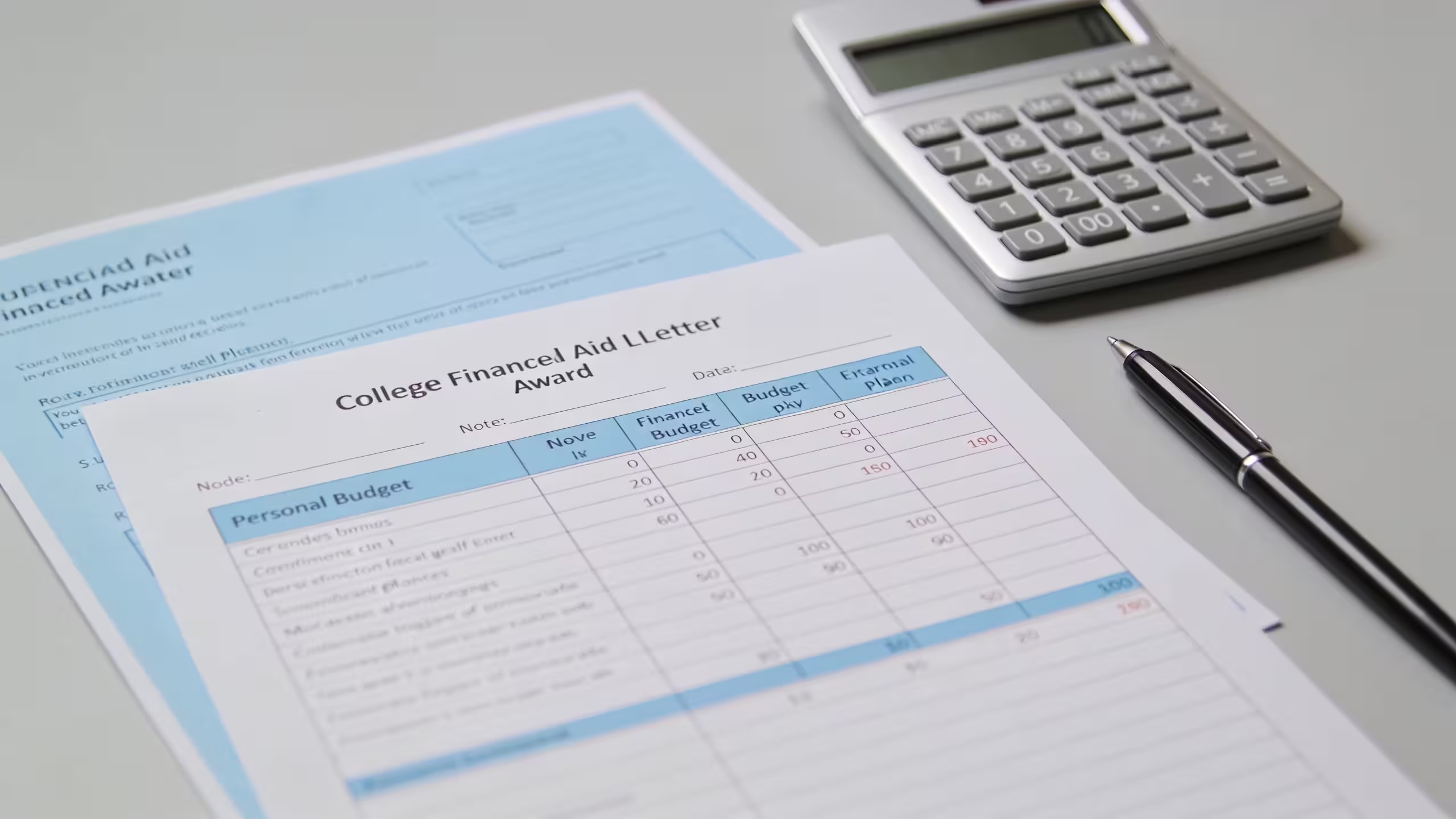
Decision Framework: Which Loan Is Right for You?
If your federal loan eligibility covers your full school costs: Use only federal loans. Do not add private debt unless you have exhausted every other option, including grants, scholarships, and work-study programs.
If federal loans fall short AND you or a cosigner has strong credit: Compare private lenders carefully. Look at the total repayment cost over the full loan term, not just the monthly payment. Ask each lender explicitly what hardship options they offer before you sign.
If federal loans fall short AND your credit or cosigner options are limited: Exhaust every federal option first. Review whether your school offers institutional aid or emergency loans. A private loan with a high rate and no repayment flexibility can become a serious financial burden in the years after graduation.
For a complete overview of all student borrowing options, including how to prepare your FAFSA and which loan types fit different enrollment situations, see our complete student loan guide.
Which Student Loan Fits Your Situation?
Answer three questions to get a plain-language recommendation.
1. Will your federal loan eligibility cover all of your school costs?
2. Do you or a cosigner have strong or established credit?
3. Do you plan to work in public service or pursue federal loan forgiveness?