What Is a Secured Small Business Loan?
By Laurel C. Yazzie | Last reviewed: July 2026
When you apply for business financing, one of the first things a lender will ask is whether you can back the loan with collateral. A secured small business loan is a type of business debt where you pledge an asset, such as real estate or equipment, to give the lender a legal claim on that property. If you stop making payments, the lender can use that claim to seize and sell the asset to cover what you owe.
Secured small business loan: A secured small business loan is a type of business financing that requires the borrower to pledge assets as collateral. The lender holds a legal claim on those assets through a document called a UCC lien. If the borrower fails to repay, the lender can seize and sell the collateral to recover their losses.
In reviewing hundreds of loan applications over a decade in consumer lending, the detail most borrowers miss is that pledging collateral and signing a personal guarantee are two separate commitments a lender can require at the same time. Many people assume one replaces the other. They do not.
What Is a Secured Small Business Loan?
A secured small business loan ties the financing to a specific asset or group of assets. Because the lender has a way to recover its money if you default, secured loans typically offer more favorable terms than unsecured alternatives. The trade-off is that the pledged asset is genuinely at risk if you fall behind on payments.
Lenders generally accept the following as collateral:
- Commercial real estate or other property the business owns
- Business equipment such as machinery, vehicles, or technology hardware
- Inventory held for sale
- Accounts receivable (money your customers owe you)
- Personal real estate, if the business does not own assets of sufficient value
The value a lender assigns to your collateral is often lower than the market value you expect. Lenders apply a discount because selling seized assets takes time and rarely returns full market price.
How a Secured Business Loan Works
When a secured loan is approved, the lender files a legal document called a UCC lien (Uniform Commercial Code lien) with the appropriate state office. This filing creates a public record of the lender’s claim on the pledged collateral. Any other lender who later considers extending credit against the same asset can see the existing claim and factor it into their decision. The lien does not mean the lender owns the asset, but it gives the lender first priority to that asset if the loan goes into default.
There are two types of UCC liens you may encounter:
| Lien Type | What It Covers | Commonly Used With |
|---|---|---|
| Specific asset lien | One named asset, such as a piece of equipment, a vehicle, or a building | Equipment financing, commercial real estate loans |
| Blanket lien | All current and future business assets, including assets acquired after the loan is made | Term loans, SBA loans, business lines of credit |
A blanket lien is a broader commitment. If you agree to one, the lender can claim any business asset, not just the one you had in mind when you signed. Read the loan agreement carefully to confirm which type applies before you close.
For a broader look at how business debt is structured, repaid, and priced, see our guide on how small business loans work.
Common Types of Secured Small Business Loans
Several loan products are built around collateral requirements. Some require assets you already own; others create collateral through the purchase itself.
- SBA 7(a) loans: The U.S. Small Business Administration guarantees a portion of these loans through approved lenders. Collateral is generally required for loans above $50,000, though the SBA will not decline a loan solely because collateral is insufficient if the borrower is otherwise qualified.
- SBA 504 loans: Long-term, fixed-rate financing for major fixed assets such as real estate or equipment. Loan amounts and project eligibility criteria are defined by the SBA 504 loan program. The purchased asset typically serves as the primary collateral.
- Equipment financing: The equipment you buy serves as its own collateral. If you stop paying, the lender can repossess the equipment directly. No separate asset pledge is usually required.
- Secured business term loans: A lump sum repaid on a fixed schedule, backed by real estate, equipment, inventory, or a blanket lien on all business assets.
- Secured business line of credit: A revolving credit limit backed by collateral, often accounts receivable or inventory, that you draw on as needed and repay on an ongoing basis.
What Can You Use as Collateral for a Business Loan?
In practice, many borrowers offer the asset they have the most equity in, which is often commercial real estate or high-value equipment. Lenders generally prefer assets that hold their value well and can be converted to cash relatively quickly if needed.
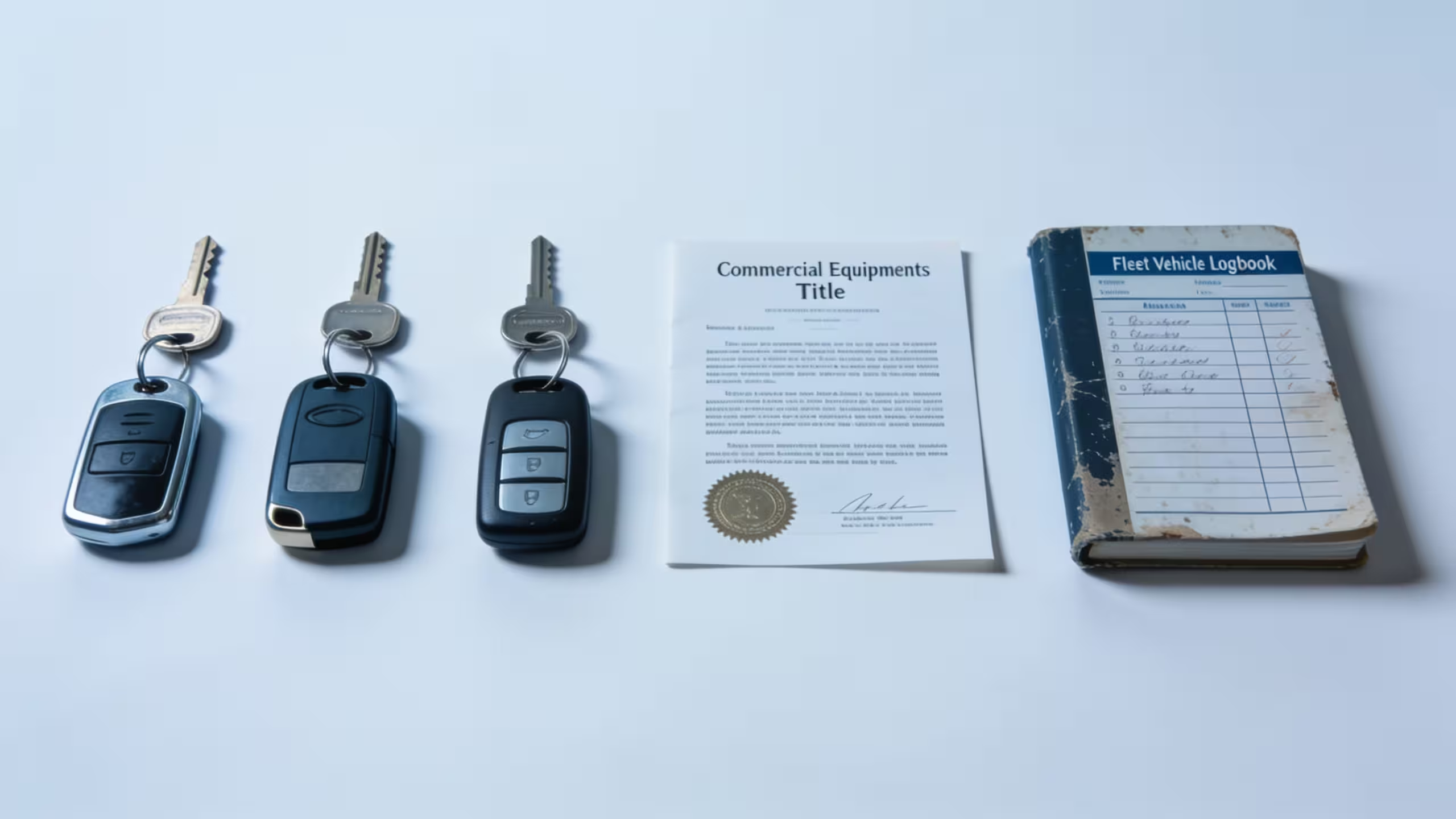
Assets commonly accepted as collateral include:
- Commercial or investment real estate your business owns
- Manufacturing, construction, or specialized trade equipment
- Business vehicles with clear title
- Inventory with a stable and verifiable resale market
- Outstanding customer invoices (accounts receivable)
- Personal real estate, if your business assets are not sufficient on their own
One condition to check before applying: if a lender has already placed a lien on an asset you own, you may not be able to use that same asset to secure a new loan from a different lender. Review your existing loan agreements for any prior lien filings before approaching additional lenders.
What Happens If You Default on a Secured Business Loan?
Defaulting on a secured loan puts the collateral at direct risk and sets a legal process in motion. Once you are in default, the lender can enforce the UCC lien by taking possession of the pledged asset. For commercial real estate, this typically requires a formal foreclosure process, which varies by state and can take months. For equipment, vehicles, or inventory under a specific asset lien, the timeline may be shorter. The lender sells the collateral and applies the proceeds to the outstanding loan balance.
If the sale price does not cover the full amount owed, you may still be responsible for the remaining difference, which is called a deficiency balance. If you also signed a personal guarantee alongside the loan, the lender can pursue your personal assets for that deficiency. Before closing on any secured loan, confirm in the loan documents whether a personal guarantee is also required and what the deficiency terms are if collateral proceeds do not cover the full balance owed.
Secured vs. Unsecured Business Loan: Which One Is Right for You?
Neither loan type is universally better. The right choice depends on what your business owns, your credit profile, and the amount you need to borrow. The framework below is designed to help you identify which path fits your situation without overcomplicating the decision.
Decision Framework: Secured vs. Unsecured Business Loan
Choose a secured loan if:
- Your business owns real estate, equipment, or significant inventory you can pledge
- You want to qualify for lower interest rates and are willing to put assets at risk to get them
- Your credit history is limited or your score falls below what most unsecured lenders require
- You need to borrow a larger amount than unsecured lending typically supports
Choose an unsecured loan if:
- Your business has strong revenue and an established credit profile
- You do not own assets of sufficient value to use as collateral
- You want to keep your assets free from lender claims or UCC liens
- You need a smaller amount and can qualify based on creditworthiness alone
If collateral is the sticking point, several financing options do not require it. Our guide to business loans without collateral covers the main alternatives and what lenders look for instead of pledged assets.
For a complete overview of your small business financing options, visit our small business loan resource hub.
FAQ: What Is a Secured Small Business Loan?
Tap any question to expand the answer.
What is a secured small business loan?
A secured small business loan is a type of business financing in which the borrower pledges one or more assets as collateral to back the debt. The lender records its legal claim on that collateral through a UCC lien filing. If the borrower defaults, the lender has the legal right to seize and sell the collateral to recover the outstanding balance. Common forms of collateral include commercial real estate, equipment, inventory, and accounts receivable.
What is the difference between a blanket lien and a specific asset lien?
A specific asset lien gives the lender a claim on one named asset, such as a particular piece of equipment or a specific building, and nothing else. A blanket lien, by contrast, gives the lender a claim on all current and future business assets, including property the borrower acquires after the loan is made. Blanket liens are more commonly used with term loans, SBA loans, and business lines of credit. Borrowers should confirm which type applies to their loan by reading the UCC filing language in their loan agreement before signing.
Are SBA loans considered secured small business loans?
Most SBA loan programs do require collateral and are therefore considered secured loans. For the SBA 7(a) program, collateral is generally required for loans above $50,000, though the SBA states it will not decline a loan solely because a borrower cannot fully collateralize the amount requested. SBA 504 loans, which finance major fixed assets such as real estate or equipment, use the purchased asset itself as the primary collateral. Borrowers should consult an SBA-approved lender to understand the specific collateral requirements that apply to their loan type and amount.
Is a personal guarantee the same as collateral?
No. Collateral is a specific asset the borrower pledges to back the loan, and the lender’s claim on it is recorded through a UCC lien. A personal guarantee is a separate legal agreement in which the business owner agrees to be personally responsible for the debt if the business cannot repay it. Lenders can, and often do, require both at the same time. If a borrower defaults on a secured loan and the collateral sale does not cover the full balance, a lender holding a personal guarantee can then pursue the borrower’s personal assets for the remaining deficiency.