Can You Get Student Loans for Online College?
By Laurel C. Yazzie | Last reviewed: June 2026
More students than ever are earning degrees without ever setting foot on a physical campus. If you are considering an online program, one of the first questions you will likely ask is whether financial aid still applies to you. The short answer is yes, but the details matter. You can get student loans for online college, provided your school meets specific federal requirements.
Can You Get Student Loans for Online College: Yes, you can get student loans for online college. Federal loans are available if your school participates in Title IV federal aid programs. Private loans are also an option. In both cases, your school must be accredited by a U.S. Department of Education-recognized agency.
Having worked directly with clients on loan applications for online programs, the most common mistake I saw was assuming any accredited school automatically qualifies for federal aid. That is not always true, and the distinction can affect thousands of dollars in available funding.
Can You Get Student Loans for Online College?
Yes. Online students can access the same loan programs available to on-campus students, as long as the school and program meet federal eligibility standards. The key requirement for federal loans is that your school must participate in the Title IV federal student aid program, which is administered by the U.S. Department of Education’s Federal Student Aid office.
Private student loans from banks and credit unions are also available for online students. Private lenders set their own eligibility rules, but most require that your school be accredited.
The main federal loan types available to online students include:
- Direct Subsidized Loans: For undergraduate students with demonstrated financial need. The government covers interest while you are enrolled at least half-time.
- Direct Unsubsidized Loans: Available to undergraduate and graduate students regardless of financial need. Interest accrues from the day funds are disbursed.
- Direct PLUS Loans: Available to graduate students (Grad PLUS) and parents of undergraduates (Parent PLUS). Require a credit check. Note that Grad PLUS loans are scheduled to be eliminated from the federal aid program starting July 2026; confirm current availability at StudentAid.gov before applying.
- Private Student Loans: Offered by banks, credit unions, and online lenders. Approval typically depends on credit score and, for undergraduate borrowers, often requires a cosigner.
What Makes an Online School Eligible for Student Loans?
Not every online program qualifies for federal financial aid. Two conditions must both be true for your school to be eligible for federal student loans.
According to the Consumer Financial Protection Bureau, borrowers should verify school eligibility before enrolling if they plan to rely on federal aid. Here is how to do it in two steps:
- Confirm accreditation: Look up your school using the U.S. Department of Education’s Database of Accredited Postsecondary Institutions and Programs at ope.ed.gov/dapip.
- Confirm Title IV participation: Use the School Search tool at studentaid.gov to confirm your school participates in federal aid programs.
If your school passes both checks, you can apply for federal loans using the FAFSA. If it fails either check, federal loans are not available for that program.
What If My School Is Accredited but Not Title IV-Eligible?
Some legitimate online programs, including many coding bootcamps and professional certificate courses, are offered through accredited institutions but are not Title IV-eligible. In that case, federal student loans are not an option for that specific program. You would need to apply directly to private lenders, who each set their own accreditation requirements. From a practical standpoint, it is worth calling the school’s financial aid office directly before enrolling to confirm which types of aid they can process. Skipping that step is one of the most common and costly errors online students make.
How to Apply for Student Loans as an Online Student
The application process for federal student loans is the same whether you attend class in person or online. Here are the steps:
- Create a Federal Student Aid ID (FSA ID) at studentaid.gov. You will use this to sign the FAFSA electronically.
- Complete the FAFSA (Free Application for Federal Student Aid) each academic year at studentaid.gov. List your online school’s Federal School Code on the form.
- Review your Student Aid Report (SAR), which summarizes the information you submitted and flags any corrections needed.
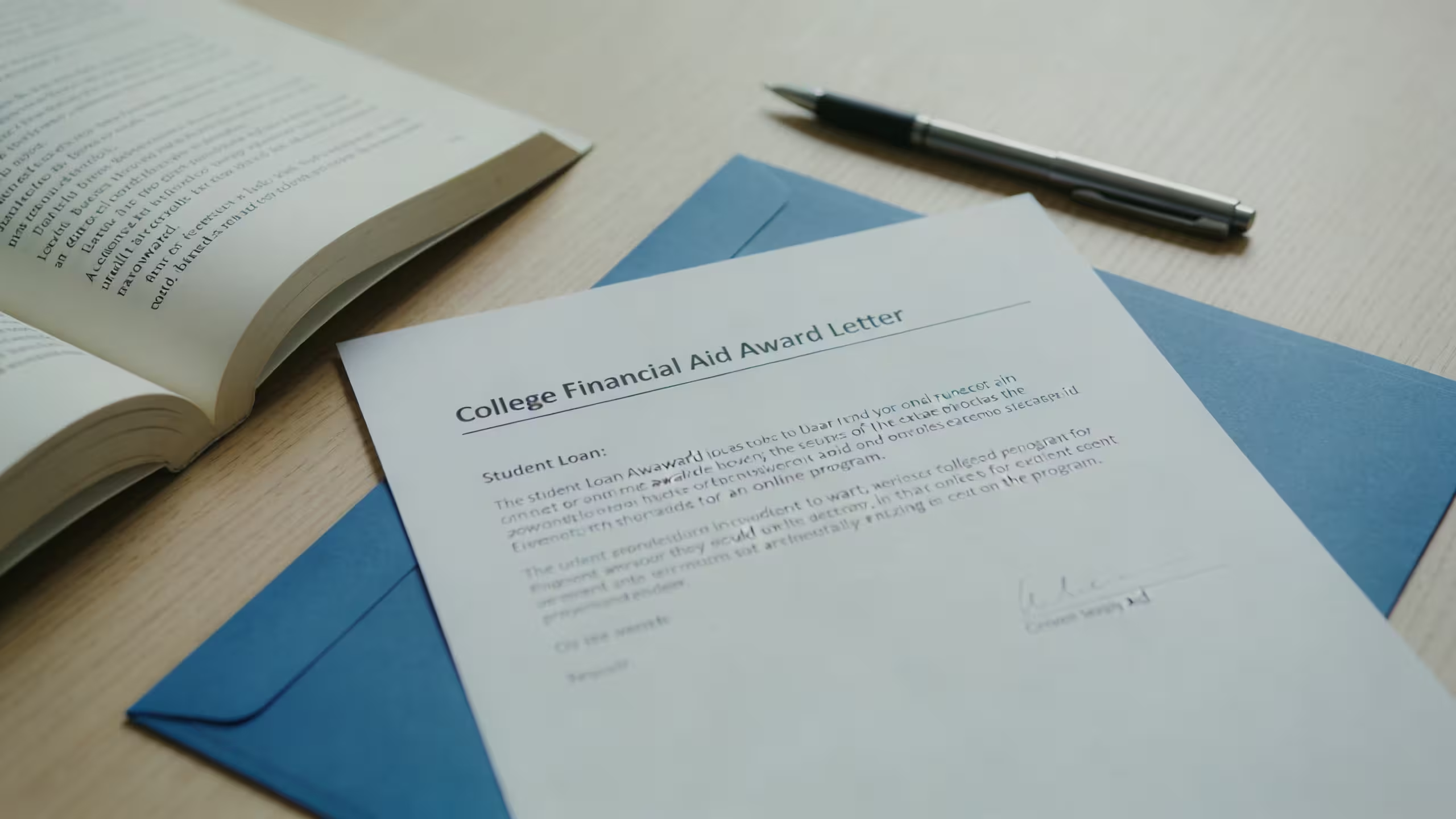
- Accept your award letter from your school’s financial aid office. You do not have to accept every loan offered. Accept only what you need.
- Complete entrance counseling and sign a Master Promissory Note (MPN) before any funds are disbursed. Both are completed online at studentaid.gov.
Does Enrollment Status Affect How Much You Can Borrow?
Yes, and this is a detail that catches many online students off guard. Federal loan limits are tied to whether you are enrolled full-time, half-time, or less than half-time. If you enroll in fewer credits than half-time, your annual loan limits are reduced. Part-time online students may find that federal aid alone does not cover their total costs, which is where private loans or employer tuition assistance programs can fill the gap. If you are unsure how your enrollment status is classified, contact your school’s registrar before the semester begins.
Federal Loans vs. Private Loans for Online Students
Choosing between federal and private loans is one of the most important decisions you will make as an online student. The decision is not complicated once you know which category your school falls into.
What most people miss when comparing loan offers is that federal loans come with borrower protections, such as income-driven repayment and Public Service Loan Forgiveness, that private loans do not offer. Those protections have real dollar value over a 10- to 20-year repayment period.
Decision Framework: Which Loan Path Applies to You?
If your school is Title IV-eligible: Apply via the FAFSA first. Federal loans offer the strongest protections and lowest fixed rates. Use private loans only to cover any gap after exhausting federal limits.
If your school is accredited but not Title IV-eligible: Federal loans are not available. Apply directly to private lenders. Compare at least two or three lenders, and check whether you need a cosigner.
If your school is neither accredited nor Title IV-eligible: Federal and most private student loans will not apply to that program. Explore employer tuition assistance, personal loans, or payment plans offered by the school directly.
For a deeper look at how student loans work from the beginning, see our guide on how student loans work for beginners. If credit is a concern, our article on getting student loans with bad credit covers your options in detail.
Three Mistakes Online Students Make When Borrowing
In practice, many borrowers sign their Master Promissory Note without fully reading the terms, especially the interest accrual rules for unsubsidized loans. Here are the three errors that come up most often:
- Not checking Title IV eligibility before enrolling. If you enroll in a non-qualifying program expecting federal aid, you may be left scrambling for alternatives at the last minute.
- Borrowing the maximum offered instead of what they need. Your award letter may offer more than your actual tuition and fees. Every dollar you borrow must be repaid with interest.
- Skipping the cosigner conversation for private loans. If you are an undergraduate borrower without established credit, most private lenders will require a cosigner. Understanding this upfront prevents delays. For a full breakdown of that process, see our page on student loans without a cosigner.
For a broader overview of all your borrowing options in one place, the student loans hub page covers every major topic in this series.
FAQ: Can You Get Student Loans for Online College?
Do online students qualify for the same federal loans as on-campus students?
Yes. Online students enrolled in a Title IV-eligible school qualify for Direct Subsidized Loans, Direct Unsubsidized Loans, and PLUS Loans under the same rules as on-campus students. The type and amount of federal aid you receive depends on your enrollment status (full-time, half-time, or less than half-time), your year in school, and your financial need for subsidized loans. You apply through the FAFSA just as any other student would.
How do I know if my online school accepts the FAFSA?
Use the School Search tool at studentaid.gov to look up your school by name or Federal School Code. If the school appears and is listed as participating in federal aid programs, you can include it on your FAFSA. You can also call the school’s financial aid office directly and ask whether the specific program you are enrolling in qualifies for Title IV federal student aid, since not every program at a participating school automatically qualifies.
Can I get student loans for a fully online certificate program?
It depends on whether the certificate program is offered through a Title IV-eligible institution and whether the certificate itself meets the program-length requirements set by the U.S. Department of Education. Some short-term certificate programs offered through accredited universities do qualify for federal aid. Others, including many coding bootcamps and professional certificates offered by private companies, do not. Always verify at studentaid.gov before enrolling if federal aid is part of your plan.
What happens to my student loans if I drop below half-time enrollment?
If you drop below half-time enrollment, your in-school deferment period for federal loans typically ends, and a grace period (usually six months for Direct Loans) begins before repayment is required. For subsidized loans, the government stops covering the interest once you fall below half-time, so interest begins accumulating. This is especially important for online students who take courses at a reduced pace, since each semester below half-time accelerates the timeline to repayment. Contact your loan servicer as soon as your enrollment status changes.
Are private student loans easier to get for online college than federal loans?
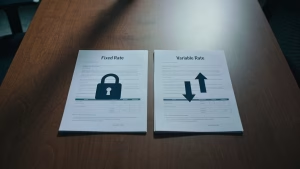
Not necessarily. Private lenders have their own accreditation requirements, and most will not lend for programs at unaccredited schools. For accredited online programs, private loans can be faster to process than federal loans, but they typically require a credit check and, for undergraduate students, often require a cosigner. Federal loans have fixed interest rates and borrower protections that private loans do not offer, so financial aid professionals generally recommend exhausting federal options first.