Best Student Loans for Community College in 2026
By Laurel C. Yazzie | Last reviewed: November 2026
Community college is one of the most affordable paths to a degree in the United States, but tuition, fees, and books can still leave a gap. If grants and savings fall short, knowing which are the best student loans for community college, and in what order to use them, can save you a significant amount of money over time.
In reviewing hundreds of loan applications over a decade in consumer lending, the detail most borrowers miss is that federal loan limits for community college students are identical to those at four-year universities. Many assume they will qualify for less. That assumption costs them real money.
This guide compares every major option, from federal Direct Loans to vetted private lenders, and gives you a clear sequence to follow.
Try Free Money First: Grants and Scholarships
Before taking on any loan, apply for aid that never needs to be repaid. Most federal aid starts with one application.
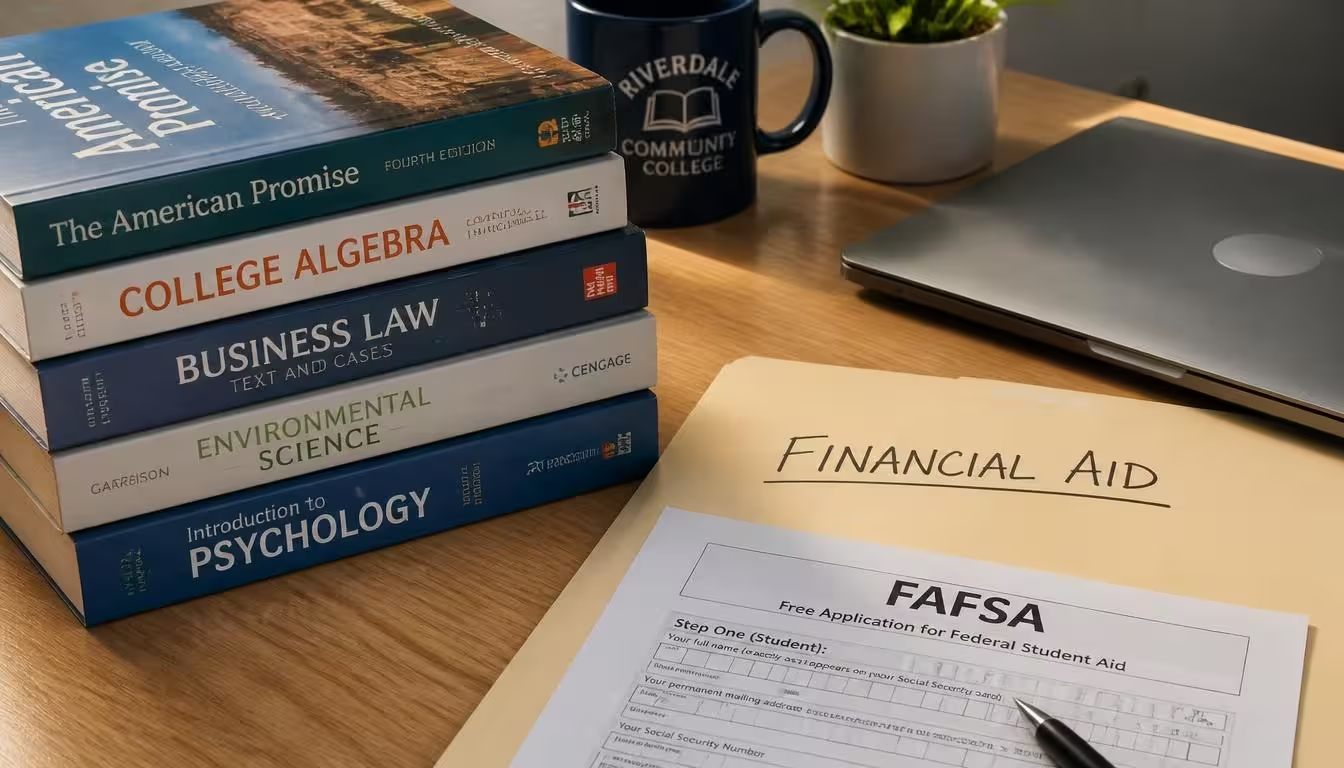
- Complete the FAFSA: The Free Application for Federal Student Aid, available at studentaid.gov, determines your eligibility for federal grants, work-study programs, and federal loans all in one submission.
- Pell Grant: The federal Pell Grant provides need-based aid you do not have to repay. Community college students are commonly eligible, and the award can cover a large share of tuition at a two-year school.
- State grants: Many states run their own grant programs for community college students. Deadlines vary by state, so contact your financial aid office early each semester.
- Institutional scholarships: Many community colleges award merit-based and need-based scholarships directly from the school. Ask the financial aid office what is available before each term’s deadline.
Only after exhausting grants and scholarships should you consider loans. And among loan options, federal comes before private every time.
Best Federal Student Loans for Community College
Federal Direct Loans are the right starting point for most community college students. According to the Consumer Financial Protection Bureau, federal student loans come with fixed interest rates, flexible repayment plans, and borrower protections that private lenders are not required to offer. Eligibility for federal loans does not depend on credit history.
The table below shows annual and aggregate borrowing limits, sourced directly from StudentAid.gov. These limits apply to community college students the same as any other undergraduate.
| Year in School | Dependent Student — Annual Limit | Independent Student — Annual Limit | Max Subsidized Per Year |
|---|---|---|---|
| Year 1 | $5,500 | $9,500 | $3,500 |
| Year 2 | $6,500 | $10,500 | $4,500 |
| Aggregate Limit | $31,000 | $57,500 | $23,000 |
Source: StudentAid.gov — limits for Direct Subsidized and Unsubsidized Loans combined, effective for the 2025-2026 academic year.
Direct Subsidized Loans
The Direct Subsidized Loan is the most affordable federal option available. The government covers the interest while you are enrolled at least half-time, during the six-month grace period after leaving school, and during approved deferment. The fixed interest rate for loans disbursed July 1, 2025 through June 30, 2026 is 6.39%, as published at StudentAid.gov.
Eligibility is based on demonstrated financial need, as determined by your FAFSA. You must be enrolled at least half-time in a program that qualifies for federal financial aid.
Direct Unsubsidized Loans
If you do not qualify for the subsidized version, or need to borrow beyond the subsidized limit, the Direct Unsubsidized Loan is available to all eligible students regardless of financial need. The same 6.39% fixed rate applies for 2025-2026. The key difference: interest begins accruing from the moment the loan is disbursed. If you do not pay the interest while in school, it is added to your principal balance when repayment begins, increasing your total repayment cost.
For a detailed side-by-side explanation of these two loan types, see our guide on subsidized vs. unsubsidized loan details.
What If Your Community College Does Not Offer Federal Loans?
Some community colleges opt out of the federal Direct Loan program. This is more common than many students expect. If your school has opted out, you will not be able to borrow a Direct Subsidized or Unsubsidized Loan through that institution even if you meet every other eligibility requirement.
If you discover this is the case, take these steps before turning to a commercial private lender: confirm the situation in writing with the financial aid office, check whether your state operates a nonprofit student loan authority program, and apply for every grant and scholarship available. Switching to a school that does participate in federal aid programs is also worth considering before accepting private loan terms.
Best Private Student Loans for Community College
Private student loans should be used only after federal options are exhausted. In practice, many borrowers find that federal aid and grants cover a significant portion of community college costs, leaving no need for private borrowing at all. When a funding gap remains, several private lenders work specifically with community college students. Not all private lenders do, so verifying school eligibility before applying is essential.

The lenders below are real, verifiable US companies confirmed to work with community college borrowers based on their published eligibility criteria at the time of writing. Rates, terms, and eligibility requirements are set by each lender and can change. Always confirm current terms directly with the lender before applying.
| Lender | Cosigner Required? | Works With Community Colleges? | Best For |
|---|---|---|---|
| College Ave | No (helps with approval) | Yes | Flexible repayment options, low loan minimums |
| Sallie Mae | No (helps with rates) | Yes | Extended grace period, no origination fee |
| Ascent | No (outcomes-based option available) | Yes | Students without a cosigner; also available less than half-time |
| Earnest | No | Yes | No origination, late payment, or prepayment fees |
| RISLA | No | Yes | Nonprofit lender, competitive fixed rates, income-based repayment option |
Private loan APRs vary by lender, creditworthiness, enrollment status, and loan term. Confirm your school’s eligibility on each lender’s website before applying. Verify current terms directly with the lender at the time of application.
Key Factors to Compare Before You Apply
What most people miss when comparing loan offers is that the rate is only one piece of the picture. When evaluating private lenders for community college, check these factors in addition to the advertised APR:
- School eligibility: Confirm your specific college appears on the lender’s approved school list.
- Enrollment requirements: Some lenders require at least half-time enrollment. Others, like Ascent, accept less-than-half-time students.
- Repayment options while in school: Deferred repayment increases your total balance; interest-only or flat payments reduce total cost.
- Cosigner release: If you use a cosigner, check whether and when the lender allows them to be removed from the loan.
- Fees: Origination and prepayment fees can meaningfully change the total cost of borrowing even when the stated APR looks competitive.
Federal vs. Private Student Loans: A Decision Framework
Choosing between federal and private loans is not primarily about which has a lower rate today. It is about which protections you need and which options you want to keep open in the future. Federal loans come with income-driven repayment plans and forgiveness programs that private lenders are not required to offer. For a full breakdown of how these two categories differ in terms of repayment and risk, see our guide on how federal and private loans compare.
Decision Framework: Which Loan Type Should You Use?
- If you have demonstrated financial need and are enrolled at least half-time: Start with a Direct Subsidized Loan. The government pays your interest while you are in school.
- If you do not qualify for subsidized aid, or need to borrow more than the subsidized limit allows: Use a Direct Unsubsidized Loan next. Same fixed rate, but interest accrues from day one.
- If you have reached your federal borrowing limit or your school does not participate in federal programs: Look into your state’s nonprofit student loan authority before turning to commercial private lenders.
- If all federal and state/nonprofit options are exhausted: Compare at least two private lenders side by side. A creditworthy cosigner can improve your approval odds and may lower your rate.
How to Apply for Student Loans at a Community College
The federal loan application process is straightforward once you know the steps. Private loans follow a separate path after federal options are settled.
- Complete the FAFSA at studentaid.gov. Use the form for the current academic year. Enter your community college’s federal school code. This single application simultaneously determines your eligibility for federal grants, work-study, and federal loans.
- Review your financial aid award letter. Your school will send a breakdown of the grants, scholarships, work-study, and federal loans you qualify for. You are not required to accept any loan automatically.
- Accept only what you need to cover the gap. Every dollar borrowed must be repaid with interest. Take the minimum amount required after grants and scholarships are applied.
- Complete Entrance Counseling and sign a Master Promissory Note (MPN) at studentaid.gov. These two steps are required by federal law before any Direct Loan funds can be disbursed.
- Apply for private loans only if a funding gap remains. Gather your school’s enrollment verification, apply with a cosigner if possible, compare at least two lenders, and confirm your school is on the lender’s eligible school list before submitting.
Funding timelines vary by lender. Ask any private lender about their disbursement schedule before you apply so your funds arrive in time for tuition due dates.
FAQ: Best Student Loans for Community College
- Federal Direct Loans do not require a credit check or cosigner for undergraduate borrowers.
- You must be enrolled at least half-time at a school that participates in federal aid programs.
- Private loans should fill gaps only after federal options are exhausted.
- Always borrow only what you need: every dollar borrowed is a dollar repaid with interest later.
Can community college students get federal student loans?
Yes, as long as your school participates in the federal Direct Loan program and you are enrolled at least half-time in an eligible academic program. The process starts with completing the FAFSA at studentaid.gov. Keep in mind that some community colleges opt out of federal loan programs entirely, so confirming with your financial aid office before you apply is an important first step.
Do I need a cosigner for a community college student loan?
Federal Direct Loans do not require a cosigner or a traditional credit check for undergraduate borrowers. Private loans typically require either a strong personal credit history or a creditworthy cosigner. If you have limited or no credit history, applying with a cosigner can improve your approval odds and may help you qualify for a lower interest rate. Some private lenders, such as Ascent, offer non-credit-based options for students who cannot provide a cosigner.
Should I borrow more than I need for community college?
No. Borrow only the amount needed to cover the gap between your cost of attendance and your grants, scholarships, and savings. Overborrowing increases your total debt and the interest you pay over the life of the loan. For federal loans, you can decline or reduce your award in your financial aid portal before funds are disbursed. It is easier to borrow less now than to pay off extra debt later.
For a broader overview of all your borrowing options, visit our complete student loans guide.
Community College Loan Comparison Tool
Filter by loan category, then click any row to highlight it for comparison. Federal loans are always the best starting point.
| Loan Type | Category | Credit Check? | Interest While Enrolled? | Repayment Protections | Best First Choice? |
|---|---|---|---|---|---|
| Direct Subsidized | Federal | No | No — govt pays it while enrolled | Income-driven repayment, forgiveness programs | Yes — start here |
| Direct Unsubsidized | Federal | No | Yes — accrues from disbursement | Income-driven repayment, forgiveness programs | Yes — use if no subsidized |
| State / Nonprofit Loans | Nonprofit | Usually yes | Yes | Varies — often includes hardship options | Second choice if federal is unavailable |
| College Ave | Private | Yes | Yes | Limited — lender-specific only | Last resort after federal and nonprofit |
| Sallie Mae | Private | Yes | Yes | Limited — lender-specific only | Last resort after federal and nonprofit |
| Ascent | Private | Yes (or outcomes-based) | Yes | Limited — lender-specific only | Last resort; cosigner-free option available |
| Earnest | Private | Yes | Yes | Limited — lender-specific only | Last resort; no-fee borrowing |
| RISLA | Private | Yes | Yes | Income-based repayment available | Last resort; strongest nonprofit-style terms |
Private loan rates vary by lender, creditworthiness, and enrollment status. Verify your school’s eligibility and current terms directly with each lender before applying. Federal loan rate of 6.39% fixed is for loans disbursed July 1, 2025 through June 30, 2026, per StudentAid.gov.