How Long Does a Business Loan Take to Get Approved?
By Laurel C. Yazzie | Last reviewed: July 2026
Whether you need cash to cover payroll, buy equipment, or expand to a second location, timing matters. The business loan approval process follows a predictable pattern once you understand its stages. The answer to how long a business loan takes to get approved depends on three things: the type of loan you choose, the lender you work with, and how prepared you are when you apply.
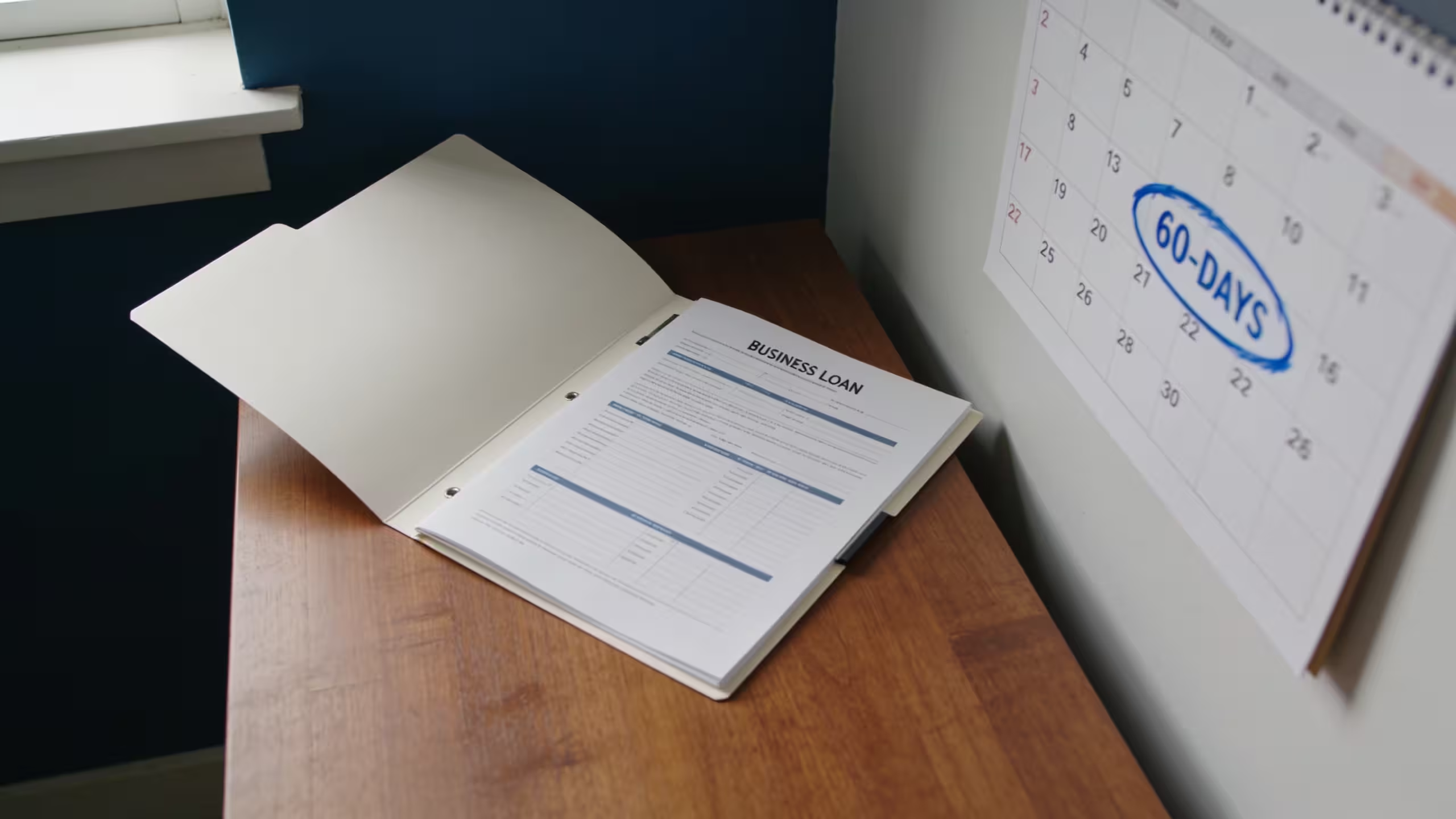
How long does a business loan take to get approved: the timeline varies widely by loan type. According to the U.S. Small Business Administration, SBA loans typically take 60 to 90 days from application to closing. Online lenders often move considerably faster. The lender type, loan size, and your documentation readiness all affect the final timeline.
How Long Does a Business Loan Take to Get Approved?
The biggest single variable is lender type. A bank that manually reviews every application operates on a very different timeline than a fintech platform using automated underwriting. Loan size and purpose also play a role: real estate loans and business acquisitions require third-party appraisals and additional documentation, which adds weeks to any timeline regardless of lender.
Use this framework to match your funding need to the right loan category before you apply:
If You Need Funding In…
| Time Frame Needed | Type of Product to Explore |
|---|---|
| Under 48 hours | Short-term online loans, invoice factoring, merchant cash advances (timelines vary by lender; confirm before applying) |
| 1 to 2 weeks | Online term loans, online business lines of credit |
| 2 to 6 weeks | Community bank loans, credit union loans |
| 60 to 90+ days | SBA 7(a) standard loans, SBA CDC/504 loans |
Timelines are general categories based on loan program structure. Funding timelines vary by lender. always confirm current processing time before applying.
Business Loan Approval Times by Loan Type
Different loan products have very different processing structures. SBA timelines in the table below reflect program documentation published by the U.S. Small Business Administration. For non-SBA products, actual timelines vary by lender and are shown as general ranges only.
| Loan Type | Typical Timeline | Key Factor |
|---|---|---|
| Online short-term loan | Varies — as fast as same day | Automated underwriting; timeline varies by lender |
| Online business line of credit | Varies by lender | Initial approval varies; subsequent draws are typically fast |
| Traditional bank loan | Several weeks or longer | Manual underwriting and documentation requirements |
| SBA Express loan | 30 to 45 days total | SBA provides a 36-hour response window; lender underwrites separately |
| SBA 7(a) standard loan | 60 to 90 days | Full SBA review required unless lender holds PLP status |
| SBA CDC/504 loan | 1 to 6 months | Three-party review: bank, certified development company, and SBA |
| SBA Microloan | 1 to 3 months | Processed through SBA-approved nonprofit intermediaries |
What Happens Between Application and Funding
Most business owners focus on the approval decision, but funding is a separate step that comes after it. Understanding each stage helps you spot where delays are most likely to occur and what you can do at each point to keep things moving.
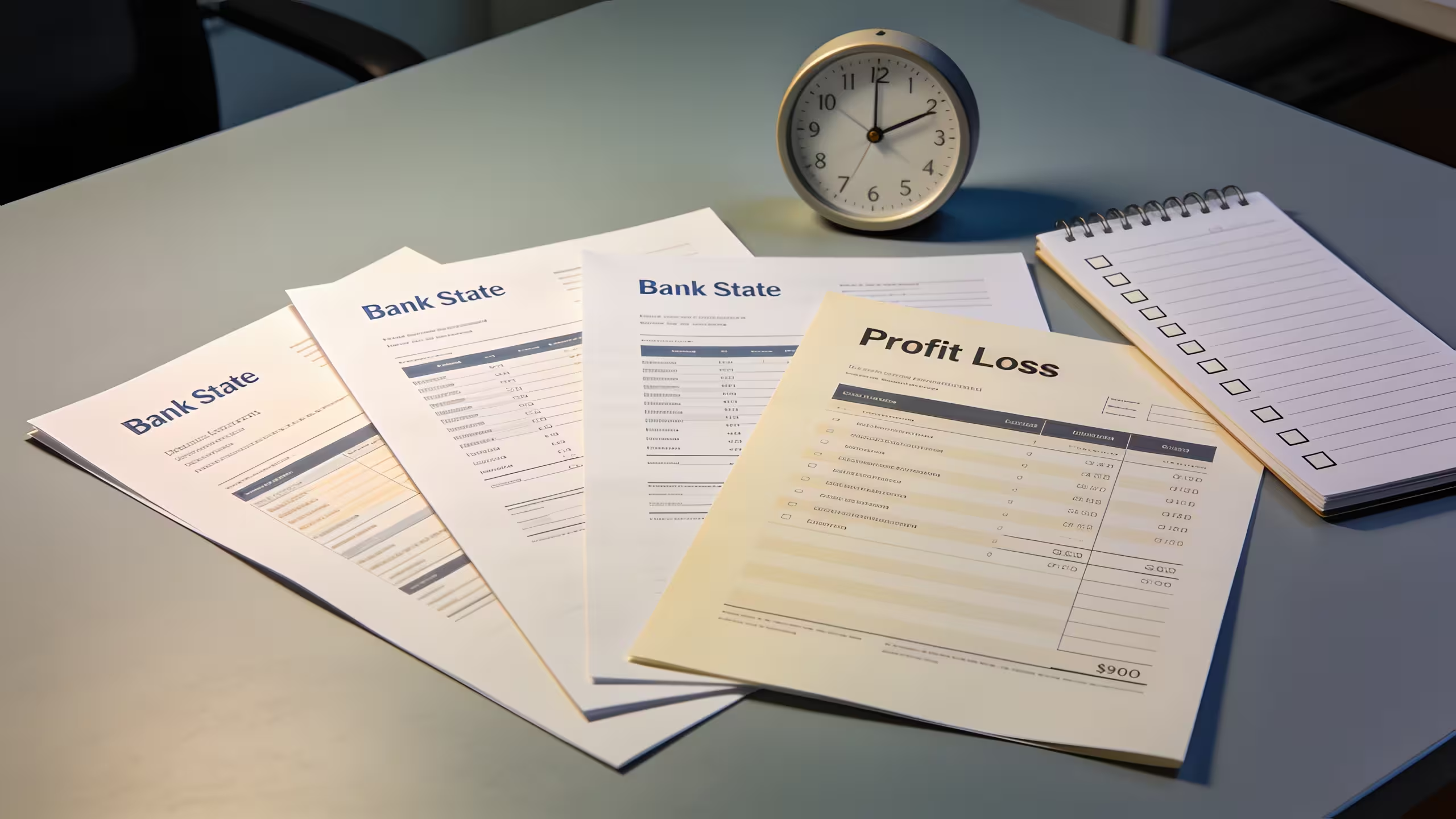
- Application: You submit personal and business details along with supporting documents. Tax returns, bank statements, a current profit and loss statement, and an existing debt schedule are the most commonly requested items at this stage.
- Underwriting: The lender reviews your creditworthiness, cash flow, collateral (if applicable), and the intended use of the loan. This is the most time-variable stage in the entire process, and the one most affected by missing documentation.
- Approval decision: The lender issues a conditional or final approval. For SBA loans at non-Preferred Lenders, the file then moves to the SBA for its own independent review before a final decision is issued.
- Closing: Both parties sign final loan documents. If the loan is secured by real property or equipment, an appraisal must be completed before closing, which can add one to three weeks depending on the asset type.
- Funding: The lender releases funds, typically by direct deposit. Even lenders with fast approval processes usually take one to two additional business days to complete this final step.
Does SBA Preferred Lender Status Actually Change Your Timeline?
Yes, it does, and this is the detail most borrowers overlook when comparing SBA lenders. The SBA’s Preferred Lender Program (PLP) authorizes certain lenders to issue a final SBA credit decision in-house, without routing the application to the SBA for a separate review. At a non-PLP lender, that SBA review step can add two to four weeks to the total timeline.
In reviewing hundreds of loan applications over a decade in consumer lending, the detail most borrowers miss is that two lenders can offer the exact same SBA loan product and quote timelines that differ by weeks, based entirely on their PLP status. The SBA maintains a lender directory as part of its loan program resources at sba.gov where you can identify Preferred Lenders in your area.
SBA Express loans are a separate, faster product within the SBA’s portfolio. The SBA commits to responding to Express applications within 36 hours. However, the lender still conducts its own full underwriting review after that response, so total funding time for Express loans typically runs 30 to 45 days from initial application to closing, per SBA program documentation.
How to Speed Up Your Business Loan Approval
What most people miss when comparing loan offers is that the borrower controls more of the timeline than they realize. Incomplete applications are the single most common source of underwriting delay. A lender cannot evaluate what it does not have, and each request for a missing document adds days to the process.
- Prepare documents before you apply. Most lenders request two years of business and personal tax returns, recent bank statements, a current profit and loss statement, and an existing debt schedule. Having these organized before your first conversation with a lender removes the main cause of underwriting delay.
- Know your key numbers. Lenders will ask for annual revenue, net profit margins, and monthly cash flow. Owners who can answer these precisely move through underwriting faster than those who need to pull the numbers mid-process.
- Match the product to your timeline, not just your rate preference. If you need funds within two weeks, a traditional bank or SBA standard loan is unlikely to meet that need regardless of how prepared you are.
- For SBA loans, prioritize Preferred Lenders. PLP status can eliminate the SBA’s independent review step and reduce the total timeline by two to four weeks compared to a non-PLP lender offering the same product.
- Respond to lender requests the same day. Underwriting frequently stalls while waiting on borrower responses. Each day of delay extends your timeline by at least that much.
For a deeper look at the five factors lenders evaluate before issuing an approval decision, see what lenders evaluate before approving you.
When You Need Funding Fast
Speed and cost generally move in opposite directions in business financing. Products that fund quickly tend to carry shorter repayment terms and higher total costs. Understanding this tradeoff before you apply can save your business a significant amount of money over the life of the loan.
From a practical standpoint, here is the decision most business owners face:
Speed-vs-Rate Decision Framework
Choose a faster product if: you need to cover a cash flow gap, an unexpected expense, or a time-sensitive opportunity, and the total cost of the faster loan still leaves your business profitable after repayment.
Choose a slower product if: you have 30 to 60 days or more before the funds are needed, and the difference in rate or terms would meaningfully reduce your total repayment cost over the life of the loan.
Newer businesses and startups face additional constraints because limited operating history reduces options on both ends of the speed spectrum. For guidance on which products are available before you have two years of revenue history, see our guide to startup financing options.
According to the Federal Reserve’s Small Business Credit Survey, large banks approved a significantly lower share of small business loan applications than smaller community institutions. Businesses that go to a large national bank first may wait several weeks for a decision, only to receive a denial. Checking eligibility with multiple lender types early in the process is a practical way to reduce overall timeline risk.
For a full overview of small business loan types, costs, and qualification factors, see our small business loan guides.
FAQ: How Long Does a Business Loan Take to Get Approved?
Tap any question to expand the answer.
How long does an SBA loan take to get approved?
SBA loan timelines vary by program type. Standard SBA 7(a) loans typically take 60 to 90 days from application to closing, per SBA program documentation. SBA Express loans move faster because the SBA commits to a 36-hour response, though total funding still typically runs 30 to 45 days. SBA CDC/504 loans involve a three-party review and can take one to six months. The fastest path through any SBA program is to apply through an SBA Preferred Lender, which can eliminate a separate SBA review step and reduce the timeline by two to four weeks.
Can I get a business loan approved the same day?
Some online lenders and alternative financing products advertise same-day or next-day approval and funding. Products such as merchant cash advances and invoice factoring can move particularly fast because they are based on receivables or future sales rather than a traditional credit and financial review. That said, actual timelines vary by lender, and faster products typically carry higher costs and shorter repayment terms. Always ask the specific lender for their current processing time before relying on a timeline for business planning purposes.
What documents do I need to speed up business loan approval?
The documents most commonly requested by business lenders include two years of business and personal tax returns, recent business bank statements (typically three to six months), a current profit and loss statement, a balance sheet, and a schedule of existing business debts. SBA loans also require additional forms, including SBA Form 1919, a personal financial statement, and business ownership and licensing documents. Having all of these prepared before you submit your first application is the most reliable way to reduce underwriting delays.
Does my credit score affect how long business loan approval takes?
Credit score affects both your eligibility and, indirectly, how long approval takes. Borrowers with strong personal and business credit histories tend to move through underwriting faster because their risk profile is easier for a lender to evaluate. Borrowers with lower scores or mixed credit histories may face more detailed review, additional documentation requests, or conditional approval steps that add time to the process. Lenders set their own minimum credit score requirements and rarely publish them; the Consumer Financial Protection Bureau provides general guidance on business credit at consumerfinance.gov.
What is the SBA Preferred Lender Program and does it speed up my loan?
The SBA Preferred Lender Program (PLP) is a designation the SBA grants to high-volume lenders that have demonstrated the ability to process SBA loans accurately and efficiently. PLP lenders are authorized to make a final SBA credit decision in-house, which removes the step where the application is sent to the SBA for an independent review. At a non-PLP lender, that SBA review can add two to four weeks to the total timeline. Choosing a PLP lender when applying for an SBA 7(a) loan is one of the most concrete steps a borrower can take to reduce overall approval time. The SBA publishes lender information at sba.gov.