Can You Get a Small Business Loan With No Revenue?
By Laurel C. Yazzie | Last reviewed: June 2026
The short answer is yes. Getting a small business loan with no revenue is possible, but the path looks different than a traditional bank loan. Most conventional lenders want to see at least one to two years of revenue history before approving you. If your business is new, or it exists but has not yet made a sale, you are not out of options. You are looking at a different set of tools.
In reviewing hundreds of loan applications over a decade in consumer lending, the detail most borrowers miss is how much weight lenders place on personal credit and a written business plan when revenue data is not available. Those two factors can carry the weight that income history normally would.
Small Business Loan With No Revenue: Yes, you can qualify for certain types of financing before your business earns revenue. SBA microloans, equipment financing, and personal loans used for business purposes are the most accessible options. Lenders evaluate your personal credit history, business plan, and available collateral instead of business income.
Can You Get a Small Business Loan With No Revenue?
Yes, though not every loan type will be available to you. Traditional term loans and SBA 7(a) loans typically require documented revenue because lenders use income history to assess repayment ability. Pre-revenue businesses do not have that documentation, so those products are largely off the table at first.
What lenders evaluate when revenue is zero:
- Personal credit score: Lenders set their own minimum requirements, which they rarely publish publicly. The stronger your personal credit history, the more options you will have access to.
- Business plan: A written plan with realistic financial projections shows a lender you have thought through how the business will generate income and repay the debt.
- Collateral: Personal or business assets you can pledge reduce the lender’s risk and improve your approval odds considerably.
- Business registration and EIN: A formal business structure signals legitimacy, even before revenue begins.
- Industry type: Some sectors are considered lower risk, which affects how lenders view a pre-revenue application in that space.
Loan Types Built for Pre-Revenue Businesses
The three main options for pre-revenue businesses:
- SBA Microloans : up to $50,000 through nonprofit intermediaries
- Equipment Financing : the asset itself secures the loan
- Personal Loans : underwritten on your personal credit, not business income
A handful of financing products are designed specifically for startups and businesses that have not yet built a revenue track record. Each one uses a different proxy for creditworthiness rather than relying on business income.
SBA Microloans
According to the U.S. Small Business Administration, the SBA Microloan program offers loans of up to $50,000, with an average loan size of about $13,000. These intermediary lenders set their own credit and collateral requirements, but they are specifically built to serve startups and businesses in underserved communities that may not qualify for conventional financing.
Microloans can be used for working capital, inventory, supplies, equipment, and similar needs. Because loan amounts are smaller and the lenders are mission-driven nonprofits, these programs tend to have more flexible qualification standards than bank loans. Many microloan lenders also provide business management training alongside the funding.
Equipment Financing
If your business needs a specific piece of equipment to operate, equipment financing may be available even with no revenue. The equipment itself serves as collateral for the loan, which reduces the lender’s exposure. A business owner who needs commercial kitchen equipment or specialized machinery, for example, may qualify based on the asset’s value.
Requirements vary by lender, but most equipment financing providers will still check personal credit. The asset-backed nature of these loans makes them one of the more accessible options for pre-revenue applicants.
Personal Loans Used for Business Purposes
Some business owners fund early operations through a personal loan. This approach is underwritten on your individual credit history and personal income rather than any business revenue. The Consumer Financial Protection Bureau provides guidance on how personal loan terms are structured and what to watch for when comparing offers.
This route works best when the amount you need is modest and your personal credit is strong. Keep in mind that mixing personal and business finances can complicate bookkeeping and may affect future business credit applications. Opening a dedicated business bank account, even at the start, keeps those records clean.
What Lenders Look at When Revenue Is Zero
In practice, many borrowers applying with no business revenue are surprised by how much documentation lenders still request. The application does not become simple just because the revenue line is blank. Lenders replace income data with other signals of creditworthiness.
- A detailed business plan with projected income and expense timelines
- Personal tax returns from the past one to two years
- Personal and business bank statements (even low-balance accounts provide a paper trail)
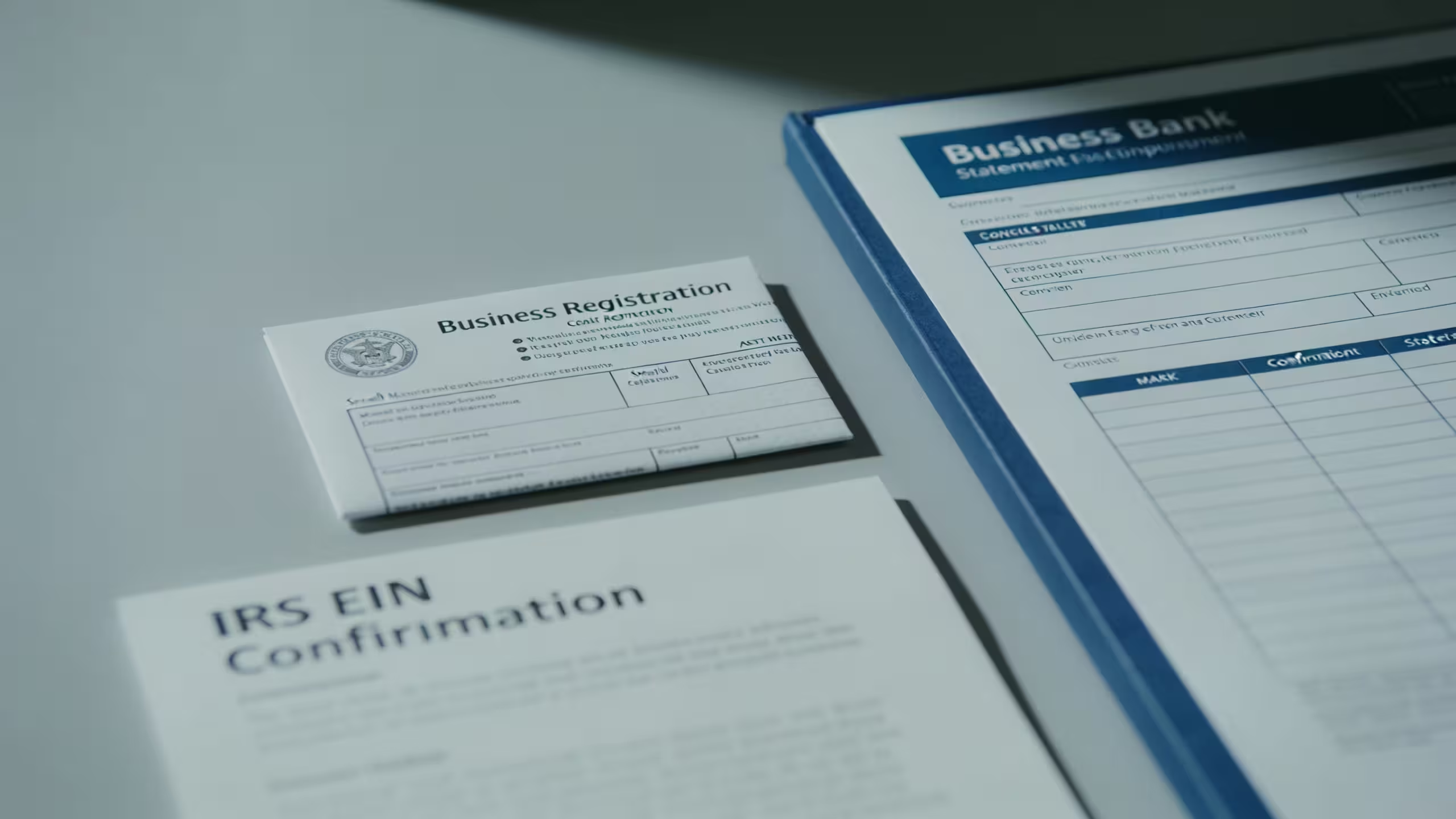
- Proof of business registration and an IRS Employer Identification Number (EIN)
- A personal guarantee, meaning you agree to repay personally if the business cannot
- Any existing assets you can offer as collateral, such as equipment, real estate, or vehicles
Does Your Business Need to Be Formally Registered Before Applying?
This question comes up often, and the answer depends on the loan type. SBA microloan intermediaries generally want to see a registered business entity, such as an LLC or sole proprietorship, along with an EIN from the IRS. These requirements exist because registration gives the lender a legal entity to which the loan is attached and a structure through which a personal guarantee can be enforced.
For a personal loan used for business purposes, formal registration is not required, since the loan is underwritten entirely on your personal profile. However, registering your business before you apply, even as a sole proprietor, signals seriousness and gives you access to a broader range of lenders from the start.
If you are still at the idea stage with no registered entity, no EIN, and no business banking activity, most business loan programs will not have enough to evaluate. Getting your registration in place first is a practical step worth completing before spending time on applications.
Which Option Fits Your Situation
Not every pre-revenue borrower is in the same position. From a practical standpoint, the right financing path depends on what you bring to the table beyond the revenue gap. Use this framework as a starting point.
| Your Situation | Best Starting Point |
|---|---|
| Strong personal credit, need under $50,000 | SBA microloan through a local nonprofit intermediary |
| Need specific equipment to launch the business | Equipment financing (the asset secures the loan) |
| Strong personal credit, small funding need | Personal loan applied to business use |
| Need to establish business credit before applying | Secured business credit card to begin building history |
Steps to Take Before You Apply
Applying without preparation is one of the most common mistakes pre-revenue borrowers make. A rejected application can leave a mark on your credit and narrow your options. These steps put you in the strongest position before you submit anything.
- Register your business and get an EIN. Registration is free or low-cost in most states and takes little time. An EIN from the IRS establishes your business as a separate legal entity and is free to obtain online.
- Open a dedicated business bank account. Even with zero revenue, a business account creates a financial paper trail and keeps personal and business finances separate from day one.
- Write a basic business plan. Include what the business does, who your customers are, how you will generate revenue, and exactly how you intend to use the loan proceeds.
- Check your personal credit report. You can access all three of your credit reports for free at AnnualCreditReport.com. Dispute any errors before you apply so they do not affect your evaluation.
- Find the right lender before applying. Different SBA microloan intermediaries have different lending standards. Research lenders in your area through the SBA’s microlender directory and contact them before submitting a formal application.
What Happens After You Get Your First Small Business Loan?
Repaying your first loan on time begins building a business credit profile. That history is what unlocks better terms and larger loan amounts the next time you apply. Many pre-revenue borrowers start with a microloan or small personal loan specifically to build that track record, and not just to fund operations. For a deeper look at how loan products work at each stage of a business, see our guide on how business loans work. If you want to understand lender expectations for new businesses specifically, our startup business loan guide covers application requirements and the approval process in detail. For a full overview of every small business financing option available, visit the small business loans hub.
FAQ: Small Business Loan With No Revenue
Can I get a small business loan if my business just opened?
Yes, but the options are more limited than for established businesses. SBA microloans and equipment financing are specifically designed to serve businesses in their early stages, including those that have recently launched. The key is that lenders will shift their evaluation to your personal credit, your business plan, and any assets you can offer as collateral, since revenue history is not yet available. Applying through an SBA-approved microloan intermediary in your area is often the most straightforward first step.
What credit score do I need to get a business loan with no revenue?
Lenders set their own minimum credit score requirements, which they rarely publish publicly. Because requirements differ from one lender to the next, the most effective approach is to check your rate with multiple lenders through a soft credit pull, which does not affect your score. As a general rule, the stronger your personal credit history, the more loan types you will be able to access and the better the terms you are likely to receive. Reviewing your credit report in advance at AnnualCreditReport.com and correcting any errors is one of the best preparation steps you can take before applying.
Do SBA microloans require collateral?
According to the U.S. Small Business Administration, each SBA microloan intermediary sets its own collateral and credit requirements. In practice, many intermediaries do require some form of collateral along with a personal guarantee from the business owner, meaning you agree to repay the loan personally if the business cannot. However, because these lenders are nonprofit organizations focused on supporting underserved borrowers, their collateral standards are often more flexible than those of commercial banks. Contacting your local intermediary directly is the best way to understand exactly what they require.
Is it better to use a personal loan or an SBA microloan for a new business?
The right choice depends on your situation. A personal loan is underwritten on your individual credit profile and does not require a business entity, which makes it easier to access quickly. An SBA microloan is specifically designed for business use and, when repaid, can help establish a business credit history that opens up better financing options later. If your main goal is to build a business credit profile alongside funding your operations, the SBA microloan route is typically the stronger long-term move, even if it involves more paperwork upfront. If speed and simplicity are priorities and the amount is modest, a personal loan may be the more practical first step.