What Affects Student Loan Interest Rates
By Laurel C. Yazzie | Last reviewed: August 2026
Understanding what affects student loan interest rates can mean the difference between thousands of dollars saved and thousands paid unnecessarily. The short answer depends entirely on one question: are you borrowing from the federal government or from a private lender? Federal student loans follow a government-set formula that has nothing to do with your credit score. Private student loans are priced based on your financial profile. Knowing how each system works puts you in a much stronger position as a borrower.
What Affects Student Loan Interest Rates: Federal loan rates are set by a government formula tied to the 10-year U.S. Treasury note yield and do not depend on your credit score. Private loan rates are set by each lender based on your credit score, income, cosigner status, and whether you choose a fixed or variable rate.
In reviewing hundreds of loan applications over a decade in consumer lending, the detail most borrowers miss is that federal and private loans operate under entirely separate pricing systems. Trying to negotiate a federal rate is not possible. But working to improve the rate you are offered on a private loan is, once you know which factors to focus on.
What Affects Student Loan Interest Rates
The biggest dividing line is the loan type. Here is a side-by-side view of the factors that matter for each:
| Factor | Federal Loans | Private Loans |
|---|---|---|
| Credit score | Not considered | Major factor |
| Income | Not considered | Considered by many lenders |
| Cosigner | Not applicable | Can lower the rate offered |
| Loan term | Not a rate factor | Shorter terms often mean lower rates |
| Fixed or variable rate | Fixed only | Fixed or variable, borrower chooses |
| Pricing method | Treasury yield + fixed statutory margin | Lender sets the rate based on your profile |
How Federal Student Loan Rates Are Set Each Year
Congress established the current formula in the Bipartisan Student Loan Certainty Act of 2013. The rate is not chosen arbitrarily, and it does not change once your loan is disbursed. Every borrower who takes out the same type of federal loan in the same academic year pays the same rate, regardless of their financial background.
The Annual Treasury Yield Formula
Each May, the U.S. Treasury holds a 10-year Treasury Note auction. The high yield from that auction becomes the base rate for the coming academic year. The Department of Education then adds a fixed margin that is set by statute and varies by loan type. According to Federal Student Aid, the margins and caps are as follows:
- Undergraduate Direct Subsidized and Unsubsidized Loans: Treasury yield + 2.05%, capped at 8.25%
- Graduate Direct Unsubsidized Loans: Treasury yield + 3.60%, capped at 9.50%
- PLUS Loans (parent borrowers and graduate students): Treasury yield + 4.60%, capped at 10.50%
For the 2025-26 academic year, for example, the formula produced a rate of 6.39% for undergraduate borrowers, as published by the U.S. Department of Education. The resulting rate is fixed for the life of every loan disbursed in that period. Once you take out a federal loan, that rate never changes, regardless of what happens to interest rates in the broader economy afterward.
Why Your Credit Score Does Not Change Your Federal Rate
Direct Subsidized and Direct Unsubsidized Loans require no credit check. Every borrower in the same loan category during the same academic year receives the same rate. The only things that affect your federal interest rate are which loan type you borrow and when your loan is disbursed. This uniform pricing is one of the strongest arguments for maxing out federal aid before turning to private lenders. For a full picture of how these loan types compare on other dimensions, see our guide to the federal vs. private loan differences.
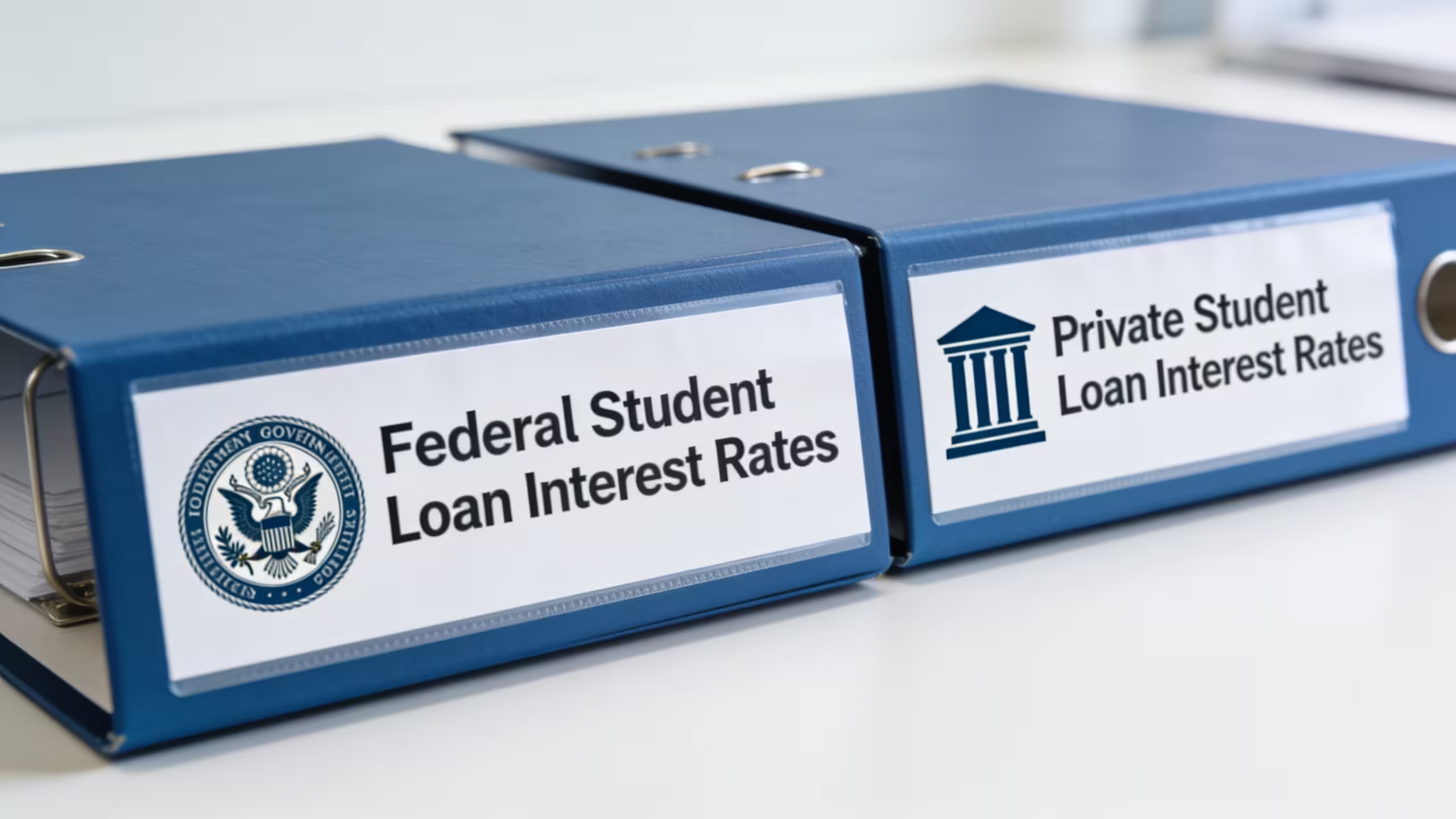
What Determines a Private Student Loan Rate
Private lenders evaluate your risk as a borrower and price the loan accordingly. In practice, many borrowers apply to only one private lender and accept whatever rate is offered, without realizing that comparing offers from multiple lenders can produce meaningfully different results on the exact same borrower profile.
Your Credit Score and Credit History
Your credit score is typically the most heavily weighted factor in a private lender’s decision. A strong score signals consistent repayment history and lower default risk, which typically results in a lower offered rate. Borrowers with limited or no credit history may either receive higher rates or require a cosigner to qualify at all. The length of your credit history, the mix of accounts you carry, and your current utilization rate all feed into this picture.
Adding a Cosigner
A cosigner with a strong credit profile takes on equal legal responsibility for the loan. From the lender’s perspective, this reduces the risk of default, which often results in a lower rate than the borrower would receive alone. This is especially effective for students who are borrowing early in their credit history. Both the borrower and cosigner should understand that any missed payments will affect both of their credit files.
Loan Term and Rate Type
Shorter repayment terms often come with lower rates, since the lender’s exposure is reduced over a shorter window. Your choice between a fixed and variable rate also affects the starting rate you are offered. Variable rates often begin lower than fixed rates, but they can rise over time as market benchmarks shift. For a detailed breakdown of when each choice makes sense, see our guide to choosing between fixed and variable rates.
If/Then: Which Factors Apply to You?
- If your loans are federal: Your rate is set by the government formula. You cannot negotiate it. Focus on borrowing only what you need, since a lower principal means less interest regardless of the rate.
- If you are applying for private loans with strong credit: Compare at least three lenders using soft-pull rate checks, which do not affect your score. A fraction of a percentage point over a ten-year term adds up to hundreds of dollars.
- If your credit is thin or new: Adding a creditworthy cosigner is typically the single most effective step before you apply. It can shift you into a significantly better rate tier.
- If you have variable-rate private loans: Monitor market rate trends. If your financial profile has improved since you first borrowed, refinancing into a fixed rate may lock in savings before rates rise further.
Does the Federal Reserve Affect Student Loan Interest Rates?
The Federal Reserve’s benchmark rate influences the broader economy and affects private lending costs, but it does not directly set student loan rates for either loan type. The specific impact depends on which type of loan you hold:
- Federal loans: Tied to the 10-year Treasury note yield, which moves based on bond market conditions. A Fed rate cut does not automatically lower federal student loan rates for the upcoming academic year — the two benchmarks move on different schedules.
- Private loans with variable rates: More sensitive to Fed decisions, since variable rates often track benchmarks that adjust with the broader rate environment. When the Fed cuts rates, private variable-rate borrowers may eventually see their rates ease.
- Private loans with fixed rates: The rate is locked in at disbursement and is not affected by Fed decisions afterward, the same as federal loans.
What Happens to Your Rate When You Refinance Federal Loans Into a Private Loan?
This is the question most articles on this topic leave out entirely. When you refinance federal student loans with a private lender, the government formula no longer applies to those loans. Your new interest rate is set by the private lender based on your credit score, income, debt levels, and other underwriting criteria at the time of refinancing. If your credit has improved significantly since you first borrowed, refinancing can produce a lower rate than your original federal loan carried.
But refinancing federal loans into a private loan is permanent. You give up access to income-driven repayment plans, and any eligibility for federal loan forgiveness programs ends at that point. According to the Consumer Financial Protection Bureau, borrowers should weigh the loss of these federal protections carefully before refinancing with a private lender, even when the offered rate is lower.
Steps to Lower Your Student Loan Interest Rate
What most people miss when comparing loan offers is that the interest rate alone does not tell the full story. Origination fees, interest capitalization rules, and repayment flexibility all affect the true cost of borrowing. That said, here are concrete steps that work for each borrower type:
- Federal borrowers: Enroll in autopay. According to Federal Student Aid, enrolling in automatic debit payments reduces your interest rate by 0.25 percentage points on eligible federal loans. Check the Federal Student Aid site for the current autopay benefit on your loan type, as rates and terms can change.
- Private loan applicants: Build your credit before applying. Even a modest improvement in your credit score before you submit an application can shift you into a better rate tier. Check your credit report for errors at AnnualCreditReport.com before applying.
- Private loan applicants: Compare multiple lenders. Use soft-pull rate checks from at least three lenders. These do not affect your credit score and give you a realistic range of what you qualify for.
- Private borrowers post-graduation: Consider refinancing if your profile has improved. A stronger income and credit score after graduation may qualify you for a meaningfully lower rate. Only refinance federal loans privately if the interest savings clearly outweigh the permanent loss of federal protections.
For a broader overview of how interest accumulates over time, how loan types compare, and which options make sense for your situation, visit our student loan resource hub.
FAQ: What Affects Student Loan Interest Rates?
Tap any question to expand the answer.
Does your credit score affect your federal student loan interest rate?
No. Direct Subsidized and Unsubsidized federal loans do not require a credit check, and every borrower in the same loan category during the same academic year receives the same rate. Your credit score has no bearing on federal loan pricing. Direct PLUS Loans do include a credit check, but this is used only to determine eligibility, not to set the rate. The rate for all PLUS borrowers in a given year is fixed by the same government formula as all other federal loans.
What is the formula used to set federal student loan interest rates?
Federal student loan rates are calculated by adding a fixed statutory margin to the high yield from the 10-year Treasury Note auction held each May. The margin added is 2.05% for undergraduate Direct Loans, 3.60% for graduate unsubsidized loans, and 4.60% for PLUS loans. Congress set these margins in the Bipartisan Student Loan Certainty Act of 2013, and they do not change from year to year. The resulting rate is fixed for the life of any loan disbursed during that academic year and cannot change afterward.
Can adding a cosigner lower your private student loan interest rate?
Yes, for many borrowers, adding a creditworthy cosigner is the most direct way to qualify for a lower private student loan rate. The lender treats the cosigner as a second source of repayment, which reduces the risk of the loan. This lower risk is often reflected in a better rate offer. The cosigner carries equal legal responsibility for the debt, meaning any missed payments will appear on both the borrower’s and cosigner’s credit reports.
Does the Federal Reserve directly control student loan interest rates?
No. The Federal Reserve sets the federal funds rate, which influences the broader economy but does not directly determine student loan rates. Federal student loan rates are tied to the 10-year Treasury note yield, which moves separately from the federal funds rate. Private variable-rate loans are more sensitive to Fed decisions, since their benchmark rates often adjust alongside the broader interest rate environment. Fixed-rate loans, whether federal or private, do not change after the loan is disbursed regardless of what the Fed does.
What happens to your interest rate if you refinance federal student loans into a private loan?
When you refinance federal student loans with a private lender, the government formula no longer applies to those loans. Your new rate is set by the private lender based on your credit score, income, and other financial factors at the time you refinance. If your credit has improved significantly since you originally borrowed, the new rate may be lower than your original federal rate. However, refinancing federal loans into private loans is permanent. You lose access to income-driven repayment plans and any eligibility you may have had for federal loan forgiveness programs.