Can You Get a Business Loan Using Personal Credit?
By Laurel C. Yazzie | Last reviewed: July 2026
If you are planning to apply for a small business loan, one of the first things a lender will do is pull your personal credit report. Many business owners are caught off guard by this, especially those who have kept their business finances carefully separate from their personal accounts. Understanding why this happens, and what lenders actually look for, puts you in a much stronger position before you apply.
Can You Get a Business Loan Using Personal Credit: Yes. Most lenders review your personal credit score when you apply for a business loan, especially if your business is new or lacks its own credit history. They use it to assess your reliability as a borrower. A personal guarantee, which most loans require, makes your personal credit score directly relevant.
Why Lenders Review Your Personal Credit for a Business Loan
The core reason comes down to one document most borrowers overlook: the personal guarantee. A personal guarantee is a legal commitment you sign agreeing to repay the loan from your own assets if the business cannot. Because you are personally on the hook for the debt, the lender wants to understand how you have handled financial obligations in the past.
From a practical standpoint, your personal credit report tells that story more clearly than almost anything else in your application. It shows a pattern of behavior over years, not just a snapshot of today.
Here is what lenders typically examine when they pull your personal credit for a business loan:
- Payment history: Whether you have consistently made on-time payments on personal loans, credit cards, and mortgages. This is the single factor that carries the most weight.
- Credit utilization: How much of your available revolving credit you are currently using. High utilization signals financial strain.
- Length of credit history: How long your oldest accounts have been open and the average age of all your accounts.
- Derogatory marks: Late payments, collections, charge-offs, bankruptcies, or tax liens on record.
- Recent credit inquiries: How many new credit accounts you have opened or applied for recently.
According to the U.S. Small Business Administration, lenders evaluate both personal and business financial history when determining whether a borrower can reliably repay a loan. This applies to SBA-backed loans as well, which are designed to be more accessible than conventional bank financing but still include a personal credit review during underwriting.
Can You Get a Business Loan Using Personal Credit Alone?
Yes, and for many small businesses this is exactly how the first loan works. Startups and younger businesses have no independent credit history, so lenders rely almost entirely on the owner’s personal credit file to evaluate risk. As your business matures and builds its own credit profile, personal credit becomes one input among several rather than the sole deciding factor.
How much your personal credit matters depends on where your business is in its development and how it is structured. Use this framework before you apply:
- Business less than 2 years old: Personal credit is the primary factor. Your business has little to no credit history for lenders to evaluate.
- Business 2 or more years old with consistent revenue: Personal credit still matters, but strong cash flow and business bank history carry additional weight alongside it.
- Sole proprietorship: Your personal and business finances are legally the same entity. Lenders treat your personal credit score as the business credit score.
- LLC or corporation: Your business is a separate legal entity, but lenders will still pull your personal credit, especially while your business credit file is thin or new.
- Seeking an SBA loan: A personal credit review is part of the underwriting process. SBA programs are designed to serve businesses that may not qualify for conventional bank loans, but creditworthiness is still assessed.
What If You Have a Business Partner With a Stronger Credit Profile?
This question comes up more often than most articles address. When a business has multiple owners, lenders typically pull personal credit reports from every owner who holds a significant ownership stake. The threshold varies by lender, but owners with meaningful equity in the business are generally included in the credit review.
A partner with stronger personal credit can help the overall application. A partner with serious derogatory marks can create complications, even if your own credit is clean. Before applying with co-owners, all majority stakeholders should review their personal credit reports so there are no surprises during underwriting. You can access your free credit reports at AnnualCreditReport.com.
What to Do If Your Personal Credit Is a Weak Point
A lower personal credit score does not automatically disqualify you from every type of business financing. Some lenders and programs place more emphasis on business performance than on personal credit history, and certain loan products are structured in ways that reduce the emphasis on your score.
In practice, many borrowers with solid businesses are surprised to find options available to them even when traditional banks have said no. These are the paths most worth exploring:
- Community Development Financial Institutions (CDFIs): Nonprofit lenders that serve small businesses underserved by traditional banks. They evaluate the full picture, not just a credit number.
- SBA microloans: Available through nonprofit intermediaries, these smaller loan amounts may come with more flexible personal credit requirements than conventional SBA loans.
- Equipment financing: Secured by the equipment itself, this product type places less weight on personal credit because the lender has a tangible asset as collateral.
- Invoice factoring: Provides cash based on your outstanding invoices rather than your credit history. The quality of your customers’ creditworthiness matters more than your own.
- Adding a co-signer: A creditworthy individual who agrees to share responsibility for the loan can strengthen an application where personal credit is the main concern.
Lenders set their own minimum credit requirements and rarely publish them. Checking your rate with multiple lenders through a soft inquiry, which does not affect your score, is the best way to understand your actual options before committing to a formal application.
For a detailed look at financing options when your score is the primary challenge, see our guide to getting a business loan with bad credit.
Building Business Credit to Reduce Reliance on Your Personal Score
The long-term path to separating personal and business credit is building a business credit profile strong enough to carry weight on its own. This takes time, but a few concrete steps accelerate the process.
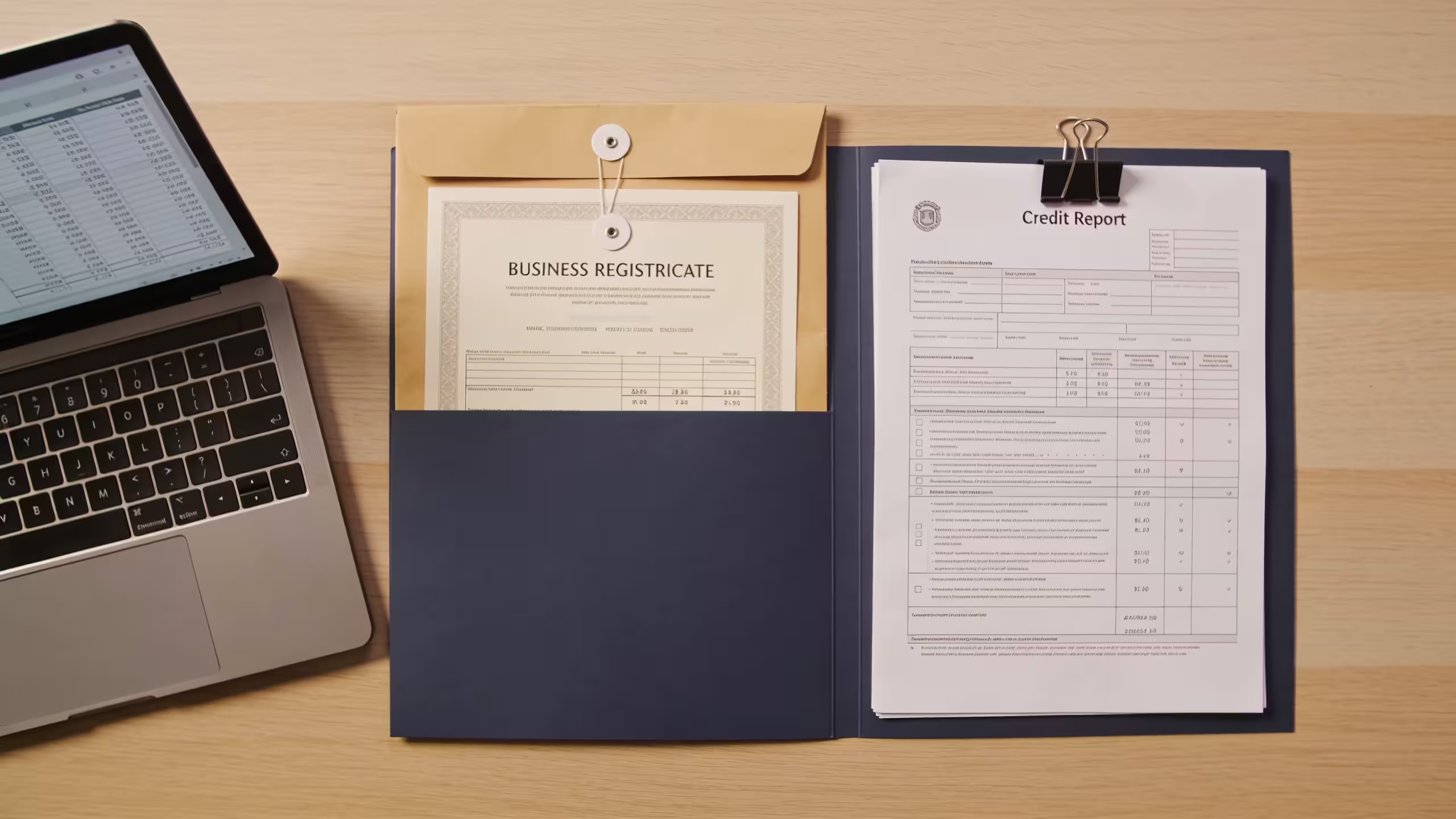
- Register your business as an LLC or corporation and obtain an Employer Identification Number (EIN) from the IRS.
- Open a dedicated business checking account in the business’s name using your EIN, not your Social Security number.
- Apply for a business credit card or a net-30 vendor account with a supplier that reports payments to a business credit bureau such as Dun and Bradstreet, Experian Business, or Equifax Business.
- Pay every business obligation on time. Payment history drives business credit scores the same way it drives personal credit scores.
In reviewing hundreds of loan applications over a decade in consumer lending, the detail most borrowers miss is that even a well-established LLC still requires the owner’s personal credit report during underwriting at most lenders. Building business credit reduces how heavily lenders lean on your personal score over time, but it rarely eliminates the personal credit check entirely for small business loans.
Understanding how lenders evaluate your creditworthiness before you apply is one of the most practical steps you can take. It helps you identify the right loan type and avoid submitting formal applications for products you are unlikely to qualify for in your current situation.
If you are still in the early stages of establishing your business, see our breakdown of startup business loan options for a look at what early-stage lenders actually prioritize.
For a full overview of business borrowing options and how each type works, visit the small business loans resource center.
FAQ: Can You Get a Business Loan Using Personal Credit?
Tap any question to expand the answer.
Do all business loans require a personal credit check?
Most business loans, including those backed by the SBA, include a personal credit check as part of the underwriting process. This remains true even when your business is incorporated as an LLC or corporation. The main exception is when a business has a long-established credit profile strong enough for a lender to evaluate independently, which typically takes several years to develop. Products like invoice factoring or purchase order financing rely more on the creditworthiness of your customers than on your personal credit score, making them a useful alternative for borrowers with credit challenges.
What part of my personal credit matters most when applying for a business loan?
Payment history carries the most weight in your personal credit score and is what lenders watch most closely during a business loan review. A consistent record of on-time payments signals that you are likely to manage business debt responsibly, while missed payments or defaults raise concerns about repayment risk. Credit utilization, meaning how much of your available revolving credit you are currently using, and any derogatory marks such as collections or past bankruptcies are also reviewed closely. Lenders look at the overall pattern across all these factors, not just a single number.
Can I get a business loan if my personal credit score is low?
Yes, though your options narrow as your personal credit score decreases. Community Development Financial Institutions (CDFIs) and SBA microloan programs work with business owners who have lower personal scores, often weighing business revenue and cash flow more heavily. Equipment financing uses the equipment itself as collateral, which reduces the emphasis on personal credit. Checking your rate through soft inquiries with multiple lenders will not affect your score and helps you understand which products you realistically qualify for before submitting a formal application.
Does taking out a business loan affect my personal credit score?
It depends on the loan structure and whether you signed a personal guarantee. If you personally guaranteed the loan, missed payments or a default can appear on your personal credit report and lower your score. Some lenders also report business loan activity to personal credit bureaus even when the loan is technically in the business’s name. Before signing any business loan agreement, ask the lender directly whether they report to personal credit bureaus and what the consequences of a default would be for your personal credit file.
How long does it take to build business credit separately from personal credit?
Building a business credit profile that lenders treat as meaningfully independent from personal credit typically takes two to three years of consistent activity. The process starts with incorporating the business, obtaining an EIN, opening a business bank account, and using vendors or credit cards that report to business credit bureaus. On-time payments on these accounts from the very beginning are the most important driver of business credit scores. Even with a well-developed business credit file, most lenders will still review personal credit alongside it, especially for larger loan amounts.