Cheapest Personal Loan Lenders: How to Find Your Lowest Total Cost
By Laurel C. Yazzie | Last reviewed: October 2026
Finding the cheapest personal loan lenders takes more than scanning a list of interest rates. The actual cost of a loan depends on your APR, any upfront fees, and the loan term you choose. Knowing where to look and what to compare can save you hundreds of dollars before you sign anything.
In reviewing hundreds of loan applications over a decade in consumer lending, the detail most borrowers miss is the origination fee, a one-time upfront charge that can quietly make a lower-rate loan more expensive than one with a higher rate and no fee at all.
What Makes a Personal Loan Lender “Cheap”?
A cheap personal loan is one with the lowest total cost, not just the lowest advertised rate. Several factors combine to determine what you actually pay. According to the Consumer Financial Protection Bureau, shopping around and comparing multiple loan offers can save borrowers significant money over the life of a loan.
- Annual Percentage Rate (APR): The APR reflects the interest rate plus most fees, expressed as a yearly percentage. It is the most reliable starting point for comparing offers across lenders.
- Origination fee: A one-time charge, often deducted from your loan proceeds before you receive the money, that some lenders add to cover processing costs. Not all lenders charge one. Learn more about how origination fees affect your loan.
- Prepayment penalty: A fee charged if you pay off your loan early. Most personal loan lenders do not charge one, but always confirm before signing.
- Late payment fees: Charged if you miss a due date. These vary by lender and by state.
- Loan term: A shorter term typically means a higher monthly payment but less total interest paid over the life of the loan. A longer term lowers your monthly payment but increases what you pay overall.
What most people miss when comparing loan offers is that two loans with similar APRs can carry very different total costs once origination fees and term lengths are factored in. The True Cost Test section below walks through exactly how to make that comparison.
Cheapest Personal Loan Lenders by Type
The cheapest personal loan lenders fall into three main categories. Each type has a different pricing structure, membership requirement, and credit profile it tends to favor. Use this table to identify which type is most likely to offer you the best deal given your situation.
| Lender Type | APR Profile | Origination Fees | Best For | Key Caveat |
|---|---|---|---|---|
| Credit Unions | Often among the lowest available; federal credit unions are capped at 18% APR by the NCUA | Rarely charged | Members with good-to-excellent credit who prefer low or no fees | Membership required; application process may be slower than online lenders |
| Online Lenders | Varies widely; competitive for strong credit, higher for lower scores; wide APR range across lenders | Some charge none; others charge a percentage of the loan amount | Borrowers who want fast prequalification and a fully digital process | Rate range is wide: always prequalify with multiple lenders before choosing |
| Traditional Banks | Competitive for existing customers with strong credit; rates vary by institution | Policies vary; some banks waive fees for existing account holders | Current bank customers who can leverage an existing relationship for discounts | Typically stricter qualification; may offer an autopay rate discount |
Federal credit unions have a legal interest rate ceiling set by the National Credit Union Administration. You can find current guidance on credit union borrowing at MyCreditUnion.gov, the NCUA’s consumer information site. Well-known credit unions such as PenFed and Navy Federal Credit Union, and online lenders such as LightStream, SoFi, and Upstart, are real, verifiable options in each category. Confirm their current rates directly, as rates change frequently and vary by borrower profile.
The True Cost Test: Why APR Alone Won’t Tell You Everything
APR is a good starting point, but it is not the full picture. A loan with a lower APR and a meaningful origination fee can cost more in actual dollars than a loan with a slightly higher APR and no fee. This is especially true on shorter loan terms, where you have less time to spread the upfront cost across your payments.
The True Cost Test: A Five-Step Decision Framework
- Calculate your origination fee in dollars: multiply the loan amount by the fee percentage.
- Use a loan calculator to find your total interest paid over the full loan term.
- Add those two numbers together. That sum is your true borrowing cost for this offer.
- Run the same calculation for every other offer you receive.
- Choose the loan with the lowest true total cost, not just the lowest APR or lowest monthly payment.
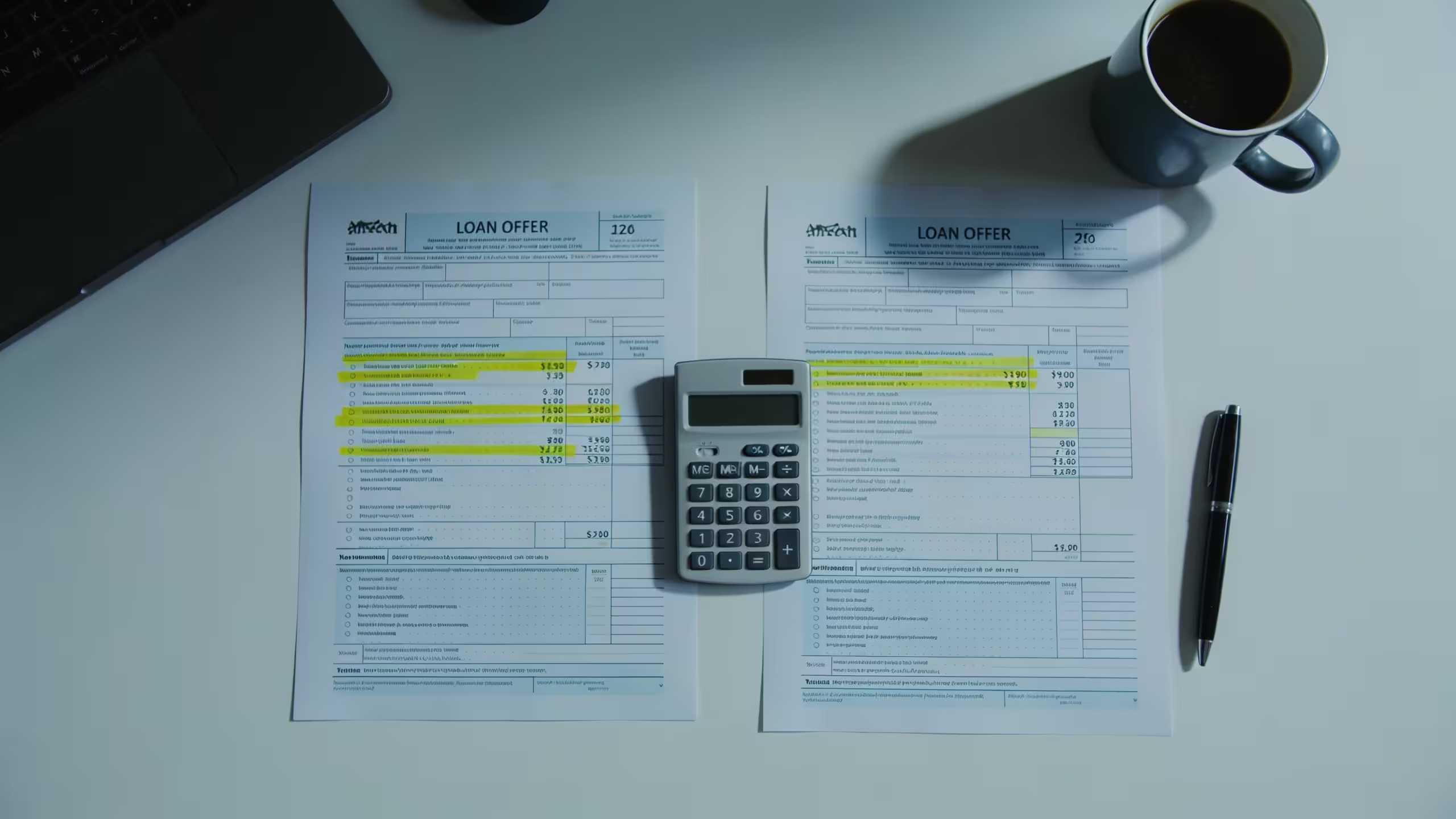
Use the True Cost Calculator in the section below to run this side-by-side comparison for any two loan offers.
Does an Origination Fee Change Which Lender Is Actually Cheaper?
Yes, and this is one of the most misunderstood parts of personal loan shopping. Federal law under the Truth in Lending Act (Regulation Z) requires lenders to include origination fees in the APR calculation. In theory, the APR already reflects these costs. In practice, the comparison breaks down when two loans have different structures: a fee deducted upfront effectively raises the true interest you pay, particularly on short-term loans where there is less time to recoup that cost through lower monthly interest.
From a practical standpoint, a borrower comparing two $10,000 loan offers, one at a lower APR with an origination fee and one at a slightly higher APR with no fee, should run the True Cost Test on both before deciding. The lower-APR offer is not automatically the cheaper option. For a deeper look at the specific variables that drive your rate, see our guide on the factors affecting your personal loan rate.
How to Get the Cheapest Rate You Qualify For
The cheapest personal loan lenders will not offer every borrower the same rate. Your rate depends on your credit profile, income, existing debt load, and the loan amount you request. These steps can improve your chances of landing the lowest offer available to you.
- Check your credit report before applying. Review your report at AnnualCreditReport.com for errors before submitting any application. Inaccurate information can lower your credit score and reduce your chances of qualifying for a low rate.
- Prequalify with at least three lenders. Most lenders now offer a soft-pull prequalification that shows you a real rate estimate without affecting your credit score. Get several offers before committing to any one lender. The Consumer Financial Protection Bureau recommends comparing multiple loan offers to find terms that match your financial situation.
- Choose the shortest loan term you can comfortably afford. Lenders typically price shorter terms at lower APRs. A 24-month loan usually carries a lower rate than a 60-month loan of the same amount, even with the same lender.
- Ask about autopay discounts. Many lenders reduce your rate, often by a fraction of a percentage point, when you enroll in automatic payments. Confirm in writing that this discount appears in your final loan documents before signing.
- Explore a credit union if you are not already a member. Many credit unions have low-cost or free membership requirements. Because credit unions are member-owned nonprofits, their loan pricing is structured to serve members rather than generate profit, which often translates to lower rates and fewer fees.
What Credit Score Do You Need for the Cheapest Personal Loan Rates?
Lenders set their own minimum credit score requirements, which they rarely publish publicly. As a general pattern across the market, the lowest advertised rates go to borrowers with very good to excellent credit. Borrowers in the fair credit range are more likely to qualify for mid-range rates, and some online lenders specialize in applicants with limited or imperfect credit histories.
Checking your rate through a soft pull with multiple lenders costs nothing and does not affect your credit score. The Federal Reserve tracks average consumer loan rates in its G.19 consumer credit statistical release at federalreserve.gov. Reviewing that data gives you a national benchmark for where average personal loan rates currently stand, which can help you assess whether an offer you receive is competitive.
Red Flags: When a “Cheap” Loan Is Not
Not every lender that markets itself as the most affordable delivers the best deal. Knowing what to watch for can prevent a loan that looks cheap at first glance from becoming expensive later.
- Rate quoted without APR: If a lender advertises only an interest rate and not an APR, you are likely missing fee costs. Always ask for the APR in writing before agreeing to anything.
- Origination fee deducted from proceeds: Some lenders charge an origination fee that is taken out of your loan before you receive it. If you need $10,000 and the fee is $500, you receive $9,500 but owe $10,000. Factor this into how much you request.
- Prepayment penalties buried in the fine print: A loan with a prepayment penalty can become an expensive trap if your plans change and you want to pay it off early. Verify that no prepayment penalty applies before signing.
- Guaranteed approval claims: No legitimate lender can guarantee approval without reviewing your credit history and income. Claims of guaranteed approval are a common signal of predatory lending.
- Pressure to accept immediately: A reputable lender gives you time to review your loan disclosure before signing. Pressure to commit on the spot is a warning sign, not a sign of a good deal.
For a broader overview of your borrowing options, including how personal loans compare to credit cards, lines of credit, and secured borrowing, visit our complete personal loans guide.
True Cost Calculator: Compare Two Loan Offers
Enter the details of two loan offers to find which one actually costs less in total dollars.
Loan A
Loan B