
Why Is Auto Insurance So Expensive?
By Laurel C. Yazzie | Last reviewed: July 2026
If your auto insurance bill has gotten harder to absorb each renewal period, you are not alone. Premiums have risen sharply across the United States, and many drivers are paying significantly more than they did just a few years ago. The reasons divide into two categories: industry-wide forces that affect every driver, and personal rating factors that determine where your premium lands within that range.
Having worked directly with clients on auto coverage decisions, the most common misconception I encountered was that a clean driving record is enough to guarantee a low rate. ZIP code, vehicle choice, and broader market conditions often matter just as much.
Why auto insurance is so expensive: Auto insurance is so expensive because insurers must cover rising repair costs, higher medical bills, and more frequent severe weather claims. Nationally, auto insurance premiums have climbed significantly faster than overall inflation since 2020. Your personal rate is also shaped by your driving record, vehicle, ZIP code, and coverage choices.
Why Is Auto Insurance So Expensive: What Drives Costs Up
Auto insurance premiums are determined by what it costs insurers to pay out claims. When the cost of repairing a car, treating an injured driver, or replacing a stolen vehicle increases, premiums follow. According to data tracked by the U.S. Bureau of Labor Statistics, motor vehicle insurance costs have risen substantially faster than the overall rate of inflation since 2020, making auto insurance one of the fastest-climbing household expenses in the country.
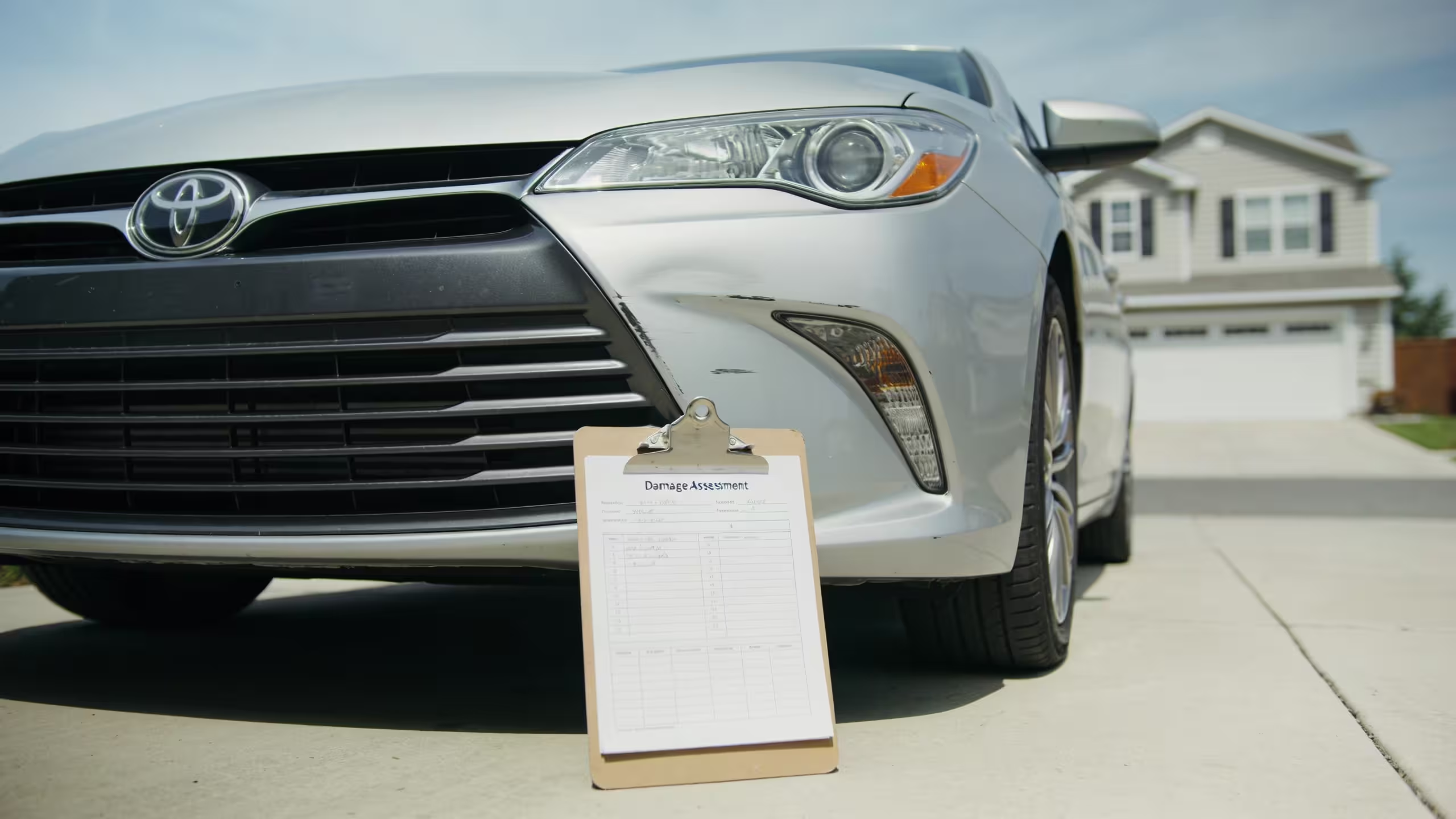
According to the Insurance Information Institute, medical and auto body repair costs have increased far faster than general inflation in recent years, and legal costs have risen as well. Several compounding forces are driving claim costs higher across the entire industry:
- Expensive modern vehicles: New cars are equipped with cameras, radar sensors, and computer modules that control everything from braking to airbag deployment. Replacing a bumper on an older car was a simple body shop repair. On a newer vehicle, that same bumper may require recalibrating radar and camera systems, multiplying the repair cost several times over.
- Higher medical costs: Auto liability coverage pays for injuries caused in accidents. As hospital and treatment costs have risen, every bodily injury claim has become more expensive for insurers to settle.
- More severe accidents: Traffic fatalities and serious crashes increased noticeably after the pandemic as driving patterns changed. More severe crashes produce larger claims, which raise the average cost insurers must price for.
- Climate-related damage: Flooding, hailstorms, and wildfires cause significant vehicle damage. States exposed to extreme weather events tend to carry higher average premiums as a result.
- Rising vehicle theft: Auto thefts have climbed in recent years. Comprehensive coverage claims related to stolen vehicles add to the total loss costs that insurers must recover through premiums.
- Uninsured drivers: When an uninsured driver causes an accident, your uninsured motorist coverage absorbs the loss. As the share of uninsured motorists on the road has grown in many states, the cost is effectively distributed across insured drivers through higher premiums.
The Rate Lag Nobody Explains
One detail most explainers skip over: auto insurers cannot raise premiums the moment their costs go up. In most states, insurers must file a rate increase request with the state insurance commissioner and wait for formal approval before charging policyholders more. That process takes months, and in some states it takes considerably longer.
This creates a “rate lag.” The premium increase you received this year may reflect losses your insurer absorbed one to two years ago, not what is happening in the market right now. It is also why rates can appear to spike sharply even after repair cost inflation has started to cool: insurers are catching up to claims costs they were not permitted to price into premiums sooner. From a practical standpoint, this lag works in both directions. When costs do eventually stabilize, rate relief is equally slow to arrive because rate reductions require the same approval process.
Personal Factors That Make Your Rate Higher
Industry-wide cost increases set the floor for what premiums must cover. Personal factors determine where on that range your specific rate lands. According to the Insurance Information Institute, insurers evaluate a combination of driver and vehicle characteristics when setting each policyholder’s premium.
| Rating Factor | Why It Affects Your Premium |
|---|---|
| Driving record | At-fault accidents and moving violations signal higher claim risk. A single at-fault crash can raise your rate for several years. |
| Vehicle type | Vehicles with high repair costs, high theft rates, or expensive components cost more to insure regardless of your driving history. |
| ZIP code | Urban areas with higher accident rates, greater theft frequency, and more uninsured drivers on the road carry higher premiums than rural or suburban areas. |
| Age and driving experience | Drivers under 25, and especially teen drivers, pay more due to statistically higher accident rates in that age group. |
| Credit-based insurance score | Used in most states to predict claim likelihood. A lower score is associated with higher premiums. Note: this factor is prohibited in California, Hawaii, Massachusetts, Michigan, and a small number of other states. |
| Coverage type and deductible | Full coverage with a low deductible costs more than minimum liability only. Raising your deductible reduces your premium but increases your out-of-pocket cost after any claim. |
| Annual mileage | More miles driven means more exposure to accidents. Low-mileage drivers often qualify for premium discounts, and some insurers offer usage-based pricing programs. |
In practice, many drivers with spotless records still pay far more than expected because their ZIP code or vehicle type places them in a higher-risk tier. The rate is not a judgment on your driving. It is a calculation based on every risk factor associated with your full profile.
What You Can Control (And What You Cannot)
When reviewing auto insurance costs year over year, separating controllable factors from those outside your control helps you focus your energy where it will actually make a difference. The decision framework below maps each situation to the action most likely to reduce your rate.
Decision Framework: Where to Focus to Lower Your Auto Insurance Cost
- If your rate went up and your driving record is clean: The cause is almost certainly market-wide cost increases or a statewide rate adjustment your insurer filed. Get competing quotes from at least three insurers. For the same driver profile, premiums can differ by hundreds of dollars per year depending on the insurer and the rates they have filed in your state.
- If your premium seems high for your area: Look at your vehicle. A model with lower repair costs, a better safety record, or a lower theft rate may cost meaningfully less to insure. This is worth comparing before your next vehicle purchase.
- If you drive fewer miles than average: Ask your insurer about low-mileage or usage-based programs. Some insurers price premiums based on how much you actually drive, not a flat annual estimate, which can produce significant savings for occasional drivers.
- If you carry full coverage on an older vehicle: Compare your annual collision and comprehensive premium against the vehicle’s current market value. When the combined annual cost of those two coverages approaches what the insurer would pay out in a total loss, it may make more financial sense to drop them and self-insure for that risk.
- If a teen driver is on your policy: A certified driver education course can qualify them for a discount. Ask your insurer specifically which programs they recognize before enrolling.
What to Do If Your Rate Went Up for No Reason
Rate increases with no personal claims or violations are a common frustration. When your insurer raises your premium despite your clean record, the cause is typically a statewide rate adjustment: your insurer filed a rate change based on overall claims trends across your state and received regulatory approval to apply it. You did nothing to trigger it. In that situation, shopping competing quotes is the most practical tool available to you.
To understand what your current coverage actually includes and whether your limits remain appropriate for your situation, see our guide on what auto insurance covers. For a broader explanation of how policies are structured and what each coverage type does, our overview of how auto insurance works covers the key mechanics. For a full look at auto insurance topics, visit our auto insurance resource hub.
Frequently Asked Questions: Why Is Auto Insurance So Expensive?
Tap any question to expand the answer.
Why did my auto insurance go up if I never filed a claim?
Your premium can rise even without any personal claims because auto insurance rates are based partly on the broader claims experience across your insurer’s entire book of business in your state. If accident rates, vehicle theft, or repair costs increased in your area, your insurer may have filed a statewide rate adjustment with your state insurance commissioner and received approval to apply it to all policyholders, regardless of individual claim history. The rate lag between when insurers absorb rising costs and when they receive regulatory approval to adjust premiums means these increases can arrive well after the underlying cause. Shopping competing quotes is the most direct way to check whether another insurer offers a better rate for your unchanged profile.
What is the single biggest factor in determining my auto insurance rate?
No single factor dominates for every driver, but your driving record carries heavy weight because it directly signals the likelihood of a future claim. A single at-fault accident or serious moving violation can raise your premium significantly and remain on your record for several years depending on your state’s rules. However, for drivers with clean records, factors like ZIP code, vehicle type, and coverage level often account for the largest share of premium variation from one driver to another. The Insurance Information Institute notes that insurers weight all of these factors together, and different insurers give different factors different weights, which is why quotes can vary so much across companies.
Does where I live really affect my auto insurance premium?
Yes, and the effect can be substantial. According to the Insurance Information Institute, auto insurers factor rates down to the ZIP code level in most states, based on local data including accident frequency, vehicle theft rates, the prevalence of uninsured drivers, and the cost of medical care and auto repairs in that area. Urban areas with dense traffic and higher theft rates consistently produce higher premiums than rural or suburban areas, even for the same driver profile and the same vehicle. Moving to a different ZIP code, or even changing where you park your car overnight, can sometimes affect your rate.
Is full coverage auto insurance always worth the cost?
Full coverage (which adds collision and comprehensive to your required liability policy) is generally worth the cost when your vehicle has significant market value, when you could not afford to repair or replace it out of pocket, or when your lender requires it as a condition of your loan or lease. For older vehicles with lower market values, the calculation changes: if the combined annual cost of collision and comprehensive coverage approaches or exceeds what your insurer would pay in a total loss claim, you may be paying more for those coverages than they would deliver in a payout. Reviewing this comparison annually as your vehicle depreciates is a straightforward way to identify potential savings.
Can my credit score affect how much I pay for car insurance?
In most states, yes. Insurers use a credit-based insurance score, which is separate from your standard credit score but derived from similar credit data, to help predict the likelihood and cost of future claims. Drivers with lower credit-based insurance scores are typically charged higher premiums than those with higher scores, all other factors being equal. This practice is prohibited by state law in California, Hawaii, Massachusetts, Michigan, and a small number of other states, so whether it affects your rate depends on where you live. Improving your overall credit health over time may help lower your insurance premium in states where this factor is permitted.