Best Auto Insurance for First Time Drivers: How to Choose and Save
By Laurel C. Yazzie | Last reviewed: October 2026
Getting behind the wheel for the first time is a significant milestone, and so is buying your first auto insurance policy. Rates for first-time drivers run higher than for experienced motorists, but the gap is not fixed. The decisions you make at the start, from which coverage type you select to which vehicle you drive, can make a real difference in what you pay.
Having worked directly with clients on their first auto insurance purchases, the most common misconception I encountered was that all first-time drivers face the same situation. They do not. A 17-year-old being added to a parent’s policy follows a completely different path than a 35-year-old getting licensed and buying a car simultaneously. Identifying which situation applies to you is the first step toward finding the best auto insurance for first time drivers that actually fits your life.
Best Auto Insurance for First Time Drivers: What to Look For
The best auto insurance for first time drivers is not automatically the cheapest option. It is the policy that matches your vehicle type, your state’s minimum requirements, your budget, and whether you are buying on your own or joining an existing household policy. Carriers weigh first-time driver profiles differently, and the features that matter most depend on your specific circumstances.
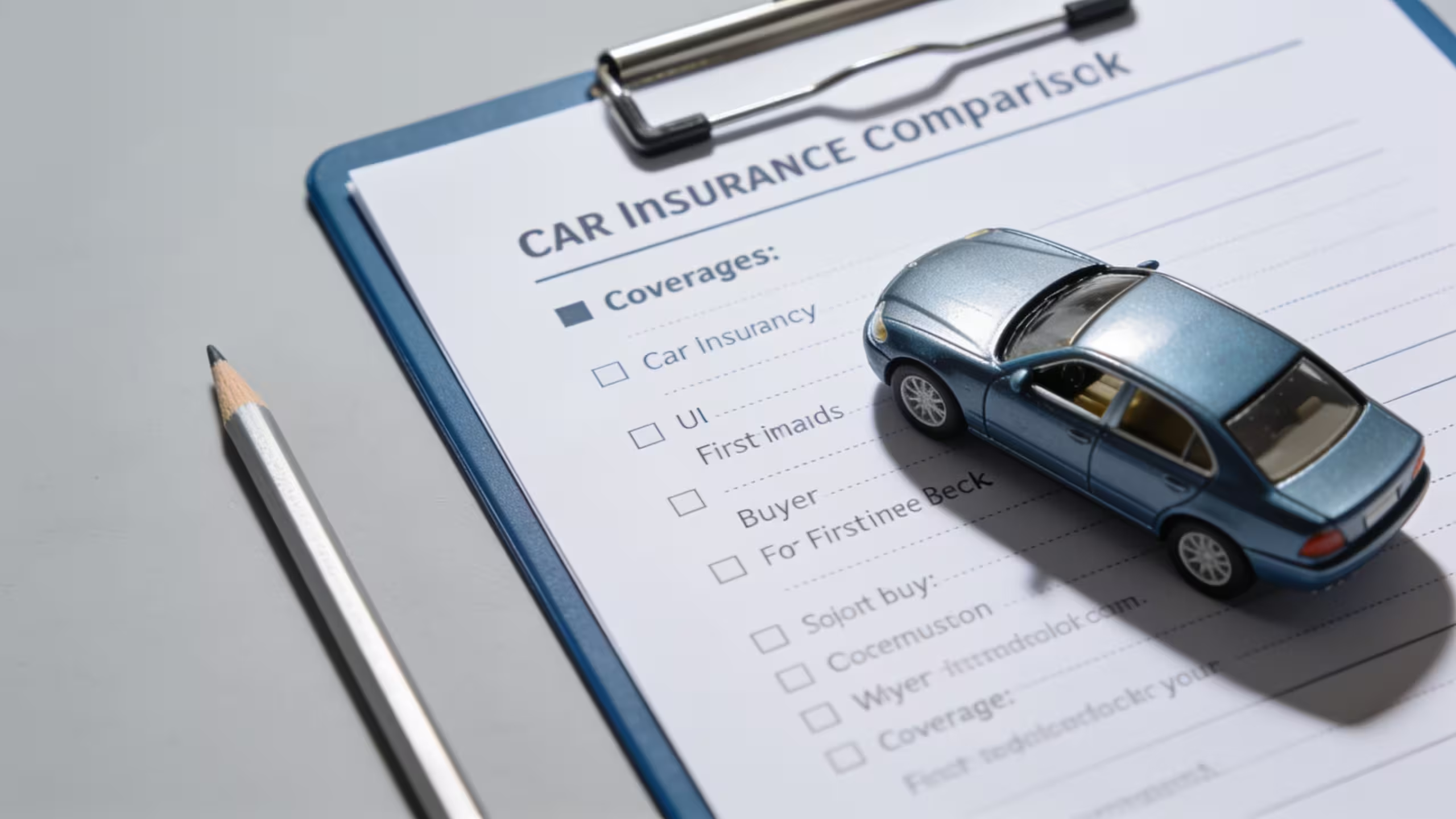
According to the Insurance Information Institute, auto insurance premiums are calculated using a combination of driving record, vehicle type, location, coverage selections, and years of experience. For first-time drivers, the absence of any driving history is the single largest cost driver, because insurers have no claims data to estimate your individual risk level.
Three policy features are worth prioritizing when comparing options as a first-time buyer:
- Accident forgiveness: Some carriers will not raise your rate after your first at-fault accident. For a driver still establishing a record, this protection can prevent a significant rate increase early on.
- Telematics programs: These optional programs use a phone app or plug-in device to track driving behavior and reward safe habits with discounts at renewal. New drivers often benefit most because they have no history to work from, and clean tracked data is the fastest way to build a favorable profile.
- Good student discount: If you are a student maintaining at least a B average, most major carriers offer a premium reduction. This discount requires only a transcript or grade verification and can be applied immediately.
Liability-Only vs. Full Coverage: Which One Do You Need?
The most consequential coverage decision for any first-time buyer is whether to carry liability-only coverage or full coverage. This choice shapes both your monthly premium and your financial exposure after an accident. The right answer depends on your vehicle and how you own it.
| Coverage Type | What It Covers | When to Consider It |
|---|---|---|
| Liability only | Damage and injuries you cause to others. Does not pay for repairs to your own vehicle. | You own your car outright and it carries a low market value |
| Collision coverage | Repairs to your vehicle after an accident, regardless of who caused it | Your vehicle has meaningful market value; you are financing or leasing |
| Comprehensive coverage | Theft, weather events, fire, vandalism, and other non-collision losses | You live in an area with higher theft or severe weather risk |
| Full coverage (all three) | Protects others and your own vehicle across most accident and loss scenarios | Required by lenders for financed or leased vehicles; recommended for newer cars |
For a detailed comparison of these coverage categories and what each one excludes, see our guide on liability versus full coverage.
When You Are Financing or Leasing, Full Coverage Is Not Optional
If you are making loan or lease payments on your vehicle, your lender contractually requires you to carry both collision and comprehensive coverage. Dropping these protections while a lender holds an interest in your car is a policy violation that typically triggers forced-placed insurance, which usually costs more than keeping the coverage you dropped.
If you own your vehicle outright and it has a low market value, liability-only coverage can be a reasonable starting point, especially while your budget is tight. The trade-off is clear: if you cause an accident, you pay for your own repairs out of pocket.
A Decision Framework: Match Your Situation to the Right Coverage Path
First-time drivers do not all face the same options. Before requesting quotes, identify which of the following scenarios matches your current situation. Each leads to a different starting strategy.
| Your Situation | Recommended Starting Path |
|---|---|
| Teen driver living at home, being added to a parent’s policy | Stay on the parent’s policy for as long as eligible. This is almost always the lowest-cost path for young drivers with no established record. Enroll in a telematics program through the parent’s carrier to begin building a favorable data profile. |
| Adult getting licensed for the first time, purchasing own car | Purchase your own policy. If the vehicle is financed, full coverage is required. Compare quotes from at least three carriers because each company handles “no prior insurance history” differently for adult buyers. |
| Young adult moving off a parent’s policy for the first time | Get your own policy. If you have a clean record on the parent’s plan, confirm whether that history transfers when requesting quotes independently. Telematics programs can help bridge the gap while you build a standalone record. |
| Tight budget, vehicle owned outright and older | State minimum liability coverage is a viable starting point, but understand the gap: your vehicle is unprotected after an at-fault accident. Enroll in telematics immediately to work toward a rate reduction as quickly as possible. |
How to Lower Your Premium as a First-Time Driver
Rates are high for first-time drivers because insurers have no data on how you actually perform behind the wheel. The fastest route to a lower rate is to provide that data, either through a telematics program, a clean record over time, or both.
- Enroll in a telematics program: These usage-based programs track braking, acceleration, and night driving through a smartphone app. Drivers who demonstrate safe habits typically receive meaningful discounts at renewal, and new drivers benefit most because there is no prior record to compete with.
- Maintain a B average or better: Most major carriers offer a good student discount for full-time students with qualifying grades. The discount typically requires a transcript or school verification and can be reapplied at each renewal.
- Choose your vehicle with insurance cost in mind: This point is addressed in more detail below, but the vehicle you drive often has more impact on your first-year premium than any discount program.
- Bundle your policies: If you are also renting an apartment, adding a renters insurance policy from the same carrier often unlocks a multi-policy discount on both premiums.
- Set a manageable deductible: Raising your deductible lowers your premium. Only increase it to an amount you could comfortably cover out of pocket after an accident. Setting a deductible you cannot actually afford defeats the purpose of carrying coverage.
- Pay your full six-month premium at once: Many carriers offer a pay-in-full discount. If your budget allows for the upfront cost, this is one of the simplest reductions available without changing your coverage.
Does the Car You Drive Change Everything?
In practice, many first-time drivers focus all their energy on discount programs when the vehicle they choose has an equal or larger impact on the premium. A used sedan with a strong safety rating typically costs significantly less to insure than a newer crossover, sports car, or luxury vehicle, regardless of which discounts apply.
According to the National Association of Insurance Commissioners, the make and model of a vehicle, its repair cost history, its theft frequency, and its available safety features all feed into how carriers price coverage for that car. Checking the estimated insurance cost of a vehicle before purchasing it is a practical step most first-time buyers skip entirely.
Understanding the full range of factors that affect your rate is worth the time. Our breakdown of factors that raise your auto premium covers all ten variables insurers use and which ones you can actively manage.
How First-Time Adult Drivers Are Rated Differently From Teens
One distinction that most comparison articles skip entirely: a 16-year-old getting their license and a 32-year-old getting their license for the first time do not face the same underwriting scenario, even though both are technically first-time drivers.
Teen drivers fall into a defined statistical risk category that insurers have priced for decades. A first-time adult driver is treated differently: they are not automatically placed in the highest-risk tier based on age, but the absence of prior insurance history still places them above what a driver with a continuous coverage record would pay. The surcharge for no history varies significantly by carrier.
| Driver Profile | How Underwriters Treat the File |
|---|---|
| Teen first-time driver | Placed in a defined statistical risk tier based on age. Rate reflects decades of actuarial data for this group. |
| Adult first-time driver (25+) | Not automatically placed in the highest risk tier, but no prior coverage history means one favorable underwriting factor is absent. Surcharge for missing history varies significantly by carrier. |
What Happens When You Have No Prior Insurance History?
Insurance carriers track continuous coverage as part of your risk profile. A gap in coverage, or no coverage history at all, removes one factor that would otherwise work in your favor. Some carriers apply a formal surcharge for this condition. Others treat it as neutral for adult buyers above a certain age. There is no standardized rule across the industry.
For adult first-time drivers, comparing quotes from at least three separate carriers is particularly important. The only way to determine how a specific insurer weights no prior coverage history is to request a quote directly and note the difference between carriers quoting identical coverage on the same vehicle. That gap, where it exists, reflects exactly how each company treats first-time buyer risk.
Once you select a carrier, maintaining continuous coverage without any lapse is the most straightforward way to build a favorable profile over the first one to three years.
What to Do After You Buy Your First Policy
Purchasing coverage is step one. The habits you build in the first few years of driving shape your rate for a long time. A clean record combined with continuous coverage is the most reliable path to lower premiums over time.
- Set a calendar reminder to compare quotes at every renewal. Rates shift, and the carrier that offered the best rate at your first policy may not be the most competitive two years later.
- Report any address change to your insurer promptly. Carriers price coverage down to the ZIP code in most states, and moving even a short distance can change your rate.
- Revisit your coverage if your vehicle’s market value drops significantly. At some point, the cost of carrying collision and comprehensive coverage may exceed the realistic payout after a total loss.
- Ask your carrier what milestones qualify you for a rate reduction: one year clean, three years clean, age 25, or completion of a state-approved defensive driving course.
For a complete overview of all auto insurance topics, including coverage types, claims, and deductibles, visit our auto insurance resource center.
First-Time Driver Coverage Finder
Select the statement that best matches your situation to see the recommended starting coverage path.
Being added to an existing household policy is almost always the lowest-cost option for teen drivers. Ask the current carrier about telematics enrollment and whether a good student discount applies to reduce the added cost further.
If you are making loan or lease payments, your lender requires collision and comprehensive coverage. Compare quotes from at least three carriers, because each company treats no prior insurance history differently for adult buyers and the variation can be significant.
When requesting quotes independently, confirm whether your years of clean driving on a parent’s policy are recognized by the new carrier. Telematics enrollment can help bridge any gap in standalone history.
Liability-only coverage keeps your premium manageable while you build a record. Understand the trade-off: your own vehicle is not protected after an at-fault accident. Telematics programs are the fastest route to a discount once coverage is in place.