Best Student Loans for Bad Credit: Your Options Compared
By Laurel C. Yazzie | Last reviewed: October 2026
If you are searching for the best student loans for bad credit, or you have no credit at all, getting approved can feel like hitting a wall before you start. The good news is that federal student loans for undergraduates are not built around your credit score the way personal loans or credit cards are.
In reviewing hundreds of loan applications over a decade in consumer lending, the detail most borrowers miss is this: the credit barrier applies mainly to private loans, and even there, practical workarounds exist.
This guide compares the main options, from federal programs you access through the FAFSA to private lenders that use alternative approval criteria. For a broader overview first, see our guide on how bad credit affects your options.
Do You Need Good Credit to Get a Student Loan?
No, not for federal undergraduate loans. Direct Subsidized and Direct Unsubsidized Loans do not use your credit score, so bad credit or no credit history will not block you. Private lenders are different: most check credit, which is where a cosigner or alternative criteria come in.
Student Loan Decision Framework for Bad Credit Borrowers
- If you are a U.S. citizen or eligible non-citizen enrolled at least half-time: start with federal Direct Loans through the FAFSA. No credit check required.
- If you are a graduate student: start with Direct Unsubsidized Loans. Graduate PLUS Loans are no longer available to new borrowers as of July 1, 2026, and new federal limits apply, so check studentaid.gov for current figures before planning around private loans.
- If you need more than your federal limit and have a creditworthy family member willing to help: apply for a private loan with a cosigner.
- If you have no cosigner available: look for private lenders that evaluate GPA, enrollment, or future income potential instead of credit history.
- If you are a parent borrowing for a dependent undergraduate: consider a Parent PLUS Loan, which uses an adverse credit check rather than a minimum credit score.
The Best Student Loans for Bad Credit, Compared
The table below summarizes the main options for U.S. students and parents, what each requires, and who each suits best. For more on cost and long-term protections, see our guide to the differences between federal and private loans.
| Loan Type | Credit Check? | Who Qualifies | Key Advantage for Bad Credit |
|---|---|---|---|
| Direct Subsidized Loan | No | Undergrads with financial need | No interest while enrolled at least half-time |
| Direct Unsubsidized Loan | No | Eligible students, no financial need required | Credit history is never a factor |
| Parent PLUS Loan | Adverse credit check only | Parents of dependent undergrads (borrowing caps apply) | No minimum credit score required |
| Private Loan with Cosigner | Yes (cosigner’s credit evaluated) | Students with a creditworthy cosigner | Access to private loans despite low personal credit |
| Private Loan (No Cosigner) | Alternative criteria (GPA, income potential) | Varies by lender, often upperclassmen at eligible schools | An option when no cosigner is available |
Federal Student Loans: Start Here Before Anything Else
For anyone comparing the best student loans for bad credit, federal loans come first. According to the Consumer Financial Protection Bureau, federal student loans come with borrower protections, such as deferment and forbearance options, that private loans generally cannot match. The repayment plans available to new borrowers have changed, so check studentaid.gov for current options.
To access federal loans, complete the Free Application for Federal Student Aid (FAFSA) each academic year. Your school will send an aid offer listing the federal loans you qualify for. Accept those before exploring private options.
- Direct Subsidized Loans: For undergraduates with demonstrated financial need. No credit check. The government pays the interest while you are enrolled at least half-time.
- Direct Unsubsidized Loans: For eligible undergraduate and graduate students, with no financial need requirement. No credit check. Interest accrues immediately, but repayment is deferred until after you leave school.
- Parent PLUS Loans: For parents of dependent undergraduates. An adverse credit check applies, but no minimum credit score is required. Graduate PLUS Loans are no longer available to new borrowers as of July 1, 2026.
Parent PLUS Loans: What “Adverse Credit” Actually Means
The Parent PLUS credit check is not the same as a private lender’s credit review. The Department of Education does not set a minimum credit score. It checks for adverse credit history, such as seriously delinquent accounts or events like a bankruptcy discharge, foreclosure, repossession, tax lien, or default on federal student aid within a set lookback period. See the Parent PLUS page at studentaid.gov for the current definition.
A low score on its own, without those specific events, does not automatically disqualify a parent. If a parent is denied, the options include applying with an endorser (similar to a cosigner) or documenting extenuating circumstances. New annual and lifetime caps per student also apply, and the loan is the parent’s debt, not yours, so have that conversation before applying.
Private Student Loans for Bad Credit: What to Know
Private lenders set their own eligibility criteria, and most evaluate credit. For borrowers with bad credit, two paths exist: applying with a cosigner, or finding a lender that uses criteria other than credit score.
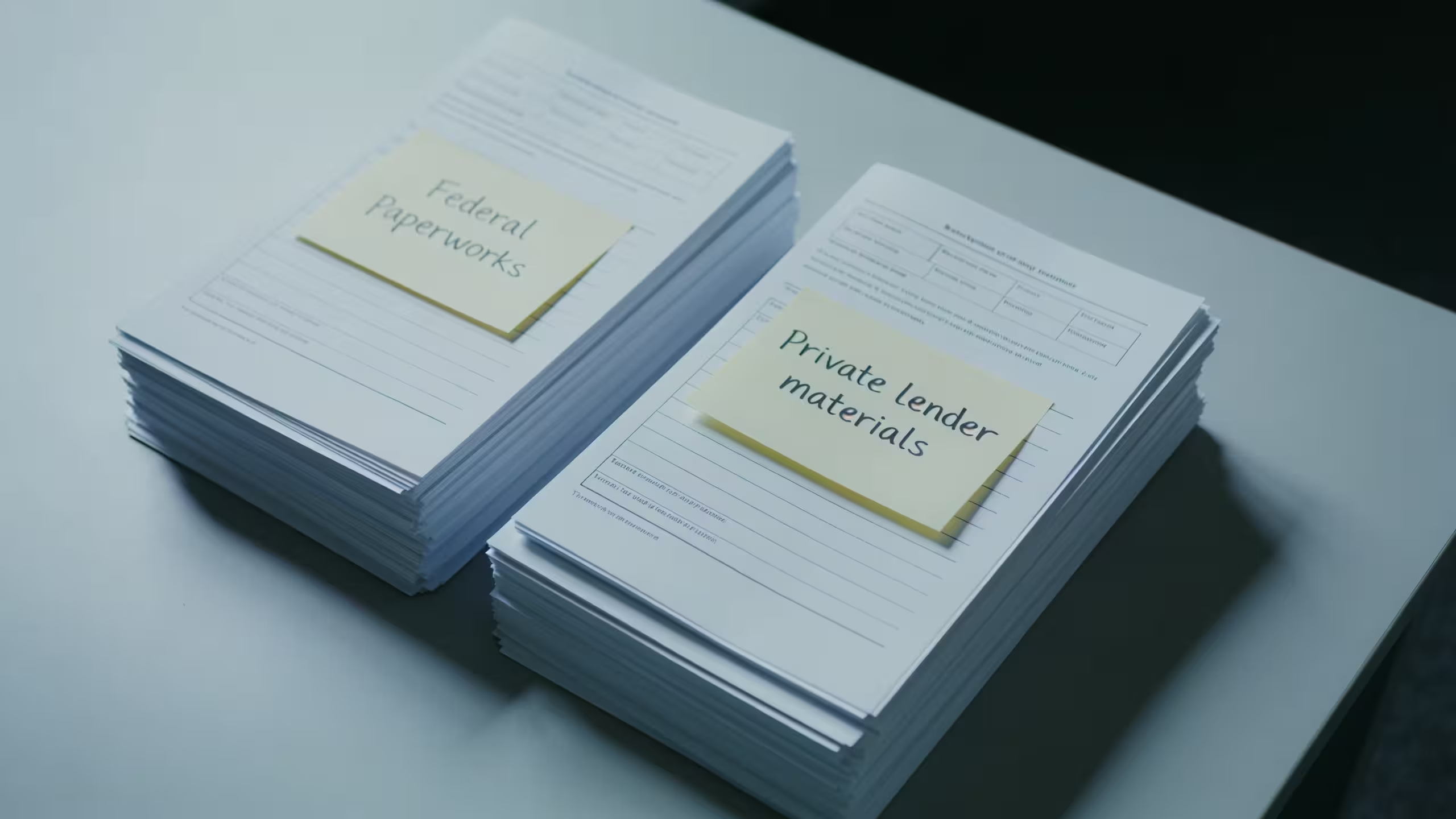
Cosigned vs. No-Cosigner Private Loans at a Glance: A cosigned loan uses a creditworthy co-applicant’s profile to qualify you and may offer lower rates. A no-cosigner loan uses alternative factors, such as GPA or projected income, but typically comes with fewer lender choices and potentially higher rates. Check terms directly with each lender before applying.
Private Loans With a Cosigner
Adding a creditworthy cosigner, typically a parent or close relative, is the most common way bad credit borrowers access private student loans. The lender evaluates the cosigner’s credit profile alongside yours, which can open up significantly more options.
From a practical standpoint, many borrowers treat the cosigner arrangement as temporary. Several private lenders offer cosigner release once the borrower has made a set number of on-time payments and meets the lender’s credit requirements alone. Release terms vary, so review each policy before you apply, not after. Ask whether a soft credit pull is available so you can check your rate without a hard inquiry.
Private Loans Without a Cosigner
A smaller group of private lenders serves students who cannot access a cosigner. These lenders substitute alternative criteria for a traditional credit review, such as GPA, academic major, year in school, and projected income.
Ascent and Funding U are examples of private lenders that have offered no-cosigner products, generally based on academic performance and enrollment rather than a credit score. Ascent’s no-cosigner option has been limited to eligible upperclassmen and graduate students. Eligibility, states, and terms vary by lender and change over time, so verify current details directly with each company before applying.
If you are weighing this path, our article on your options without a cosigner walks through the strategy in more detail.
How to Strengthen Your Application Before You Apply
What most people miss when comparing loan offers is that private rate quotes reflect the profile you present at the time you apply. A few steps taken first can expand your choices.
- Check your credit reports for errors. Review all three for free at AnnualCreditReport.com and dispute anything incorrect, outdated, or not yours.
- File the FAFSA early. Some aid is first-come, first-served, and filing early shows exactly how much remains to cover before you consider private loans.
- Identify a potential cosigner first. Knowing whether one is available changes which lenders are worth researching.
- Use soft-pull rate checks. Prequalification with several private lenders lets you compare estimated rates without a hard credit pull.
- Confirm school eligibility. Lenders using alternative criteria often limit programs to specific schools, so check the lender’s eligible school list.
Will Taking Out a Student Loan Help My Credit?
It can, over time. Student loans are installment accounts that typically report to the credit bureaus, so on-time payments build a payment history, one of the most heavily weighted factors in most credit scoring models. That record can also help with cosigner release down the road. Missed payments do the opposite, so confirm you can afford the payment before you borrow.
What to Do If You Still Cannot Cover Your Costs
If federal loans and the best student loans for bad credit from private lenders still leave a gap, consider these options before making enrollment decisions.
- Apply for scholarships and grants. These do not need to be repaid and are not based on credit. Start with your school’s financial aid office.
- Ask about institutional aid. Many colleges keep emergency or supplemental funds that do not appear in a standard package, especially if your circumstances changed after you filed the FAFSA.
- Talk with a parent about Parent PLUS. A parent without adverse credit history can borrow with no minimum credit score, but caps apply and the debt is theirs.
- Review your school options. A lower-cost school, or part-time enrollment while working, reduces how much you need to borrow.
For more on borrowing, repayment, and what happens after graduation, visit our student loans overview and resources.
Find Your Best Loan Path
Answer three quick questions to see which student loan type fits your situation.
1. Are you a U.S. citizen or eligible non-citizen enrolled (or planning to enroll) at a school that participates in federal student aid?