By Laurel C. Yazzie | Last reviewed: May 2026
Does Renters Insurance Cover a Stolen Bike Outside?
When your bike disappears from a public rack or gets taken from outside your building, the first question most renters ask is whether their policy will help. The good news is that most standard renters insurance policies do cover a stolen bike outside your home. The amount your insurer pays, however, depends on a few key factors that are worth understanding before you file a claim.
Does Renters Insurance Cover Stolen Bike Outside: Yes. Most standard renters insurance policies cover a stolen bike outside your home through off-premises personal property coverage. Coverage may be limited to a percentage of your total personal property limit. Filing a claim only makes sense if the bike’s value exceeds your deductible.
Does Renters Insurance Cover Stolen Bike Outside?
Theft is a named peril in almost every standard renters insurance policy. That means your personal property coverage extends to your bicycle whether it was taken from your apartment, your building’s bike room, or a public rack across town. The Insurance Information Institute explains that personal property coverage protects your belongings against a defined list of risks called named perils, and theft is consistently among them.
In reviewing hundreds of policies over a decade in the industry, the detail most renters miss is that off-premises coverage is included by default in almost all standard policies, not as a paid upgrade.
Here are the perils most renters insurance policies cover under personal property protection:
- Theft, whether at home or at an outside location
- Vandalism or malicious damage
- Fire and smoke damage
- Windstorm or hail
- Damage caused by a motor vehicle collision
- Falling objects
How Off-Premises Coverage Works for a Stolen Bike
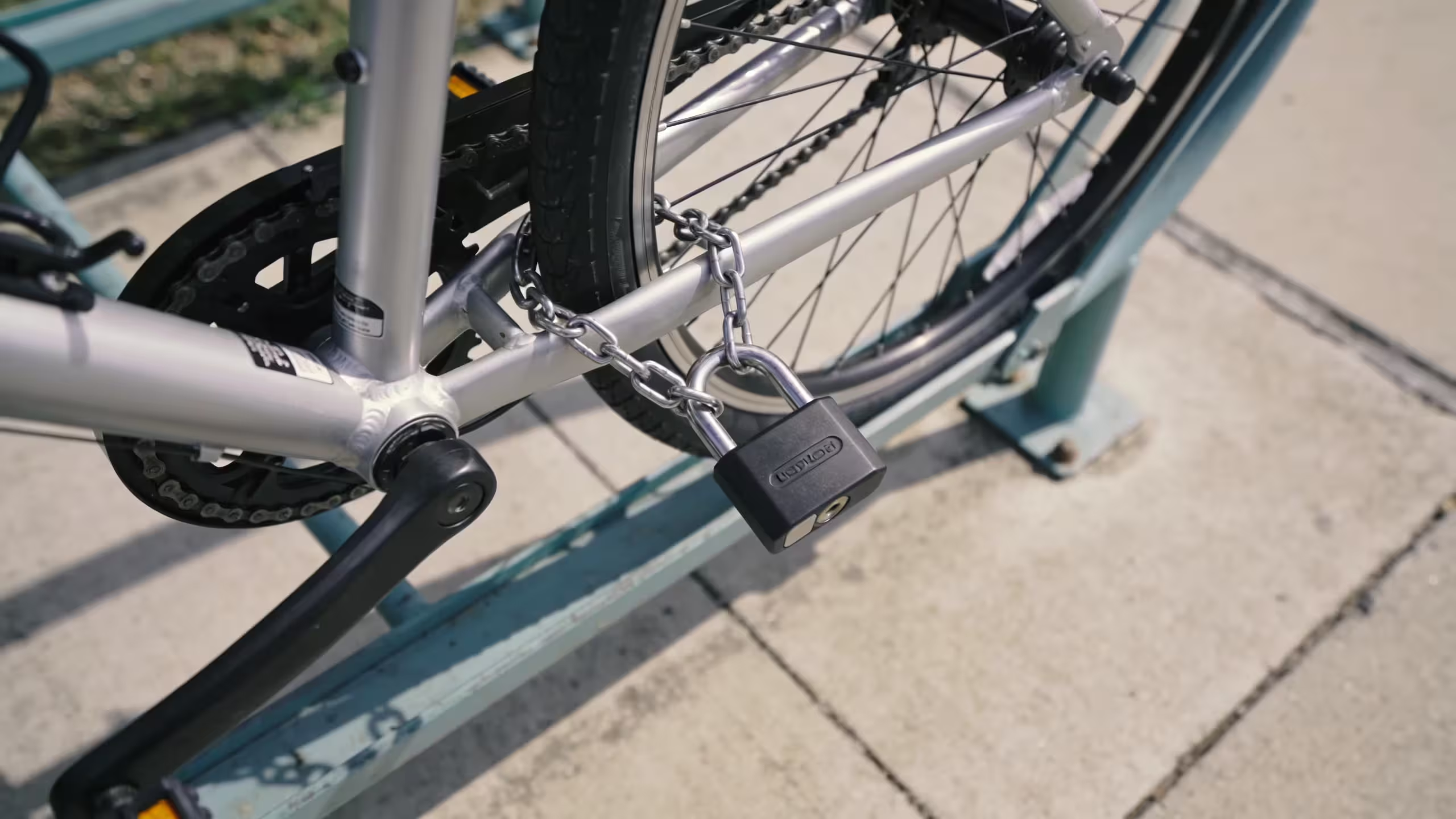
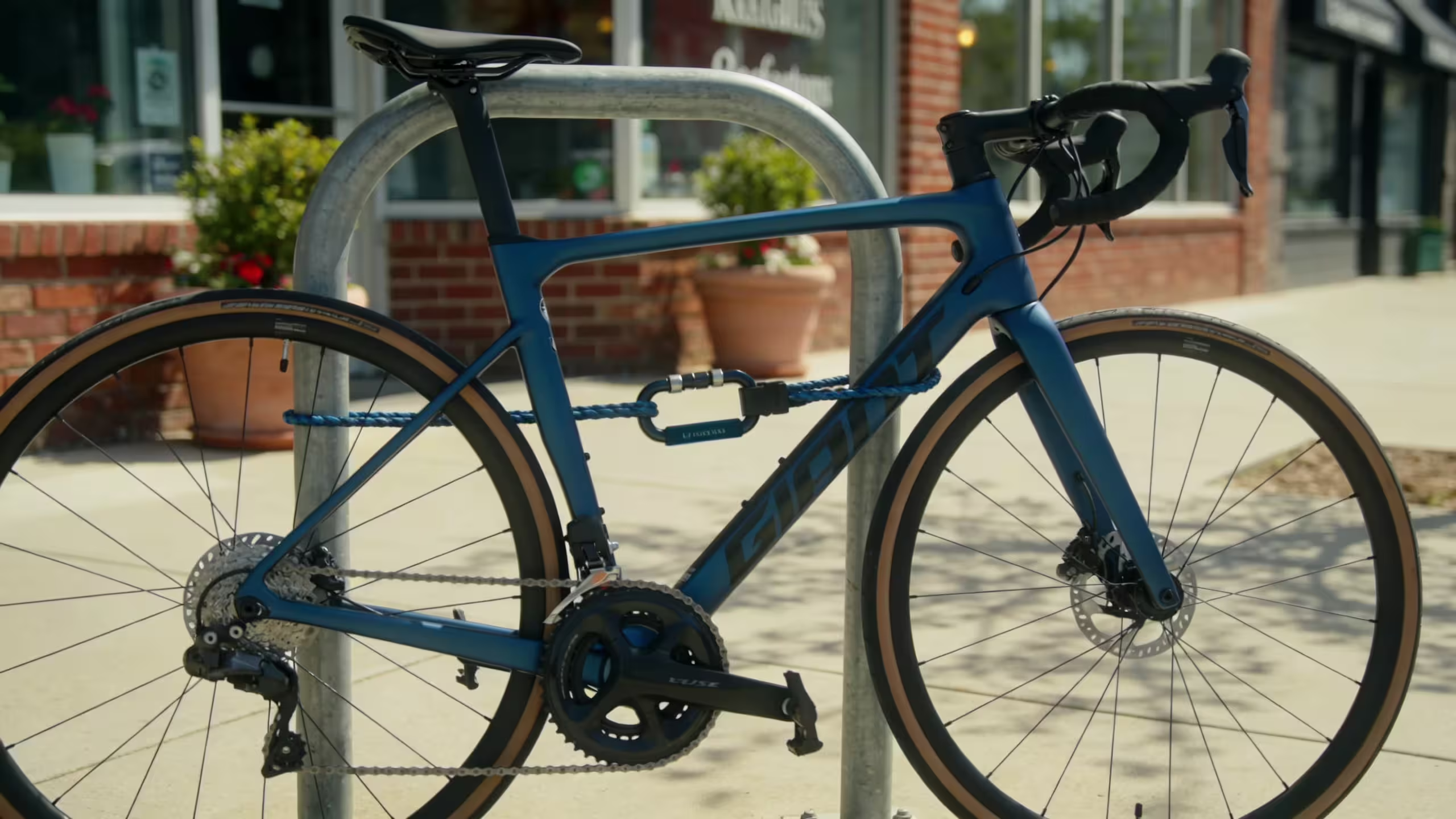
Your renters policy’s personal property coverage generally follows your belongings wherever they go. If your bike is stolen from a coffee shop bike rack, a gym parking lot, or a park trail, that qualifies as an off-premises theft, and your policy typically covers it.
The key difference is the limit that applies. Many insurers apply an off-premises sub-limit: a cap on how much they will pay for property stolen or damaged outside your home. This cap is separate from your total personal property limit and may be significantly lower. Your declarations page is the only place to find the exact figure for your specific policy.
| Location of Theft | Coverage Applied | Common Limit Range (verify your policy) |
|---|---|---|
| Inside your apartment or unit | Full personal property limit applies | Up to your policy maximum — check declarations page |
| Outside your home (off-premises) | Off-premises sub-limit applies | Lower than your main limit — verify your declarations page |
| Shared bike room or building storage | Varies by insurer and policy language | May be full limit or off-premises limit — ask your insurer |
| Storage unit (off-site) | Usually treated as off-premises | Full personal property limit may apply — verify with your insurer |
What the Off-Premises Sub-Limit Means for Your Payout
Here is a practical example of why this matters. If your policy carries a $30,000 personal property limit but your insurer applies an off-premises sub-limit, the maximum payout for a bike stolen outside your home could be a small fraction of that total. The sub-limit is the ceiling for that claim, not your full property limit.
According to the National Association of Insurance Commissioners, renters should review their declarations page carefully to understand exactly which dollar limits apply in different theft scenarios. The only accurate figure for your policy is the one written in your own coverage document. Sub-limits vary by insurer and by state.
Does It Matter Where Outside Your Bike Was Stolen?
This is the question most articles skip entirely. Whether your bike was taken from a restaurant rack downtown, a park trail, or your apartment building’s courtyard, most policies treat all of these locations as off-premises if they are outside your actual unit. The sub-limit typically applies regardless of whether the theft happened one block from home or five miles away.
Two edge cases are worth knowing. First, some insurers treat a locked, shared bike room inside your building as an extension of your residence, which means the full personal property limit could apply. Others classify any area outside your actual unit as off-premises. Second, if your bike was stolen from your car’s roof rack or trunk, that still falls under your renters policy, not your auto insurance. Car insurance does not cover personal belongings taken from a vehicle. Your renters policy’s personal property coverage would apply, though the off-premises sub-limit may still come into play.
For a full breakdown of how coverage applies to theft in different outdoor locations, see our guide on renters insurance and off-premises theft coverage.
What Renters Insurance Will Not Cover for Your Bike
Renters insurance is broad but not unlimited. Certain situations fall outside the scope of standard personal property coverage, and knowing them before a theft can save you from a frustrating denied claim.
- Normal wear, tear, or mechanical breakdown
- Flood or earthquake damage
- Damage during racing or competitive events
- E-bikes classified as motor vehicles (throttle-only, self-propelled models)
- Losses at or below your deductible amount
- Mysterious disappearance with no evidence of theft
- Intentional damage by the policyholder
In practice, many renters discover that their insurer requires documentation of a theft before approving the claim. If your bike was left unlocked and simply gone, some insurers will request a police report or other evidence before processing. Always lock your bike and keep a dated photo of it secured whenever possible. That small habit can make the difference between an approved and a denied claim.
ACV vs. Replacement Cost: How Your Payout Is Calculated
Two renters with identical bikes stolen from identical locations can receive very different payout amounts, depending on which valuation method their policies use. This is one of the most overlooked details when people review their renters coverage.
How Your Payout Is Calculated: ACV vs. RCV
Actual Cash Value (ACV): Your insurer pays what the bike is worth today, after depreciation. A bike purchased five years ago for $900 might be valued at $300 today after age and wear are factored in. You also pay your deductible before receiving anything.
Replacement Cost Value (RCV): Your insurer pays what it costs to buy the same or an equivalent bike at today’s retail price. No depreciation is deducted. This is the better option for newer or higher-value bikes.
Quick check: Open your declarations page and look for the phrase “actual cash value” or “replacement cost.” If you are not sure which applies, call your insurer before your next renewal and ask specifically about your personal property valuation method.
How to File a Stolen Bike Claim
Acting quickly after a bike theft gives your claim the best chance of a smooth approval. Most insurers require a police report before processing, and delays in reporting can complicate the timeline.
- File a police report immediately. Note the theft location, approximate time, and your bike’s description and serial number. Request a copy of the report for your records.
- Gather proof of ownership. Pull together purchase receipts, photos of the bike, or a serial number registration. A free service like Bike Index lets you register your bike’s serial number in advance.
- Contact your insurer’s claims department. Call or file online to open the claim. Have your policy number and the police report number ready.
- Submit all required documentation. This includes the police report, proof of purchase, any photos, and a description of the theft circumstances.
- Review the settlement offer carefully. Check whether the payout reflects your policy’s valuation method (ACV or replacement cost) and whether the off-premises sub-limit was applied. If the math does not look right, ask your claims rep to walk through the calculation.
What most people miss when reading their policy is the registration step. Registering your bike’s serial number before a theft happens takes only a few minutes and can both speed up your claim and help law enforcement if the bike turns up at a pawn shop or online listing.
Do You Need Extra Coverage for Your Bike?
A standard renters policy is enough for most everyday bicycles. But if you own a higher-value road bike, a custom build, or an e-bike, running through a quick check before a theft happens can save you from an unpleasant surprise when you file a claim.
Decision Framework: Do You Need a Bicycle Endorsement?
Step 1: Is your bike’s value less than your deductible?
If yes: A claim will not pay out. No endorsement is needed for claim purposes, but consider whether your deductible is set too high for the value of property you own.
Step 2: Was your bike stolen outside your home?
If yes: Check your off-premises sub-limit on your declarations page. If the bike’s value exceeds that limit, you have a coverage gap even if your total personal property limit is high.
Step 3: Does your bike’s value exceed the off-premises sub-limit or your full personal property limit?
If yes: Ask your insurer about a scheduled personal property endorsement (also called a rider). This adds the bike individually to your policy, often with no sub-limit cap and coverage for its full appraised value for a small addition to your annual premium.
When reviewing policies, the scheduled endorsement option is frequently the most cost-effective choice for bikes worth several hundred dollars or more. Your insurer can quote the endorsement cost in minutes. To understand how other belongings fit into your overall coverage, see our full guide on what renters insurance covers.
If you are also shopping for a new policy or wondering how a rider affects your premium, our breakdown of how much renters insurance costs explains what drives your rate and where there is room to adjust it.
FAQ: Does Renters Insurance Cover Stolen Bike Outside?
Does renters insurance cover a bike stolen from a public bike rack?
Yes, in most cases. Theft from a public bike rack is treated as an off-premises loss under your renters insurance personal property coverage, and theft is a named peril in nearly all standard policies. The key detail to check is your policy’s off-premises sub-limit, which caps how much your insurer will pay for property stolen outside your home. This limit is usually lower than your full personal property limit, so reviewing your declarations page before a theft happens is strongly recommended.
What is an off-premises sub-limit and how does it affect my claim?
An off-premises sub-limit is a cap in your renters insurance policy that limits how much the insurer will pay for personal property stolen or damaged outside your home. It is separate from and typically lower than your total personal property coverage limit. For example, if your total personal property limit is $30,000 but your policy includes an off-premises sub-limit, the maximum payout for your stolen bike may be a fraction of that total regardless of the bike’s actual value. You can find your specific off-premises sub-limit on your declarations page or by calling your insurer directly.
Does renters insurance cover e-bike theft?
It depends on the type of e-bike. Most standard renters insurance policies cover pedal-assist e-bikes (Class 1 and Class 3), which require the rider to pedal before the motor engages. However, throttle-only or self-propelled e-bikes that move without pedaling may be classified as motor vehicles, which renters insurance typically does not cover. If you own an e-bike, review your policy language carefully or ask your insurer for confirmation of how your specific model is classified. A scheduled personal property endorsement may be the safer option for high-value e-bikes regardless of class.
What should I do first when my bike is stolen?
File a police report as soon as possible. Include the theft location, approximate time, and a description of your bike, including the serial number if you have it registered. Request a copy of the report number, since most insurers require it before processing a claim. After filing the police report, contact your insurer’s claims department and gather your proof of ownership, including purchase receipts or photos, to submit with the claim.
Does renters insurance also cover stolen bike accessories like a helmet or lock?
Yes, accessories stolen at the same time as or separately from the bike are generally covered as personal property under your renters policy, provided the theft qualifies as a covered peril and the total value of the stolen items exceeds your deductible. Keep receipts for helmets, locks, bike computers, and other accessories so you have proof of value if you need to file a claim. The same off-premises sub-limit that applies to the bike itself would also apply to accessories stolen outside your home.
Back to the complete renters insurance guide library.