Auto Insurance for Leased Vehicles: What Coverage You Actually Need
By Laurel C. Yazzie | Last reviewed: November 2026
Understanding auto insurance for leased vehicles starts with one fact: the leasing company owns the car, not you. That changes what kind of coverage you are required to carry. Most drivers assume their state’s minimum coverage is enough for any car. For a leased vehicle, that assumption will put you in breach of your contract.
Having worked directly with clients on lease agreements, the most common misconception I encountered was that the state minimum was all they needed. It is not. Lease agreements set their own coverage requirements, and they are almost always stricter than state law.
Auto Insurance for Leased Vehicles: When you lease a car, auto insurance for leased vehicles requires more than state minimums. Most lease agreements mandate full liability, comprehensive, and collision coverage. Many lessors also require gap insurance to protect the vehicle’s value. These requirements are set by the lessor and almost always exceed what state law requires.
Why Leased Cars Require More Than the State Minimum
Every state sets a floor for how much liability coverage drivers must carry. But when you sign a lease, the leasing company adds its own requirements on top of that floor. Because the lessor retains ownership of the vehicle throughout the lease term, they have a direct financial interest in keeping it protected.
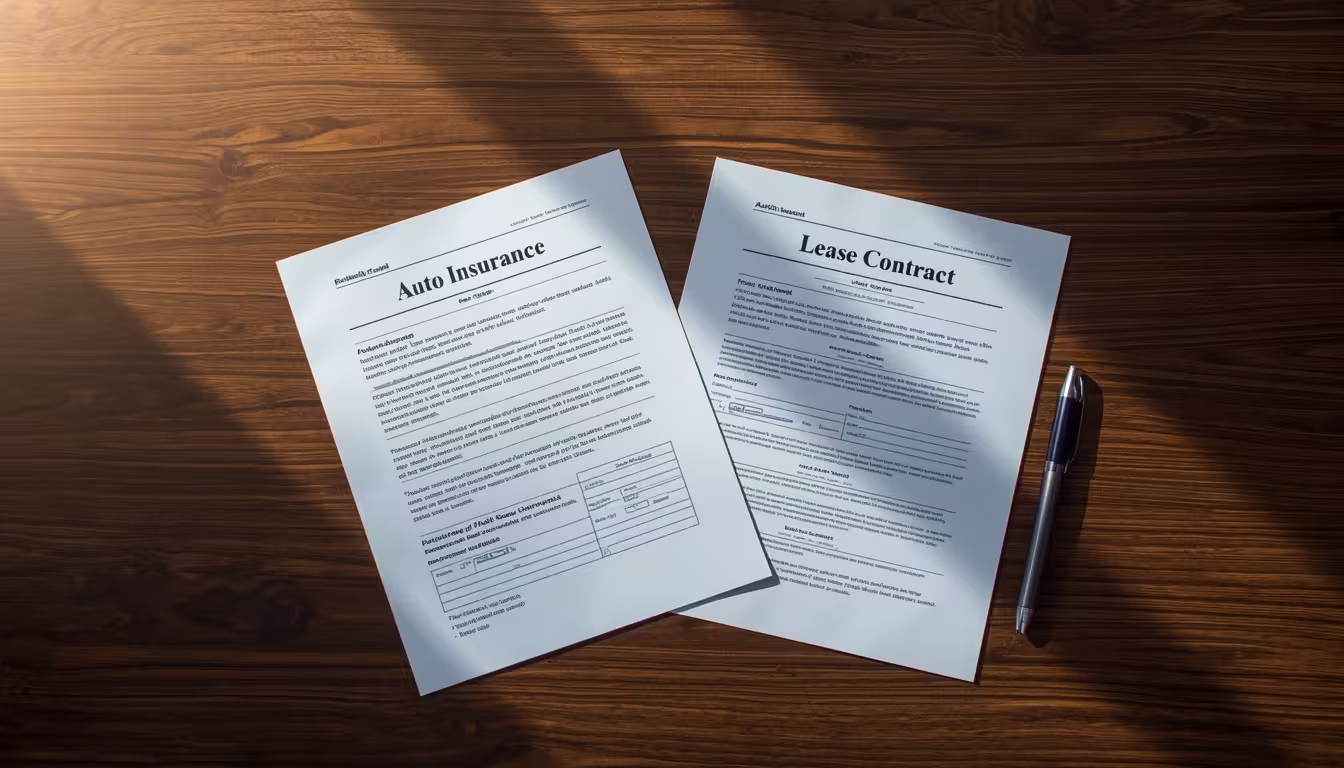
From a practical standpoint, the coverage limits written into your lease contract are what you must meet, regardless of what state law requires. If your policy falls short, you could be in breach of your lease agreement and exposed to significant out-of-pocket financial liability.
- Lessor ownership: The vehicle belongs to the leasing company during the entire term. Their asset must be protected against damage and loss.
- Depreciation risk: New vehicles lose value quickly. Lessors want assurance that damages are covered at fair market value, not the state’s liability floor.
- Shared liability exposure: In some states, the lessor’s name may appear on the registration, increasing their legal exposure if you cause an accident.
What Auto Insurance for Leased Vehicles Must Include
Lease agreements typically spell out the exact coverage types and minimum limits you must maintain. If you are unsure what your contract requires, review the insurance section of your lease documents before choosing or renewing a policy.
According to the Insurance Information Institute, lessors generally require the following coverage types as part of a standard lease agreement:
- Liability coverage: Covers bodily injury and property damage you cause to others. Lessors typically require limits well above state minimums. Check your specific lease contract for the minimum limits required.
- Comprehensive coverage: Covers damage from non-collision events such as theft, weather damage, fire, and vandalism. Almost universally required for leased vehicles.
- Collision coverage: Covers damage to the vehicle when it strikes another car or object, regardless of fault. Also almost always required by lease agreements.
- Gap insurance: Covers the difference between the vehicle’s current market value and the remaining balance on your lease if the car is totaled or stolen. Some lessors include gap coverage automatically; others require you to purchase it separately.
Knowing the difference between liability vs. full coverage matters most when you lease, because lease agreements almost always require the full coverage package.
What Happens If Your Coverage Falls Short
If your auto policy does not meet the minimum requirements in your lease, the lessor can purchase coverage on your behalf and bill you for it. This “force-placed insurance” almost always costs more than a policy you shop yourself, and it is designed to protect the lessor, not you as the driver. Reviewing your lease requirements before your policy lapses or renews is the best way to avoid it.
Gap Insurance: What It Is and Why It Matters for Leased Vehicles
Gap insurance covers the difference between what your vehicle is worth on the day of a total loss and what you still owe on your lease. Standard auto insurance pays out the actual cash value of the vehicle at the time of a claim. If that payout is less than your remaining lease balance, the shortfall is your responsibility.
According to the National Association of Insurance Commissioners, gap coverage is designed specifically to close that financial shortfall. Without it, a driver whose leased car is totaled in the first year or two of a lease term could owe thousands of dollars even after their insurance claim is settled.
How to Decide If You Need Gap Insurance
Not every lessee is in the same position when it comes to gap insurance. Use this framework to decide:
Gap Insurance Decision Framework
- If you made a small or no down payment and the vehicle is new, gap coverage is worth having. New vehicles depreciate quickly, and your insurance payout could fall short of your lease balance in the early term.
- If you are in the later years of your lease and have made most of your payments, your remaining balance may be closer to the vehicle’s current market value. The case for gap insurance weakens as the lease winds down.
- If your lease already includes gap coverage as a built-in benefit, you do not need to buy it separately. Review your contract carefully before purchasing a standalone gap policy.
What Happens to Your Insurance When a Leased Vehicle Is Totaled
When a leased vehicle is declared a total loss, your insurance company pays the actual cash value directly to the leasing company, not to you. If that amount is less than your remaining lease obligation, the difference is your responsibility. Gap insurance covers that difference. Without it, you could owe the remaining lease balance on a vehicle you can no longer drive. This is one of the most important coverage gaps drivers overlook when signing a lease.
How to Stay Compliant With Your Lease Agreement
The most reliable way to stay compliant is to review your lease agreement before shopping for insurance. Look for the specific liability limits, required coverage types, and any deductible maximums written into the contract. Those limits are your compliance floor, not the state minimums.
When reviewing policies, confirm that your declarations page matches what your lessor requires. Some lease agreements specify maximum deductibles for comprehensive and collision coverage. A deductible that exceeds your lease limit may put your policy out of compliance even if your coverage types are correct.
- Read the insurance section of your lease. It lists the required coverage types and minimum liability limits in plain language.
- Compare your current policy. If you are transferring a policy from a previously owned vehicle, your existing limits may fall short of what the lessor requires.
- Ask about included gap coverage. Many auto dealerships include gap coverage in the lease agreement. Confirm this before purchasing a standalone gap policy.
- List the leasing company as lienholder. Notify your insurance company that the lessor should be listed as an additional insured or lienholder on the policy declarations page.
For a closer look at how the main coverage types work together, see our guide to collision and comprehensive coverage.
How Does Gap Coverage Differ From Comprehensive Insurance?
Comprehensive insurance pays the actual cash value of the vehicle if it is totaled or stolen. Gap insurance covers the amount that comprehensive does not: the difference between that actual cash value and what you still owe on the lease. The two work together, not as replacements for each other. If you have comprehensive coverage but no gap coverage, you are still exposed to the remaining lease balance if the vehicle is totaled early in the term.
For a full overview of all auto coverage types, visit our auto insurance hub.
FAQ: Auto Insurance for Leased Vehicles
Tap any question to expand the answer.
Do I need gap insurance for every leased vehicle?
Gap insurance is not legally required in most states, but many lease agreements do require it. Even when it is not required, it is worth considering if you are in the early years of your lease, since new vehicles lose value quickly. If the gap between your insurance payout and your remaining lease balance is significant, gap insurance protects you from paying that difference out of pocket.
Can I use my existing auto insurance policy when I start a new lease?
You may be able to use your existing policy, but only if it already meets the coverage types and minimum limits required by your new lease agreement. Many drivers find that a policy written for a previously owned vehicle does not meet the higher liability limits or the comprehensive and collision requirements that lessors typically mandate. Review your lease contract and compare it to your current declarations page before assuming your existing coverage is sufficient.
What happens if my auto insurance coverage drops below my lease requirements?
If your coverage falls below the minimums required in your lease, the leasing company can purchase force-placed insurance on your behalf and charge you for it. Force-placed insurance is typically more expensive than a policy you shop yourself, and it is designed to protect the lessor, not the driver. It may also not include personal liability protection for you, leaving you financially exposed in the event of an accident.
How does auto insurance for a leased vehicle differ from a financed vehicle?
Both leased and financed vehicles typically require comprehensive and collision coverage, since neither the lender nor the lessor wants their asset unprotected. The key difference is gap insurance: financed vehicle owners can usually choose whether to add gap coverage, while many lease agreements require it. Lessors also tend to set higher liability minimums than lenders typically do, and may specify maximum deductible amounts that lenders do not.
What should I do at the end of a lease if the car was in an accident?
When you return a leased vehicle at the end of the term, the leasing company will inspect it for damage. Minor wear and tear is typically acceptable, but damage beyond that threshold can result in end-of-lease fees. If the vehicle was repaired following an accident, keep all repair documentation to demonstrate the work was done properly. Some lease agreements also require that repairs be completed at approved facilities, so review your contract terms before authorizing any body work.