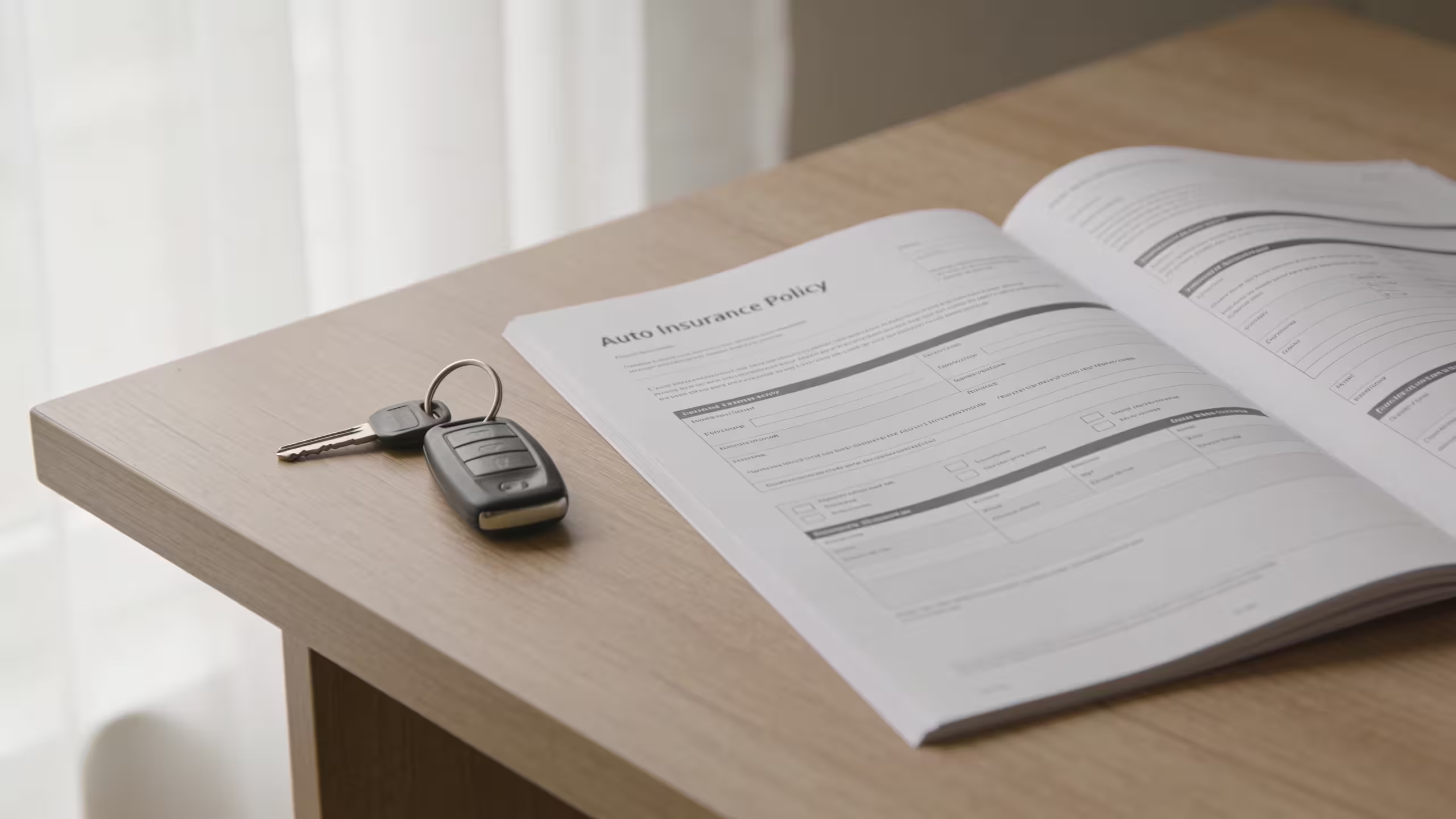
How Much Auto Insurance Do I Need?
By Laurel C. Yazzie | Last reviewed: September 2026
If you have ever stared at an auto insurance quote and wondered whether you are buying too much or too little, you are not alone. Most drivers either grab the cheapest option that keeps them legal or pile on every coverage without a clear reason. Neither approach is right. How much auto insurance you need depends on what your state requires, what you own, and what you could realistically afford to replace or pay for after an accident.
Having worked directly with clients reviewing their auto policies, the most common misconception I encountered was that state-required minimum coverage is enough to actually protect you financially.
How much auto insurance do I need: Most drivers need at least liability coverage, plus collision and comprehensive if your car is financed or if you could not replace it out of pocket. Your liability limits should match or exceed your total assets. Many states also require personal injury protection or uninsured motorist coverage.
The sections below walk through each coverage type, how to set the right limits, and the one question most guides skip: when paying for extra coverage stops making financial sense.
What Auto Insurance Coverage Does the Law Require?
Nearly every U.S. state requires drivers to carry a minimum level of liability insurance before they can legally operate a vehicle. Some states also require personal injury protection or uninsured motorist coverage as part of the minimum package. The exact rules depend on your state, so the legal floor you must meet varies by where you live and register your car.
According to the National Association of Insurance Commissioners, state minimum coverage requirements establish basic financial responsibility standards, not full protection from the real costs of a serious accident. That distinction matters: meeting the minimum means you can drive legally, not that you are adequately covered.
- Bodily injury liability: Pays for injuries you cause to other people in an at-fault accident, including medical bills, lost wages, and legal costs.
- Property damage liability: Pays to repair or replace other people’s vehicles or property when the accident is your fault.
- Personal injury protection (PIP): Required in no-fault states; covers your own medical costs and certain other expenses regardless of who caused the accident.
- Uninsured motorist coverage (UM/UIM): Required in some states; protects you when the at-fault driver carries no insurance or not enough to cover your losses.
If you are unsure what your state mandates, your state’s department of insurance website is the most current and reliable source for minimum coverage rules.
How Much Auto Insurance Do I Need?
The right amount depends on four factors: your car’s value, who holds the title, what assets you have, and your state’s requirements. A driver with a paid-off eight-year-old sedan has different needs than someone financing a new vehicle while also owning a home. Use the framework below as a starting point for your own situation.

| Your Situation | Coverage to Consider |
|---|---|
| Car is financed or leased | Liability + collision + comprehensive (lenders typically require both physical damage coverages) |
| Car is paid off with significant market value | Liability + collision + comprehensive |
| Car is paid off with low market value | Liability at minimum; evaluate whether collision and comprehensive still make financial sense (see below) |
| You have significant savings, a home, or other assets to protect | Higher liability limits; consider adding personal umbrella insurance |
| Your state requires PIP or uninsured motorist coverage | Include all state-mandated coverages before adding optional ones |
Liability Limits: How High Should You Go?
Liability coverage is written as a set of three numbers, such as 100/300/100. Each number represents thousands of dollars in coverage: bodily injury per person, total bodily injury per accident, and property damage per accident. A 100/300/100 policy covers up to $100,000 for one injured person, $300,000 for all injured people in a single accident, and $100,000 in property damage.
State minimum limits are often far lower than what a serious accident can cost. Medical bills, physical therapy, lost wages, and legal fees add up quickly, and if the at-fault driver’s coverage runs out, a court can pursue their personal assets. A practical guideline used by many insurance professionals is to carry enough liability coverage to roughly match your total net assets. If you own a home or have substantial savings, higher limits are worth the added premium. Our guide on the difference between liability and full coverage explains how to choose between the two approaches.
When Does Dropping Collision or Comprehensive Make Sense?
This is the question most general guides skip over, but it matters for anyone driving an older or lower-value vehicle. Collision coverage pays to repair or replace your car after an accident with another vehicle or object. Comprehensive covers non-collision events: theft, weather damage, hitting an animal, and similar losses. Both coverages come with a deductible you pay before the insurer pays the rest.
From a practical standpoint, if your car’s actual cash value is low enough that an insurance payout minus your deductible would be a small amount, the ongoing premium cost for that coverage may not be worth it over time. Consider a vehicle with a current market value of $3,500 and a $1,000 deductible. In a total-loss claim, you would receive $2,500 at most. If the combined annual premium for collision and comprehensive is a significant portion of that number, the coverage loses much of its financial logic year over year.
That said, this is not an automatic decision. If your car is your only reliable transportation and replacing it quickly would create a hardship, keeping both coverages can still make sense even on a lower-value vehicle. Run the numbers for your specific deductible and premium before deciding either way.
Other Coverage Types Worth Knowing About
Beyond liability and physical damage coverage, a few additional coverage types protect you in situations your base policy does not reach. Understanding each one helps you decide what belongs on your policy and what you can reasonably skip.
- Collision coverage: Pays to repair or replace your car after an accident, regardless of fault. Required by most lenders and leasing companies. See our breakdown of how collision and comprehensive compare for a full side-by-side look at both.
- Uninsured and underinsured motorist coverage (UM/UIM): Pays for your injuries and, in some states, property damage when the at-fault driver has no insurance or not enough. According to the Insurance Information Institute, about 15.4 percent of U.S. motorists were uninsured in 2023, roughly one in every seven drivers on the road. This coverage is one of the most practical additions available, especially given how affordable it typically is relative to the protection it provides.
- Personal injury protection (PIP): Covers medical expenses, lost wages, and in some states additional costs such as childcare or household services after an accident, regardless of fault. Required in no-fault states and optional in others.
- Medical payments coverage (MedPay): A narrower version of PIP available in most states. It covers medical costs for you and your passengers after an accident but does not extend to lost wages or other expenses. Useful if you have a high-deductible health insurance plan.
- Personal umbrella insurance: A separate policy that adds liability coverage above and beyond your auto policy’s limits. Typically starts at $1 million in additional coverage and is worth considering if your assets exceed what your auto policy’s liability limits can protect.
How to Lower Your Premium Without Sacrificing Protection
Reducing your auto insurance cost does not have to mean reducing meaningful coverage. Several adjustments lower your premium while keeping the protections that matter most.
- Raise your deductible on physical damage coverages: A higher deductible on collision and comprehensive lowers your annual premium. If you have savings set aside to cover a larger out-of-pocket expense after a claim, this trade-off can be worthwhile over time. The key is choosing a deductible you could actually pay without financial strain.
- Bundle your policies: Many insurers offer a discount when you carry auto and home or renters insurance with the same company. Ask about multi-policy pricing before you renew, especially if your policies are currently with different carriers.
- Compare quotes at renewal: Rates shift from year to year based on your insurer’s own pricing adjustments, your claims history, and local market conditions. Shopping your coverage annually, or at least every two to three years, can reveal meaningful differences.
- Maintain a clean driving record: Moving violations and at-fault accidents raise premiums, sometimes significantly, and the impact can last several years. Safe driving habits are one of the most consistent long-term ways to keep your rate in check.
- Ask about discounts you may already qualify for: Good driver discounts, low-mileage discounts, safety feature discounts, and professional or alumni group discounts are common but not always applied automatically. It is worth asking your insurer directly.
For a broader look at how auto insurance works, what different coverages include, and how insurers calculate your rate, visit our auto insurance hub.
FAQ: How Much Auto Insurance Do I Need?
Tap any question to expand the answer.
Is state minimum auto insurance enough coverage?
State minimums are designed to meet a legal requirement, not to fully protect you from the financial impact of a serious accident. Medical bills, legal fees, and property damage in a significant collision can easily exceed minimum liability limits, leaving you personally responsible for the difference. Most insurance professionals recommend carrying liability limits that at least match the total value of your assets. If you are not sure what your state requires or how your current limits compare, your state’s department of insurance website is a reliable starting point.
Do I need collision and comprehensive if my car is paid off?
Once your car is paid off, you are no longer required by a lender to carry collision or comprehensive, but that does not automatically mean you should drop them. The right answer depends on your car’s current market value and your deductible. If the potential insurance payout after a total loss would be small relative to what you pay in premiums each year, dropping those coverages may make financial sense. On the other hand, if the car is still worth enough that losing it would create a hardship, keeping the coverage is reasonable even without a lender requirement.
What does 100/300/100 mean on an auto insurance policy?
These three numbers represent your liability coverage limits in thousands of dollars. The first number, 100, is the maximum your insurer will pay for one person’s bodily injuries in an accident you caused. The second number, 300, is the total maximum for all bodily injuries in a single accident. The third number, 100, is the maximum for property damage to other vehicles or objects. Any costs above those limits become your personal financial responsibility, which is why many insurance professionals recommend limits that match or exceed your total assets rather than sticking with state minimums.
Is uninsured motorist coverage worth adding to my policy?
For most drivers, uninsured motorist coverage is one of the most cost-effective additions available. It pays for your injuries and, in some states, property damage when the at-fault driver has no insurance or not enough to cover your losses. According to the Insurance Information Institute, roughly one in seven U.S. drivers was uninsured in 2023, which means the odds of encountering an uninsured driver are meaningful. Some states require this coverage; in states where it is optional, the premium is typically modest relative to the protection it provides.
Can I change my auto insurance coverage limits after buying a policy?
Yes, you can adjust your coverage limits, deductible, and most coverage types at any point during your policy term, not just at renewal. Changes typically take effect within a few days and your insurer will recalculate your premium to reflect the adjustment. Major life changes, such as buying a home, paying off your car, or significantly increasing your savings, are good prompts to revisit whether your current coverage amounts still match your situation. Contact your insurer or agent to review your options.