By Laurel C. Yazzie | Last reviewed: April 2026
Does Renters Insurance Cover Water Damage From Upstairs Neighbor?
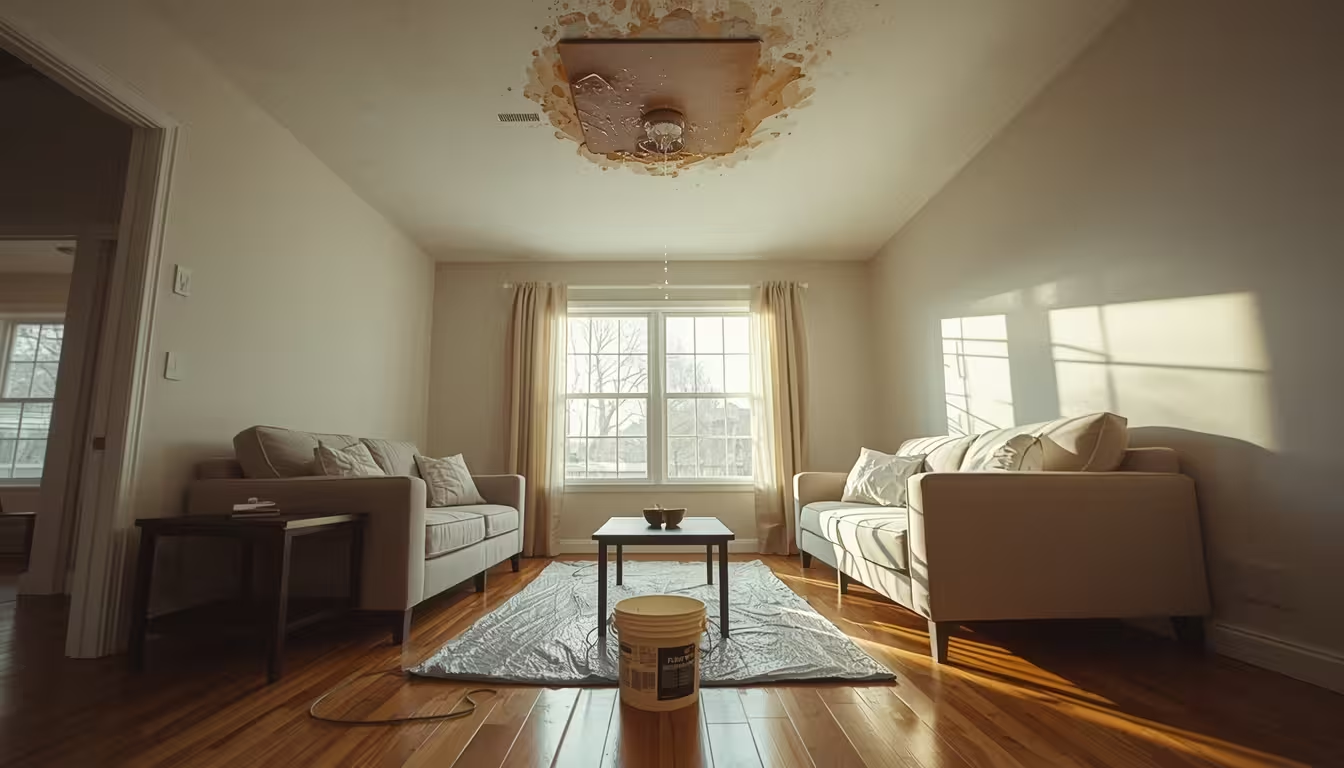
You come home, flip on the light, and notice a brown stain spreading across your ceiling. Water is dripping onto your couch. The upstairs neighbor’s washing machine hose burst while they were at work, and now your belongings are soaked. Your first thought: does renters insurance cover water damage from upstairs neighbor, or are you stuck paying for everything yourself?
The short answer is yes, in most cases. But the details matter. What caused the water, how quickly you act, and which policy responds all determine whether you get reimbursed. This guide walks through every layer of the answer so you know exactly what to expect.
Does Renters Insurance Cover Water Damage From Upstairs Neighbor: Yes, your renters insurance personal property coverage typically pays for belongings damaged by sudden and accidental water from an upstairs unit, such as a burst pipe or overflowing bathtub. Your policy may also cover temporary housing costs if your apartment becomes uninhabitable. The neighbor’s liability coverage may apply if they were at fault.
How Renters Insurance Handles Water Damage From Another Unit
Renters insurance is designed to protect your personal property against sudden and accidental losses. When water comes from an upstairs unit, three parts of your policy may respond, depending on the circumstances.
According to the Insurance Information Institute, standard renters policies cover certain types of water damage, such as from a burst pipe or when the tenant upstairs leaves the water running in the bathtub and floods your apartment. The key phrase is “sudden and accidental.” That distinction determines nearly every claim outcome.
- Personal property coverage pays to repair or replace your damaged belongings, such as furniture, electronics, clothing, and rugs, up to your policy limit and minus your deductible.
- Loss of use coverage pays for hotel stays, meals, and other extra living costs if water damage makes your apartment temporarily uninhabitable.
- Personal liability coverage applies if you accidentally cause water damage that affects another unit — but it does not pay for damage caused to your own belongings by someone else.
When Your Policy Covers Water Damage Caused by a Neighbor
Not all water damage is treated equally. The difference between a covered claim and a denied one often comes down to a single word: sudden. Here is how insurers draw the line.
Sudden and Accidental Events (Covered)
If the water entered your apartment quickly and without warning, your policy likely covers the resulting damage to your belongings. The source must be internal to the building, not an outside flood.
Gradual Leaks and Negligence (Not Covered)
If water has been seeping slowly for weeks, or if the damage resulted from ignored maintenance issues, your claim may be denied. Insurers classify slow leaks as preventable, and standard policies exclude damage from neglect.
| Covered Scenarios | Not Covered Scenarios |
|---|---|
| Burst pipe in the upstairs unit | Slow drip from a pinhole leak that has persisted for months |
| Overflowing bathtub left running by the neighbor | Rising floodwater from a storm or river overflow |
| Washing machine or dishwasher hose failure | Sewage or sump pump backup (unless you carry a water backup endorsement) |
| Fire sprinkler system accidental discharge | Damage from a roof leak caused by poor building maintenance |
The National Association of Insurance Commissioners notes that standard renters policies cover water-related damage from property utilities, but exclusions for flooding and gradual seepage apply uniformly across nearly all HO-4 policies sold in the United States.
Who Pays: Your Policy, the Neighbor’s Policy, or the Landlord?
When water comes from above, three insurance policies can come into play. Knowing which one covers what prevents you from wasting time pursuing the wrong source.
Your Personal Property Coverage
Your renters insurance pays for your damaged belongings first. This is true even when your neighbor is clearly at fault. Filing through your own policy is almost always the fastest path to reimbursement. Your insurer then decides whether to pursue the neighbor’s insurance company to recover what they paid out, a process called subrogation.
The Neighbor’s Liability Coverage
If the upstairs neighbor was negligent, such as leaving a bathtub running and leaving the apartment, their renters insurance liability coverage may pay for your damage. In practice, many renters discover that getting the neighbor’s insurance information and waiting for their adjuster takes far longer than filing through their own policy.
The Landlord’s Building Coverage
Your landlord’s insurance covers the building structure: ceilings, walls, floors, and built-in fixtures. If water damaged the drywall or flooring, that repair falls to the landlord’s policy, not yours. Your renters policy covers only your personal property inside the unit.
Decision Framework: Which Policy Pays First?
If your personal belongings are damaged by sudden, accidental water from above:
→ File through your own renters insurance. It is faster, and subrogation handles recovery from the neighbor later.
If the ceiling, walls, or floors are damaged:
→ Notify your landlord. Those structural repairs fall under the landlord’s building policy.
If you caused the water damage that spread to the unit below you:
→ Your personal liability coverage may pay for the neighbor’s damage. Notify your insurer immediately.
The Claims Process: What to Do After Water Damage From Upstairs
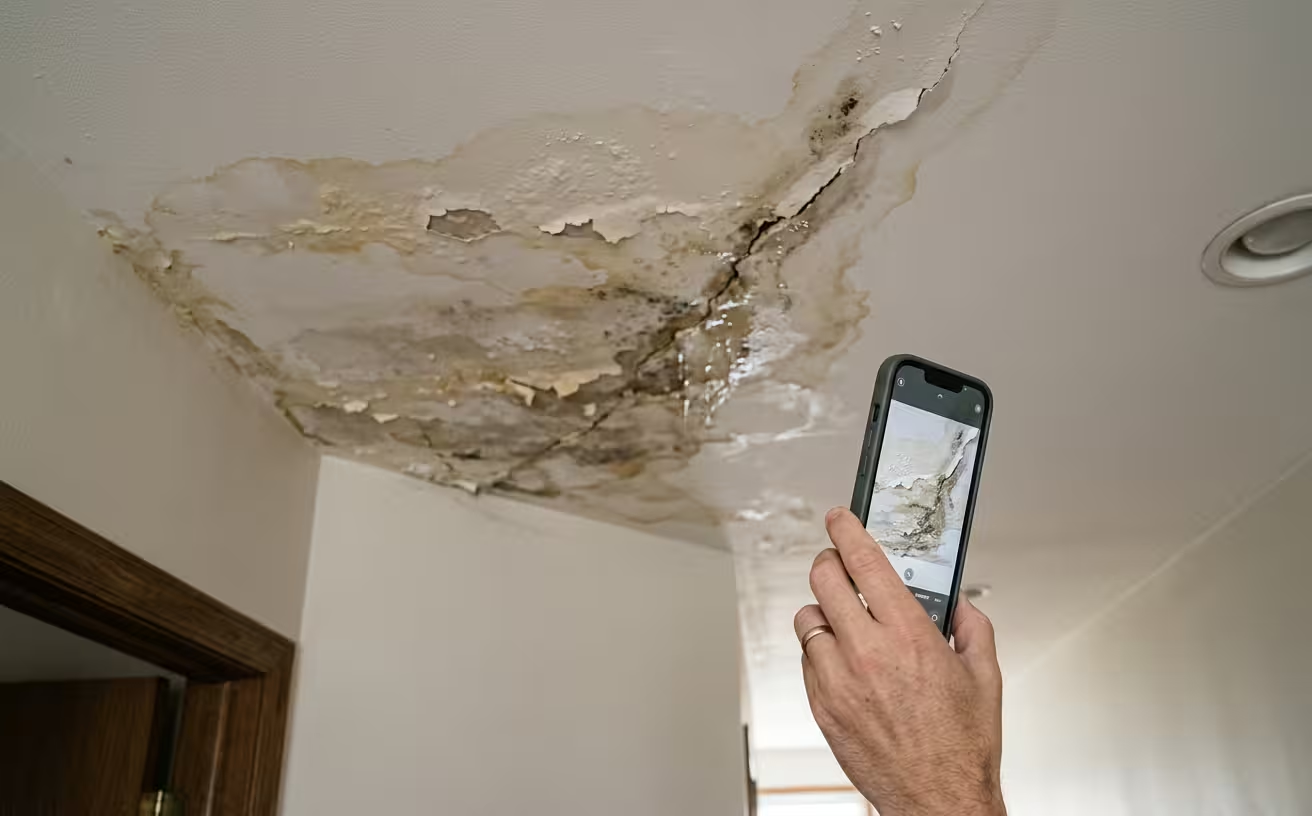
What most people miss when reading their policy is that the speed and quality of your response directly affect the outcome of your claim. Insurers expect you to take reasonable steps to prevent further damage once you discover a leak.
Having worked directly with clients on water damage claims between neighboring units, the most common misconception I encountered was that the neighbor’s insurance would automatically pay for everything, when in reality, filing through your own policy is almost always faster and puts the burden of recovery on your insurer, not you.
- Stop the source of water if you can safely do so. If water is still flowing, shut off the main water valve to your apartment or ask your landlord to do so immediately.
- Document everything before you clean up. Take clear photos and videos of the water entry point, all damaged items, and the surrounding area. Write down the date and time you discovered the damage and any conversations you have with your neighbor or landlord.
- Notify your landlord in writing. Even if the problem originated in another unit, your landlord needs to know about structural damage. A text or email creates a timestamped record.
- Contact your renters insurance company. Open a claim as soon as possible. Provide your documentation, describe how the damage occurred, and ask whether loss of use coverage applies if you need temporary housing.
- Mitigate further damage. Move undamaged belongings away from the wet area, place buckets under active drips, and keep receipts for any emergency repairs or temporary lodging. Insurers reimburse reasonable mitigation costs.
What Happens When Your Upstairs Neighbor Doesn’t Have Renters Insurance?
This scenario is more common than many renters realize. A 2023 poll conducted by the Insurance Information Institute found that only 37% of renters carry renters insurance. If your upstairs neighbor is among the majority who go without, the path to recovery narrows but does not disappear.
Filing Through Your Own Policy (Your Fastest Path)
Your personal property coverage still responds to covered water damage regardless of whether your neighbor is insured. You pay your deductible, your insurer reimburses you for the loss, and then your insurer may attempt to recover from the neighbor directly through subrogation. If the neighbor has no insurance and no significant assets, that recovery effort may fail, but your own claim payout is not affected.
When Small Claims Court Might Make Sense
If your deductible is substantial and the neighbor was clearly negligent, you may consider small claims court to recover your out-of-pocket costs. This route requires evidence of negligence and a willingness to navigate the legal process. It is rarely faster than accepting the deductible as the cost of resolution, but for larger losses it may be worth pursuing.
- Option 1: File through your own renters insurance. You get paid quickly, minus your deductible. Your insurer handles subrogation.
- Option 2: Pursue the neighbor’s liability coverage directly, if they have it. This can take weeks and requires the neighbor to cooperate.
- Option 3: Small claims court, if the neighbor is uninsured and the deductible or uninsured loss is large enough to justify the effort.
FAQ: Does Renters Insurance Cover Water Damage From Upstairs Neighbor?
These are the questions renters ask most often when dealing with water damage from an upstairs unit. Short answers appear below. Expand each question in the interactive FAQ section at the bottom of this page for a more detailed explanation.
- Does renters insurance cover water damage from an upstairs neighbor’s overflowing bathtub? Yes. If the overflow was sudden and accidental, your personal property coverage applies.
- What if the water damage was caused by a slow leak over several months? Gradual leaks are typically excluded. Insurers consider them a maintenance issue.
- Will my renters insurance pay for a hotel while my apartment is being repaired? Yes, if the water damage makes your unit uninhabitable and the cause is a covered peril, your loss of use coverage pays for temporary housing and extra living expenses.
- Does the upstairs neighbor’s insurance have to pay first? No. In practice, filing through your own policy is almost always faster. Your insurer then seeks reimbursement from the neighbor’s insurer through subrogation.
- What if the building’s plumbing caused the leak, not the neighbor? Your personal property coverage still applies to your damaged belongings. The landlord’s insurance handles structural repairs. If faulty building plumbing is the root cause, your insurer may pursue the landlord’s policy through subrogation.
How to Protect Yourself Before Water Damage Happens
The best time to prepare for water damage is before a single drop falls. A few proactive steps can turn a chaotic situation into a manageable insurance claim.
If you are reading this after damage has already occurred, focus on the claims process above. If you are planning ahead, here is what to do. Understanding what renters insurance covers in full helps you spot gaps before they become expensive surprises.
- Review your policy’s personal property limit. Walk through your apartment and estimate the total replacement cost of your belongings. If the number exceeds your coverage limit, increase it.
- Check your deductible. Know the amount you will pay out of pocket before your coverage kicks in. A higher deductible lowers your premium but means you absorb more cost after a loss. Visit our guide on how much renters insurance costs to understand the trade-off.
- Create a home inventory. Photograph every room, open closets and drawers, and save receipts for major purchases. Store the inventory in cloud storage so you can access it even if your apartment is damaged.
- Ask about water backup coverage. Standard renters policies exclude sewer and sump pump backups. For a small additional premium, a water backup endorsement can fill this gap.
- Know where the water shut-off valve is. In a multi-unit building, ask your landlord which valve controls your unit. Turning off water quickly can limit the damage to your belongings.
Related Renters Insurance Topics
FAQ: Does Renters Insurance Cover Water Damage From Upstairs Neighbor?
Does renters insurance cover water damage from an upstairs neighbor’s overflowing bathtub?
Yes. When water overflows from a neighbor’s bathtub and damages your personal property, your renters insurance personal property coverage typically pays for the loss, minus your deductible. The key condition is that the overflow must be sudden and accidental. If the neighbor left the water running and then left the apartment, their liability coverage may also respond, but filing through your own policy is almost always faster.
What if the water damage was caused by a slow leak over several months?
Gradual leaks are typically excluded from standard renters insurance policies. Insurers classify slow, ongoing seepage as a maintenance issue rather than a sudden, accidental event. If a pinhole leak has been dripping for weeks and you did not report it, your claim will likely be denied. This is why prompt reporting of any water issue to your landlord is critical, both for coverage eligibility and for preventing mold growth.
Will my renters insurance pay for a hotel while my apartment is being repaired?
Yes, if the water damage is caused by a covered peril and your apartment becomes uninhabitable, your loss of use coverage (also called additional living expenses) pays for temporary housing, restaurant meals, and other costs above your normal day-to-day spending. Keep every receipt. Coverage limits and time caps vary by policy, so confirm your specific limit with your insurer when you file the claim.
Does the upstairs neighbor’s insurance have to pay first?
No. Many renters assume the at-fault neighbor’s insurance must handle the claim first, but this is a misconception. In practice, filing through your own renters insurance is almost always faster. Your insurer pays your claim and then uses a process called subrogation to recover the money from the neighbor’s insurance company. You pay your deductible upfront, and if subrogation succeeds, you may recover all or part of that deductible.
What if the building’s plumbing caused the leak, not the neighbor?
Your renters insurance personal property coverage still applies to your damaged belongings regardless of whether the leak came from the neighbor’s unit or the building’s own plumbing. The landlord’s building insurance handles structural repairs like ceilings and walls. If a faulty building pipe is the root cause, your insurer may pursue subrogation against the landlord’s policy to recover what it paid on your claim.