Can You Get a Personal Loan with No Credit History?
By Laurel C. Yazzie | Last reviewed: May 2026
Starting your financial life can feel like a catch-22: you need credit to borrow, but you need to borrow to build credit. If you have never taken out a loan or opened a credit card, you may wonder whether any lender will approve you for a personal loan at all. The short answer is yes, but the path looks different from what most borrowers experience.
Having worked directly with clients on loan applications for borrowers with no established credit file, the most common mistake I saw was applying to the wrong type of lender first, which led to unnecessary hard inquiries and still no approval.
Can you get a personal loan with no credit history: Yes, it is possible. Some lenders will still approve you based on income, employment, and banking history instead of a credit score. However, your options will be more limited, and the loan will likely carry higher interest rates and stricter terms than those offered to borrowers with an established credit file.
Can You Get a Personal Loan with No Credit History?
Yes, but it helps to understand what lenders mean when they say you have no credit. “No credit” is not the same as bad credit. Bad credit means you have a credit history and it shows missed payments or defaults. No credit means there is no record at all for a lender or credit bureau to evaluate.
According to the Consumer Financial Protection Bureau (CFPB), getting almost any loan without a credit history can be challenging, but options do exist. Understanding why you have no credit is the first step toward finding the right path forward.
Common reasons people have no credit history include:
- You are young and newly financially independent. Most people under 22 have never had an account reported to a credit bureau.
- You recently immigrated to the United States. A credit history built in another country typically does not transfer to US credit reports.
- You have relied on cash and debit for everything. Paying with a debit card or cash does not build a credit file.
- Your credit account was opened or closed recently. The CFPB notes it can take at least six months for a new account to become scorable. Closing accounts after a life change, such as marriage, can also reset your file.
- Your lender is not reporting to the bureaus. Some smaller creditors skip this step, leaving you with no usable file.
What Lenders Look at When You Have No Credit Score
When a credit score is not available, some lenders will look at other indicators of your ability to repay a loan. This is sometimes called alternative underwriting or income-based lending. Not every lender offers it, so finding the right one matters as much as preparing your documents.
In practice, many borrowers are surprised by how much weight these alternative factors carry when a credit file is thin or absent.
- Income and employment history: A steady paycheck or verifiable self-employment income is the most important signal a lender has when your credit file is empty.
- Bank account history: Some lenders review your checking account statements to confirm regular deposits and responsible spending patterns.
- Debt-to-income (DTI) ratio: Even without a credit score, lenders want to see that your existing monthly obligations do not consume most of your income.
- Rental payment history: If your landlord reports rent payments to a credit bureau, this can serve as a substitute for a traditional credit file with certain lenders.
- Education and field of employment: A smaller number of online lenders factor in your degree or career field when assessing long-term repayment ability.
What If You Recently Moved to the United States?
If you moved to the US from another country, your foreign credit history generally does not appear on a US credit report. The three major US credit bureaus, Equifax, Experian, and TransUnion, only collect data reported by US-based creditors. That means years of on-time payments in your home country start over from zero here.
A small number of services are working to change this. Nova Credit, for example, partners with select lenders to translate credit histories from certain countries into a US-compatible format. If your home country is among those supported, asking a lender whether they accept Nova Credit reports is worth a call before you apply elsewhere.
If that option is not available to you, the fastest path is to open a secured credit card with a US bank as soon as you arrive. Many major banks offer these accounts to new immigrants without requiring a Social Security number, using a passport and proof of address instead. Six months of on-time payments on a secured card is often enough to generate your first US credit score.
Your Options for Getting a Personal Loan with No Credit History
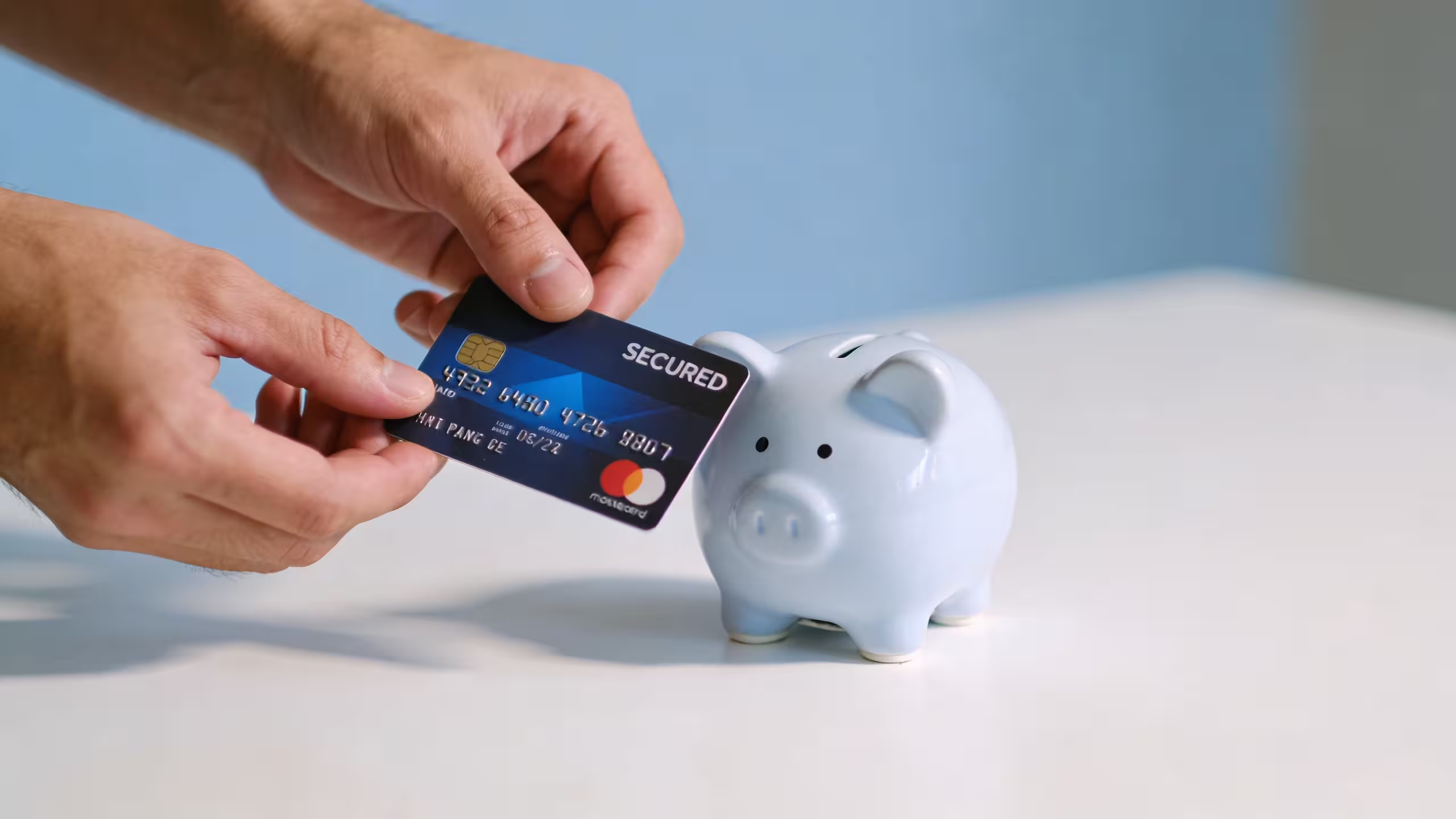
Several loan paths are realistically available to borrowers without an established credit file. Each comes with its own tradeoffs, so comparing them before submitting an application can save you time and protect your finances.
- Credit unions. Member-owned, not-for-profit lenders often have more flexible approval standards than traditional banks. If you are eligible to join a local credit union through your employer, school, or community, this is typically the first place to look when you have no credit history.
- Online lenders using alternative data. Some online lending platforms consider income, education, and employment history alongside or instead of a credit score. These platforms tend to be more accessible to first-time borrowers than brick-and-mortar banks, though terms vary widely.
- Secured personal loans. If you put up collateral, such as funds in a savings account, the lender takes on less risk and may be more willing to approve your application. Keep in mind that if you default on the loan, the collateral can be seized.
- Adding a cosigner or co-applicant. A creditworthy cosigner, such as a parent or trusted family member, takes on shared legal responsibility for the loan. This lowers the lender’s risk and can result in better terms. Only pursue this option if you are confident you can make every payment on time, because missed payments affect both your credit and your cosigner’s credit.
- Credit-builder loans. Offered by many credit unions and some banks, these small loans are specifically designed for people with no or thin credit. You make fixed monthly payments into an account, and the funds are released to you once the loan is paid off. The primary benefit is the payment history it creates, not the loan itself.
Which Option Is Right for You?
Use this decision framework to find your starting point based on your situation:
- If you have steady income but no credit file: Start with a credit union or an online lender that uses alternative data. Bring recent pay stubs, bank statements, and proof of address to your application.
- If you have a trusted family member with strong credit: Ask about adding a cosigner. This is often the fastest route to competitive loan terms when you have no file of your own.
- If you can afford to wait 6 to 12 months: Open a secured credit card or a credit-builder loan first. Use it responsibly, then apply for a personal loan once a score has been established.
- If you recently arrived in the US: Ask lenders whether they accept alternative credit data or Nova Credit reports. At the same time, open a secured card to begin building your US credit file right away.
- If you cannot wait and have no cosigner: Look into whether you qualify for a personal loan based on income and assets alone, and review the risks of no-credit-check loan products very carefully before signing anything.
Loan Types to Approach with Caution
Some lenders market products specifically to borrowers with no credit check required. While these loans exist, they often carry terms that make repayment difficult. The Federal Trade Commission (FTC) advises consumers to review the full cost of any loan before signing, including the total repayment amount, not just the monthly payment figure.
The following loan types deserve extra scrutiny when you have no credit history:
- Payday loans: These short-term loans typically require repayment in full on your next payday. The fees involved can translate into very high annual costs. They do not help you build credit and can lead to a cycle of repeated borrowing that is hard to exit.
- Car title loans: You use your vehicle as collateral. If you miss a payment, the lender can repossess it. These loans also tend to carry high fees relative to the amount borrowed.
- Unverified no-credit-check online lenders: Always confirm that a lender is licensed in your state before you apply. Your state’s financial regulator website is a reliable place to verify a lender’s legitimacy at no cost.
How to Improve Your Chances Before You Apply
If you have a little time before you need the funds, a few targeted steps can meaningfully shift a lender’s decision in your favor. Preparation matters even more when your credit file cannot speak for you.
- Pull your free credit report first. You may have more of a file than you realize. Check all three bureaus for free once a year at AnnualCreditReport.com, the official site authorized by federal law.
- Gather strong income documentation. Recent pay stubs, two years of tax returns, or bank statements showing regular deposits will support your application when your credit file cannot.
- Prequalify with multiple lenders before you commit. Prequalification uses a soft credit check that does not affect your credit score. Comparing offers from several lenders protects you from accepting unfavorable terms out of urgency.
- Lower your debt-to-income ratio before applying. Paying down any existing balances, even small ones, makes you a more attractive applicant even when you have no credit score.
- Ask your landlord to report your rent payments. Several services allow landlords to report on-time rent to the credit bureaus. A few months of reported rent payments can quickly begin building your file.
Starting to Build Credit for the Future
Getting a personal loan is one way to establish credit, but it is not the only route. If a loan is not the right fit right now, a secured credit card or a credit-builder loan can set a strong foundation. Once you have used credit responsibly for six to twelve months, you will typically have enough of a file to qualify for better options. To understand the full mechanics of how a loan is structured, our guide on how a personal loan works walks through terms, repayment, and what to expect from the application process.
What most people miss when comparing loan offers is that the annual percentage rate, or APR, is the most accurate number for comparing total cost. A lower monthly payment can sometimes mean a longer term and significantly more interest paid over the life of the loan.
For a broader look at personal loan options across different borrower situations, visit the 1TopLife personal loan resource center.
FAQ: Can You Get a Personal Loan with No Credit History?
Is “no credit” the same as bad credit?
No, they are different situations. Bad credit means you have a credit history and it contains negative marks such as missed payments, defaults, or accounts sent to collections. No credit, sometimes called being “credit invisible,” means there is no record in the credit bureaus for a score to be calculated from. Lenders may still approve borrowers with no credit if they can demonstrate reliable income and low existing debt, but the options available to each group can differ.
Will applying for a personal loan hurt my credit score if I have no credit?
Prequalifying with a lender typically uses a soft credit inquiry, which does not affect your credit score. However, submitting a full loan application usually triggers a hard inquiry, which can temporarily lower your score by a small number of points. If you have no established credit file yet, the practical impact of a hard inquiry is minimal because there is no existing score to lower significantly. Limit hard inquiries by prequalifying with multiple lenders first and only submitting a formal application to the lender whose offer best fits your needs.
How long does it take to build enough credit to qualify for a personal loan?
According to the Consumer Financial Protection Bureau, it can take at least six months for a new credit account to generate a scorable file. In practice, opening a secured credit card or a credit-builder loan and making every payment on time for six to twelve months is often enough to create a usable credit score. The exact score you will reach depends on factors such as your credit utilization and whether you have multiple accounts reporting. Once a score exists, your pool of eligible lenders expands significantly and the interest rates you are offered tend to be lower.
Can a cosigner help me get a personal loan with no credit history?
Yes, adding a creditworthy cosigner is one of the most effective ways to improve your chances of approval when you have no credit file. The cosigner’s credit history and score are factored into the lender’s decision, which can result in not only a higher likelihood of approval but also a lower interest rate. The key risk is that if you miss a payment, the cosigner is equally responsible for the debt and the missed payment will appear on their credit report as well as yours. Only ask someone to cosign if you are confident in your ability to repay the full loan on schedule.
Are no-credit-check loans a safe option for borrowers with no credit history?
No-credit-check loans exist but often come with very high fees and unfavorable repayment terms that can make them expensive over time. Payday loans and car title loans are the most common examples, and both carry significant risks: payday loans can trap borrowers in a cycle of repeated short-term debt, while title loans put your vehicle at risk if you miss a payment. The Federal Trade Commission recommends reading the full cost of any loan, including the total repayment amount, before signing. If you need funds urgently, a credit union personal loan or a loan with a cosigner is almost always a safer starting point than a no-credit-check product.