
PPO vs POS Health Insurance: Which Plan Is Right for You?
By Laurel C. Yazzie | Last reviewed: September 2026
When you open your enrollment paperwork and see “PPO” and “POS” listed side by side, the difference is not always obvious. Both plan types give you access to a network of preferred providers. Both allow you to see out-of-network doctors if needed. But the rules around referrals, primary care coordination, and monthly costs are different enough to matter a great deal depending on how you use healthcare.
This guide compares PPO vs POS health insurance across cost, flexibility, and provider access so you can walk into your next enrollment window knowing exactly which plan fits your situation. Having worked directly with clients on health plan selection during open enrollment, the most common misconception I encountered was that a higher monthly premium always signals a bad deal. For someone managing ongoing health needs, the right structure can cost less overall than the cheapest premium on the list.
What Is a PPO Health Insurance Plan?
A PPO, or Preferred Provider Organization, is one of the most flexible types of health coverage in the United States. With a PPO, you can see any licensed doctor or specialist, in-network or out-of-network, without asking permission first. You do not need to choose a primary care physician (PCP) to oversee your care, and no referral is required before booking a specialist.
PPOs typically have larger provider networks than HMO or POS plans, which means more of your current doctors are likely to be in-network. That broader access comes with a tradeoff: PPO plans generally carry higher monthly premiums than the other plan types.
- No primary care physician required. You choose who to see and when, without a coordinator in the middle.
- No referrals needed. You can book a specialist directly, without a prior PCP visit to authorize the appointment.
- Out-of-network care is covered. You pay a larger share, but the plan still pays a portion of the bill.
- Larger provider networks. More doctors, hospitals, and labs typically fall under in-network rates.
- Higher monthly premiums. The flexibility comes at a cost reflected in your monthly bill.
What Is a POS Health Insurance Plan?
A POS, or Point of Service, plan is a hybrid. It borrows the cost-saving structure of an HMO, where a primary care physician coordinates your care, and combines it with the out-of-network option found in a PPO. The result is a plan that tends to cost less per month than a PPO but requires more coordination on your end before seeing specialists.
POS plans are less common than PPOs or HMOs. According to the KFF 2025 Employer Health Benefits Survey, POS enrollment is more prevalent at smaller firms than at large employers, so whether this option is even on your table depends largely on where you work.
- A primary care physician is typically required. Your PCP coordinates your care and manages referrals.
- Referrals are usually required to see a specialist. Skipping this step, or seeing an out-of-network provider without a referral, often means paying significantly more.
- Out-of-network care is still covered. But costs rise notably when you leave the network or bypass the referral process.
- Lower monthly premiums. POS plans generally cost less per month than comparable PPOs.
- Smaller networks. Fewer providers typically participate, so confirming that your current doctors are in-network is an important first step.
For a closer look at how a PPO compares to the most common alternative, see our guide on how PPO and HMO plans compare.
PPO vs POS Health Insurance: Side-by-Side Comparison
The table below lays out the key structural differences between these two plan types. Use it as a quick reference when reviewing your enrollment options.
| Feature | PPO | POS |
|---|---|---|
| Primary care physician required | No | Yes, typically |
| Referrals to see a specialist | Not required | Usually required |
| Out-of-network coverage | Yes, at higher cost | Yes, at higher cost |
| Monthly premiums | Higher | Lower |
| Provider network size | Usually larger | Usually smaller |
| In-network deductible | Typically applies | Often lower or waived (varies by plan) |
| Care coordination | Self-directed | PCP manages and coordinates |
| Best suited for | Maximum flexibility, frequent specialist visits, travel | Lower monthly cost, in-network focus, single PCP relationship |
How PPO and POS Costs Compare
Cost is usually the deciding factor, and the comparison is not as simple as looking at the monthly premium. PPO plans charge more each month in exchange for maximum choice. POS plans lower that monthly number by adding structure to how you access care. Which one costs less over a full year depends on how you actually use the plan.
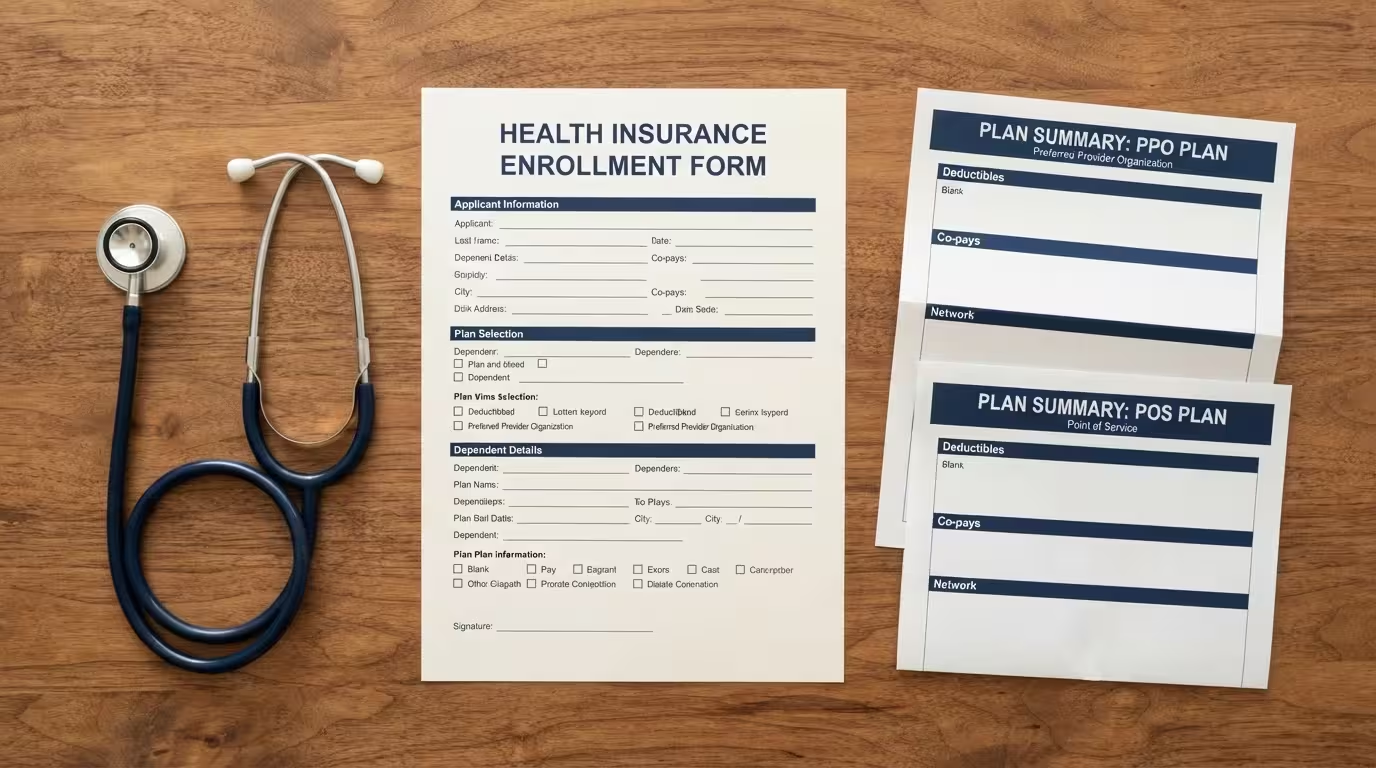
From a practical standpoint, many people underestimate the indirect cost of the POS referral process. Every specialist visit on a POS plan typically starts with a PCP appointment to authorize the referral. That adds a copay and scheduling time before you ever see the specialist. For someone who visits one or two specialists a year, this is a minor inconvenience. For someone managing a chronic condition who needs regular specialist care, it adds up over twelve months. According to the National Association of Insurance Commissioners, reviewing the full cost structure, including deductibles, copays, and out-of-pocket maximums, is essential before selecting any health plan type.
- PPO in-network costs: Copays or coinsurance apply after your deductible.
- PPO out-of-network costs: Higher coinsurance rates and a separate, higher deductible typically apply.
- POS in-network costs: Lower copays; in-network care often has a reduced or no deductible.
- POS out-of-network costs: Significantly higher, particularly without a PCP referral in hand.
- POS without a referral: Some POS plans treat this as out-of-network care even if the provider is technically in the plan’s directory. Always verify your plan’s specific rules.
Which Plan Should You Choose? A Simple Decision Framework
The right plan depends on how you use healthcare, not how you think you might use it in an ideal scenario. Use this framework to match your real situation to the plan type that fits.
Choose a PPO if:
- You see specialists regularly and cannot afford to wait for a referral each time
- Your current doctors or a preferred specialist is not in many local plan networks
- You travel frequently and need consistent coverage away from your home area
- You want the option to seek a second opinion from any provider, anywhere
- You prefer to direct your own care without a gatekeeper at every step
Choose a POS if:
- Reducing your monthly premium is a top priority
- You primarily see one doctor for most of your health needs and value that continuity
- Your preferred doctors and hospital are confirmed in the POS network
- You are generally healthy and use insurance mainly for preventive care and occasional visits
- You do not mind scheduling a PCP appointment before seeing a specialist
What If You Need to See a Specialist Frequently?
This scenario is where the PPO vs POS health insurance choice carries the most financial weight. On a POS plan, specialist access runs through your PCP. Every appointment requires a referral, which means an additional visit, a copay for that visit, and scheduling lead time before you see the specialist. If you need three or four specialist visits per year, those extra steps multiply across the calendar.
On a PPO, you contact the specialist directly and book. No preliminary visit, no waiting for authorization. For people managing diabetes, heart conditions, orthopedic injuries, or mental health care with a regular therapist or psychiatrist outside your PCP’s practice, this structural difference affects both the cost and the consistency of care you receive. Before enrolling in a POS plan, count how many specialist visits you had in the past twelve months and factor in both the referral copay and the additional scheduling time each one requires.
What If You Travel or Live in Two Locations?
POS plans are generally tied to a local or regional network. If you spend time in two states, travel frequently for work, or are a student away from home for months at a time, your POS plan may provide limited in-network access outside your home area. Out-of-network care is covered, but the cost difference is significant. A PPO’s broader national network and more consistent out-of-network benefits make it the stronger choice for anyone whose healthcare needs are not confined to one geography. For a comparison of how other plan types handle network restrictions, our overview of how HMO and EPO plans differ explains the tradeoffs in detail.
How POS Plans Fit Into the Health Plan Spectrum
A POS plan sits between an HMO and a PPO on the plan spectrum. It takes the cost efficiency and PCP structure of an HMO and adds the out-of-network safety net of a PPO. That hybrid design makes it more flexible than a strict HMO while keeping monthly costs below what a PPO requires. Knowing where POS fits in the full range of plan types can help you compare all the options in a single enrollment window.
- HMO: Lowest premiums, in-network care only, PCP required, no out-of-network coverage except emergencies.
- POS: Lower premiums than PPO, PCP required, out-of-network option available at higher cost.
- PPO: Higher premiums, no PCP required, broadest network, out-of-network care partially covered.
- EPO: Mid-range premiums, no referrals needed, but out-of-network care is not covered at all (except emergencies).
Understanding these distinctions puts you in a better position to compare whatever combination your employer offers. For a complete look at every major plan type and how they connect to cost-sharing terms like deductibles and copays, the health insurance plan types overview covers the full picture in one place.
PPO vs POS: Interactive Comparison Tool
Select what matters most to you. The rows that affect your choice will highlight.
| Feature | PPO | POS |
|---|---|---|
| PCP Required | No | Yes, typically |
| Specialist Referral | Not required | Usually required |
| Out-of-Network Coverage | Yes, at higher cost | Yes, at higher cost |
| Monthly Premiums | Higher | Lower |
| Network Size | Usually larger | Usually smaller |
| In-Network Deductible | Typically applies | Often lower or waived |
| Care Coordination | Self-directed | PCP coordinates |
Always verify plan details in your Summary of Benefits and Coverage (SBC) before enrolling.
FAQ: PPO vs POS Health Insurance
Tap any question to expand the answer.
Is a POS plan the same as an HMO?
A POS plan is not the same as an HMO, but it shares several features with one. Like an HMO, a POS plan typically requires you to select a primary care physician and obtain referrals before seeing a specialist. The key difference is that a POS plan allows you to use out-of-network providers, which standard HMOs do not cover except in emergencies. Think of a POS plan as a hybrid: it has the cost structure of an HMO with the out-of-network escape hatch of a PPO.
Can I see any doctor with a PPO plan?
Yes. A PPO plan allows you to see any licensed physician or specialist without a referral, whether they are in your plan's network or not. When you use in-network providers, your costs are lower because those doctors have agreed to discounted rates with your insurer. When you use out-of-network providers, you typically pay a higher share of the cost through a larger deductible or coinsurance percentage. Some out-of-network providers may also bill you directly for any amount above what your insurer considers "reasonable and customary."
What happens if I see a specialist on a POS plan without a referral?
On most POS plans, seeing a specialist without a PCP referral means the visit will be treated as out-of-network care, even if the specialist is in your plan's directory. That distinction matters because out-of-network cost-sharing is significantly higher than in-network rates. Some plans may not cover the visit at all without proper authorization. Always contact your plan before booking a specialist to confirm the referral process and avoid an unexpected bill.
Which plan is better for someone who is generally healthy?
For someone who rarely needs medical care beyond annual checkups and occasional visits, a POS plan often makes financial sense. The lower monthly premium is an immediate savings, and if you stay in-network and work through your PCP, the referral requirement adds little practical friction. That said, health needs can change unexpectedly. Before choosing a POS plan based on current health, check that the plan's network includes strong options for specialist care in case your needs change during the coverage year.
Are PPO plans available on the ACA marketplace?
PPO plans are available on the ACA marketplace in some states, though they are less common than HMO and EPO options at the marketplace level. Availability depends on your state and the insurers participating in your area's exchange. When shopping on the marketplace, filter by plan type in the plan details to see which structure each option uses. If PPO flexibility is important to you, verify the plan type before comparing premiums, since a lower-premium plan that turns out to be an HMO may not suit your needs.