By Laurel C. Yazzie | Last reviewed: April 2026
Does Renters Insurance Cover a Broken TV from Accidental Damage?
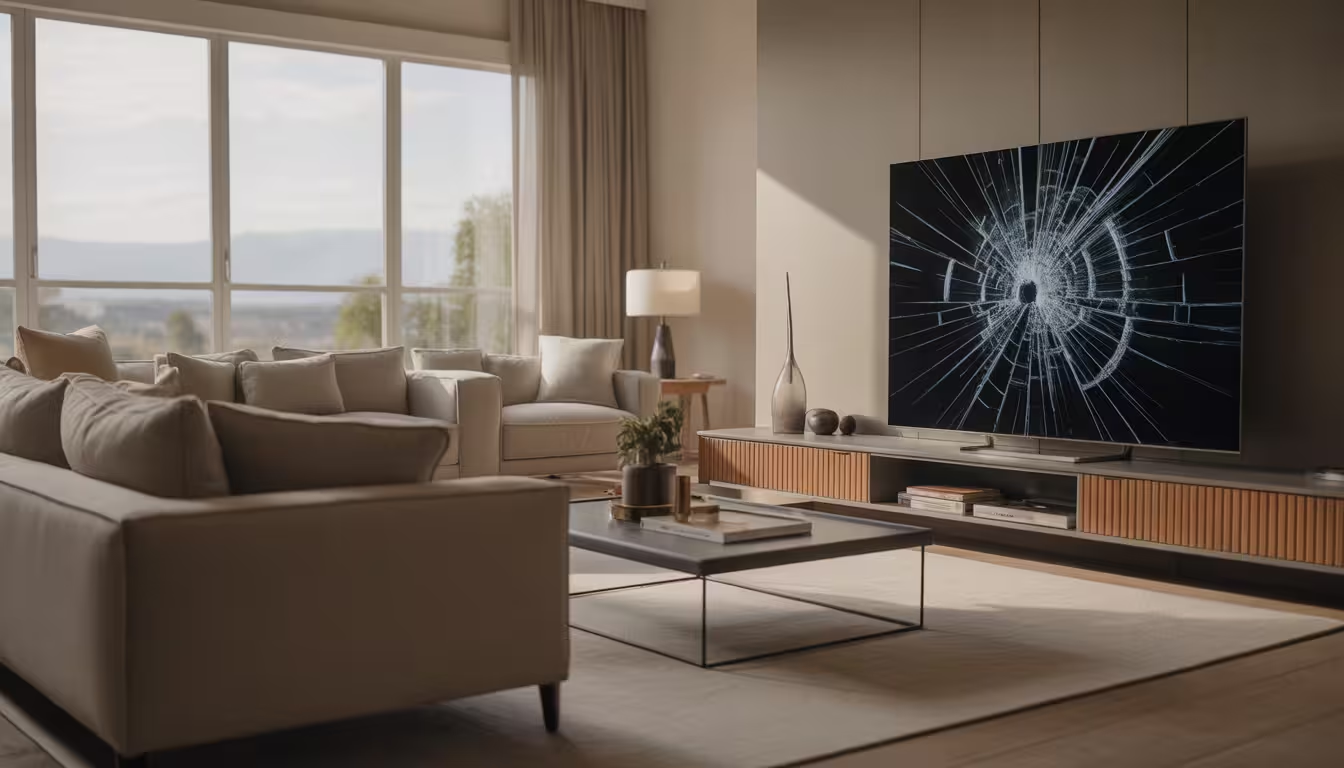
You are rearranging the living room, the television slips from your grip, and the screen cracks on impact with the floor. Your first thought: will my renters insurance cover this? The answer depends on a single detail most renters do not think about until it is too late. This article explains exactly when a broken TV is covered, when it is not, and what you can do to close the gap.
Does Renters Insurance Cover Broken TV Accidental Damage: Standard renters insurance does not cover a broken TV caused by accidental damage such as drops, spills, or mishandling. Coverage applies only when the damage results from a named peril in your policy, such as fire, theft, vandalism, or a burst pipe. Renters who want protection for accidental damage to electronics must add an endorsement like equipment breakdown coverage or scheduled personal property coverage to their policy.
Standard Renters Insurance Coverage: When a Broken TV Is Covered
A standard renters insurance policy, known in the industry as an HO-4, protects your personal belongings against specific events called named perils. The Insurance Information Institute confirms that these perils include fire, smoke, lightning, vandalism, theft, explosion, windstorm, and certain types of water damage from sources like a burst pipe or an overflowing bathtub from the upstairs unit. If your television is damaged by one of these events, your policy will likely pay to repair or replace it, minus your deductible.
Here are the most common covered scenarios for television damage:
- Fire or smoke damage: A kitchen fire spreads to the living room and destroys your TV. Covered.
- Theft: A burglar breaks in and steals your television. Covered, though a police report is usually required.
- Vandalism: Someone intentionally damages your TV during a break-in. Covered.
- Burst pipe or accidental water discharge: A pipe bursts in the ceiling above your entertainment center and water ruins your television. Covered.
- Windstorm damage: A severe storm sends debris through your window, striking and destroying your TV. Covered.
- Lightning strike or power surge from lightning: A lightning strike sends a surge through your building’s electrical system that fries your television. Covered.
According to the Insurance Information Institute, personal property coverage under a renters policy extends to electronics including televisions, computers, and gaming consoles, provided the damage was caused by a listed peril. The cause of the damage is what determines coverage, not the item itself.
What If You Damage Someone Else’s TV? Liability Coverage Explained
This is a scenario many renters never consider until it happens. If you are at a friend’s apartment and accidentally knock over their television, your renters insurance personal property coverage does not respond because you do not own the damaged item. However, the personal liability portion of your renters policy may cover the loss. Liability coverage protects you when you are legally responsible for damage to another person’s property. The National Association of Insurance Commissioners explains that the liability portion of a renters policy provides a legal defense and pays for damages if a court determines you were negligent and caused injury or property damage to another person. The key distinction: you damaging your own TV is a personal property question, while you damaging someone else’s TV is a liability question.
When Renters Insurance Will Not Cover a Broken TV
Standard renters insurance does not cover every way a television can break. The exclusions are specific, and accidental damage is one of the most commonly misunderstood gaps. In practice, many renters discover this exclusion only after filing a claim.
Here are the scenarios where your broken TV will almost certainly not be covered:
- Accidental drops: You drop the TV while moving it, mounting it, or rearranging furniture. Not covered.
- Spills and liquid damage: A drink spills onto the television or a cleaning product leaks into the screen. Not covered.
- Pet damage: Your dog knocks over the TV or chews through a cable, causing internal damage. Not covered.
- Child damage: A child throws a toy that strikes and cracks the screen. Not covered.
- Negligence: You fail to secure the TV properly on its stand or wall mount, and it falls. Not covered.
- Wear and tear: The television simply stops working after years of use. Not covered.
- Manufacturer defects: A faulty component causes the screen to fail. Not covered by renters insurance, though a manufacturer warranty may apply.
- Flood or earthquake: These require separate, standalone policies or endorsements. Not covered by standard renters insurance.
Having worked directly with clients on electronics damage claims over a decade in the industry, the most common misconception I encountered was that renters insurance functions like an extended warranty for everything you own. It does not. It protects against specific, sudden, and accidental events listed in the policy. A television slipping out of your hands, while certainly sudden and accidental, is not one of those listed events.
Does Renters Insurance Cover Accidental Damage to a TV? The Covered Peril Test
To determine whether your broken television is covered, apply this simple decision framework that cuts through the policy jargon.
Step 1: Identify the exact cause of the damage. Was it fire? Theft? A drop? A spill? Be specific. The cause, not the item, is what matters.
Step 2: Check your policy’s list of named perils. Look for a section usually titled “Perils Insured Against” or “Losses We Cover.” Compare your cause to this list.
Step 3: Apply the Covered Peril Test:
- If the cause of damage appears in your policy’s list of named perils, your TV is likely covered. File the claim.
- If the cause of damage is not listed, or is listed under exclusions, your TV is likely not covered. Proceed to step 4.
Step 4: The Add-On Path. If the damage is accidental in nature and not covered by your standard policy, check whether you have an endorsement that extends coverage. The three most relevant endorsements are detailed in the next section. If you do not have one, consider adding it for future incidents.
This framework applies to any personal property claim, not just televisions. The same logic works for laptops, smartphones, gaming consoles, and other electronics.
How to Add Accidental Damage Coverage for Your TV
If your current policy does not cover accidental damage and you want that protection, you have options. Each endorsement serves a different purpose, and knowing which one fits your situation prevents you from paying for coverage that does not actually help.
- Equipment Breakdown Coverage: This endorsement covers the cost to repair or replace electronics and appliances that stop working due to internal mechanical or electrical failure. If your TV suffers a power supply failure or a motherboard malfunction, equipment breakdown coverage would likely respond. It does not cover drops, spills, or external physical damage.
- Scheduled Personal Property Coverage: Also called a personal articles floater, this endorsement lets you list individual high-value items at their appraised or agreed value and insures them against a broader range of risks, sometimes including accidental damage and mysterious disappearance. Coverage typically follows the item worldwide and may carry no deductible. The Insurance Information Institute notes that floaters provide additional coverage for valuable items when standard policy limits are too low.
- Electronics Endorsement: Some insurers offer a specific electronics add-on that covers accidental damage like drops, cracked screens, and liquid spills for devices including televisions, laptops, tablets, and smartphones. Availability varies by insurer, and coverage limits and deductibles differ from your main policy.
What most people miss when reading their policy is that these endorsements are not automatically included. You must ask for them. Contact your insurance agent or carrier, describe the coverage gap you want to fill, and request a quote for the endorsement that matches your needs.
Filing a Claim for a Broken TV: What to Expect
If your television was damaged by a covered peril and you decide to file a claim, the process matters. A well-prepared claim is resolved faster.
- Document the damage immediately. Take clear photos and video of the broken television from multiple angles. Capture the surrounding area to show the cause of damage where possible.
- Gather proof of ownership and value. Locate your purchase receipt, credit card statement, or order confirmation. Note the model number, serial number, and date of purchase. This establishes both ownership and the item’s value.
- File a police report if applicable. If the damage resulted from theft or vandalism, a police report is typically required before your insurer will process the claim.
- Contact your insurance company promptly. Most policies require you to report a loss within a reasonable timeframe. Delaying can complicate or jeopardize your claim.
- Understand your reimbursement method. If you have actual cash value coverage, your payout will reflect the depreciated value of your TV, what a used model of similar age and condition would cost today. If you have replacement cost coverage, your payout covers the cost of a comparable new television, minus your deductible. The difference can be hundreds of dollars.
For more detail on how personal property claims are valued, see our guide on what renters insurance covers, which explains actual cash value versus replacement cost in depth.
FAQ: Does Renters Insurance Cover Broken TV Accidental Damage?
Does renters insurance cover a TV I dropped while moving?
No. Dropping your television while moving, rearranging furniture, or mounting it on a wall is considered accidental damage, which standard renters insurance does not cover. If you have an electronics endorsement or scheduled personal property coverage that includes accidental damage protection, those endorsements may respond. Without an add-on, the cost of repair or replacement falls entirely on you.
Will renters insurance cover a TV damaged by a power surge?
It depends on the cause of the surge. If the power surge resulted from a lightning strike, which is a named peril, your television is likely covered. If the surge was caused by a utility grid fluctuation with no lightning involved, coverage varies by policy. Some standard policies include sudden and accidental damage from artificially generated electrical current as a covered peril. Check your policy language or ask your agent. An equipment breakdown endorsement generally covers internal electrical failures regardless of the surge source.
Does renters insurance cover a TV damaged by a pet or child?
No. Damage caused by pets knocking over a television or children throwing objects that crack the screen is classified as accidental damage and is excluded from standard renters insurance. An electronics endorsement or scheduled personal property coverage with accidental damage protection would be required to cover these scenarios.
What if my roommate accidentally breaks my TV?
Your renters insurance personal property coverage does not cover accidental damage to your own belongings, regardless of who caused it. Your roommate’s renters insurance policy, if they have one, would also not cover your TV under their personal property coverage because they do not own it. The liability portion of your roommate’s policy might respond if you can establish they were negligent, but this is a more complex path and depends on the specific facts of the incident and policy language. The cleanest solution is for you to carry an endorsement that covers accidental damage to your own property.
How much does it cost to add accidental damage coverage for electronics?
The cost of endorsements varies by insurer, location, and the value of the items being covered. Equipment breakdown coverage typically adds a modest amount to your annual premium. Scheduled personal property coverage cost depends on the item’s value and the risk profile. According to the Insurance Information Institute, the average renters insurance premium in the United States is about $171 per year. Adding an endorsement generally increases that figure by a fraction, not a multiple. Request quotes from your current insurer to get an exact cost based on your situation.
For a detailed breakdown of renters insurance premiums and what drives your rate, see our guide on how much renters insurance costs.