Does Auto Insurance Cover Stolen Cars?
By Laurel C. Yazzie | Last reviewed: July 2026
Finding your car gone is one of the most disorienting experiences a driver can face. Before you can process what happened, one question takes over: does auto insurance cover stolen cars? The short answer is yes, but only if you have the right coverage type on your policy. The difference between having it and not having it can mean thousands of dollars out of pocket.
Does Auto Insurance Cover Stolen Cars: Yes, but only if your policy includes comprehensive coverage. Comprehensive pays the actual cash value of your vehicle, minus your deductible, if the car is not recovered. If your car is found but damaged, comprehensive covers the repairs. Liability-only and collision-only policies do not cover theft.
Which Coverage Type Pays for a Stolen Car?
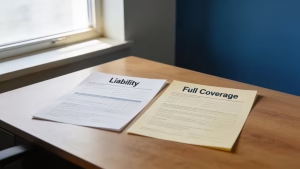
Not all auto insurance is the same, and that distinction matters when a vehicle is stolen. Most drivers carry one or more of three standard coverage types, but only one applies to theft.
| Coverage Type | What It Pays For | Covers Vehicle Theft? |
|---|---|---|
| Comprehensive | Non-collision events: theft, vandalism, fire, weather, animal collisions | Yes |
| Collision | Damage from collisions with other vehicles or fixed objects | No |
| Liability | Bodily injury and property damage you cause to others | No |
According to the Insurance Information Institute, comprehensive coverage is the component of a standard auto policy that handles non-collision events, including theft, fire, and vandalism. Liability coverage, which most states require as a legal minimum, only protects against claims from other people. Collision covers accident damage. Neither covers a stolen car.
When reviewing policies, one important point that many drivers miss is that comprehensive can be purchased separately from collision. You do not need both to be protected against theft. Comprehensive alone is enough.
What Does Auto Insurance Actually Pay When Your Car Is Stolen?
If your car is stolen and you carry comprehensive coverage, your insurer does not pay you what you originally paid for the vehicle. They pay the actual cash value (ACV): the market value of the vehicle at the moment it was stolen, after accounting for depreciation based on age, mileage, and condition. The payout reflects what a buyer would have paid for your car that day, not what a replacement would cost.
- Car not recovered: Your insurer pays the ACV minus your deductible. The loss is treated similarly to a total loss after a collision.
- Car recovered but damaged: Comprehensive covers the repair costs up to the ACV, minus your deductible. If repairs exceed the vehicle’s value, the insurer may declare a total loss and issue the ACV settlement instead.
- Car recovered undamaged: If the vehicle is returned without damage, no claim payment is needed. Notify your insurer of the outcome so the open claim can be closed.
Having worked directly with clients navigating auto theft claims, the most common misconception I encountered was that insurance would replace the car with an equivalent new model. It does not. The payout reflects the car’s depreciated value at the time of theft, which can be significantly less than current replacement cost.
What If the Payout Is Less Than What You Owe on Your Loan?
This is a scenario that catches many drivers off guard. Vehicles depreciate quickly, often faster than a loan balance decreases in the early years of financing. If your car is stolen and the ACV settlement is lower than what you still owe your lender, you remain responsible for the difference. You would owe money on a car you no longer have.
Gap insurance addresses exactly this shortfall. It pays the difference between the insurer’s ACV payout and the remaining loan or lease balance. This gap tends to be largest for drivers who financed with a small down payment, since those loans depreciate fastest relative to the outstanding balance in the early years. Gap coverage is typically available as an optional add-on from your auto insurer or through your lender at the time of purchase. The National Association of Insurance Commissioners provides a consumer guide to auto insurance that covers optional coverage types including gap coverage.
Does Auto Insurance Cover Items Stolen from Your Car?
No. Your auto insurance covers the vehicle itself, not the personal belongings inside it. If a thief breaks into your car and takes a laptop, camera, cash, or clothing, those items are not covered by any part of your auto policy, including comprehensive.
Personal property stolen from your vehicle is typically covered under your homeowners or renters insurance policy, which extends personal property coverage to belongings away from home. Sub-limits and deductibles apply, so check your declarations page before assuming you are fully protected under that policy.
| What Was Taken | Auto Insurance Covers? | Alternative Coverage |
|---|---|---|
| The vehicle itself | Yes (comprehensive) | N/A |
| Laptop, phone, camera | No | Homeowners or renters insurance (sub-limits apply) |
| Cash or credit cards | No | Homeowners or renters insurance (sub-limits apply) |
| Factory-installed stereo or navigation system | Yes (comprehensive) | N/A |
| Aftermarket stereo or added speakers | Sometimes (policy-dependent) | Custom parts or equipment endorsement |
For a full breakdown of what falls outside your policy’s reach, the guide on what your policy excludes covers every major exclusion category in detail.
What About Permanently Installed Parts Like a Catalytic Converter?
Catalytic converters are a frequent target for thieves because they contain valuable metals and are relatively easy to remove. The good news: permanently installed components of your vehicle, including the catalytic converter, are considered part of the car itself. Comprehensive coverage applies. If a thief removes your catalytic converter, you can file a comprehensive claim for the repair cost, minus your deductible. If the repair cost is close to or below your deductible, it may be worth paying out of pocket to avoid the claim impacting your record.
What to Do If Your Car Is Stolen
Acting quickly after discovering your car is missing improves the chance of recovery and speeds up the claims process. Follow these steps in order.

- Confirm the car was stolen, not towed. Before reporting theft, check whether the vehicle was towed for a parking violation or impounded. Call local towing companies or the non-emergency police line to rule this out first.
- File a police report immediately. Your insurer will require a police report number to open a claim. Be ready to provide the vehicle identification number (VIN), make, model, color, and license plate number.
- Notify your insurance company. Contact your insurer as soon as the report is filed. Have your policy number and the police report number ready. Your insurer will open a claim and explain next steps.
- Notify your lender or leasing company. If the vehicle is financed or leased, your lender has a financial interest in it. Inform them of the theft and ask about any documentation they require.
- Ask about a rental car. If you carry rental reimbursement coverage, your insurer may cover a temporary rental while the claim is open. Confirm the daily and total dollar limits before booking. For details on how this coverage works in practice, see how rental car coverage applies after a covered loss.
How Long Before Insurance Pays a Stolen Car Claim?
This is the part most guides skip. Insurers do not typically pay a theft claim immediately after you report the vehicle missing. A waiting period is standard practice, giving law enforcement time to locate and recover the vehicle before a settlement is issued. The length of this period varies by insurer. Check with your claims adjuster when you open the claim so you know what timeline to expect.
During the waiting period, your rental reimbursement coverage should remain active as long as the claim is open. Once the period passes without recovery, the insurer processes the settlement and issues the ACV payment minus your deductible. If the vehicle is found after a settlement has been paid, ownership of the car generally transfers to the insurer at that point, since they have already compensated you for the loss.
Should You Add Comprehensive Coverage to Your Policy?
If your car is financed or leased, this decision may already be made for you. Most lenders require comprehensive coverage as a condition of the loan or lease agreement. Check your loan documents to confirm before assuming you have it or that you need to add it separately.
From a practical standpoint, many drivers who own their car outright skip the question entirely. That assumption can be expensive. Use this framework to decide:
Decision Framework: Should You Add Comprehensive Coverage?
- Your car is financed or leased: Your lender likely already requires comprehensive. Review your loan or lease agreement to confirm coverage is in place.
- You own your car outright and it holds significant value: Add comprehensive. The out-of-pocket cost of losing a car to theft far exceeds what comprehensive typically costs annually for most owned vehicles.
- You own an older car with low market value: Calculate the vehicle’s actual cash value, then subtract your deductible. Compare that net figure to the annual comprehensive premium. If what you would collect after a total theft is small relative to what you pay each year, comprehensive may not be cost-effective for your situation.
The right answer depends on your vehicle’s specific value and your deductible amount. For a broader look at how auto coverage types work together and what each one is designed to protect, visit our complete auto insurance guide.
FAQ: Does Auto Insurance Cover Stolen Cars?
Common questions about vehicle theft and auto insurance coverage are answered in the FAQ section below.
FAQ: Does Car Insurance Cover Theft?
Does liability insurance cover a stolen car?
No. Liability coverage only pays for injuries and property damage you cause to other people. It does not cover any damage to or loss of your own vehicle. If your car is stolen and you carry only the state minimum liability policy, your insurer will not pay anything for the theft. You need comprehensive coverage for a stolen vehicle claim to be valid.
Does auto insurance cover a car stolen with the keys left inside?
In most cases, yes. Most insurers cover theft under comprehensive regardless of whether the keys were left in the vehicle, because the crime of theft has still occurred. However, some policies include language about negligence, and coverage decisions can vary by insurer and state. Review your specific policy’s theft exclusion language or speak with your agent to confirm how your policy handles this scenario before assuming you are covered.
If my car is recovered but damaged, do I have to pay a deductible?
Yes. If your stolen vehicle is recovered with damage, comprehensive coverage pays for the repairs, but your deductible applies just as it would for any other comprehensive claim. If the cost of repairs is close to or below your deductible, it may be worth paying for the repairs out of pocket rather than filing a claim, since claims can affect your premium at renewal depending on your insurer and policy terms.
What if I only have collision coverage and my car is stolen?
Collision coverage does not apply to theft. Collision is specifically designed to pay for damage caused by your vehicle hitting another vehicle or object. If your policy includes collision but not comprehensive, a theft loss will not be covered. This is a common gap for drivers who added collision to protect against accidents but did not separately add comprehensive to protect against non-collision events like theft, fire, or weather damage.
Can I keep using my car while a theft claim is still open?
If your car is stolen, you do not have a vehicle to use while the claim is open. This is why rental reimbursement coverage matters in a theft scenario. If you carry this optional add-on, your insurer will pay for a temporary rental car up to your policy’s daily and total limits while your claim is being processed. The coverage typically remains active during the waiting period before the insurer issues a final settlement. Check your policy or call your insurer immediately to confirm rental benefits are available before booking a vehicle.