How Personal Loans Work: A Simple Guide for US Borrowers
By Laurel C. Yazzie | Last reviewed: May 2026
A personal loan can help you pay off credit card debt, cover an unexpected expense, or finance a home repair without tapping your savings. Knowing how personal loans work before you apply can save you money and help you avoid surprises. This guide covers the mechanics, the costs, and how to decide whether one fits your situation.
How Personal Loans Work: A personal loan gives you a fixed sum of money upfront from a lender, which you repay in equal monthly installments over a set term, typically one to seven years. The lender charges interest expressed as an annual percentage rate (APR), plus possible fees. Most personal loans are unsecured and do not require collateral.
In reviewing hundreds of loan applications over a decade in consumer lending, the detail most borrowers miss is the difference between the monthly payment and the total amount repaid over the life of the loan. That gap, which is your total interest cost, is the number worth knowing before you sign.
What Is a Personal Loan?
A personal loan is an installment loan. You borrow a fixed amount, receive it as a lump sum, and repay it in monthly payments over a set term. The interest rate is usually fixed, so your payment amount stays the same each month.
Unlike a mortgage or auto loan, a personal loan is not tied to a specific purchase. Most lenders allow you to use the funds for nearly any legal purpose, from consolidating credit card debt to covering medical bills to paying for a home repair.
- Fixed monthly payment for the full loan term
- Lump-sum funds deposited directly to your bank account
- No collateral required for most unsecured loans
- Flexible use for most legal expenses
- Credit line closes permanently once the loan is paid off
Secured vs. Unsecured Personal Loans
Most personal loans are unsecured. The lender approves you based on your credit history, income, and debt-to-income ratio. A secured personal loan requires collateral, such as a savings account or a vehicle. Secured loans may carry lower rates for borrowers with limited credit history, but you risk losing the collateral if you stop making payments.
How Personal Loans Work: Step by Step
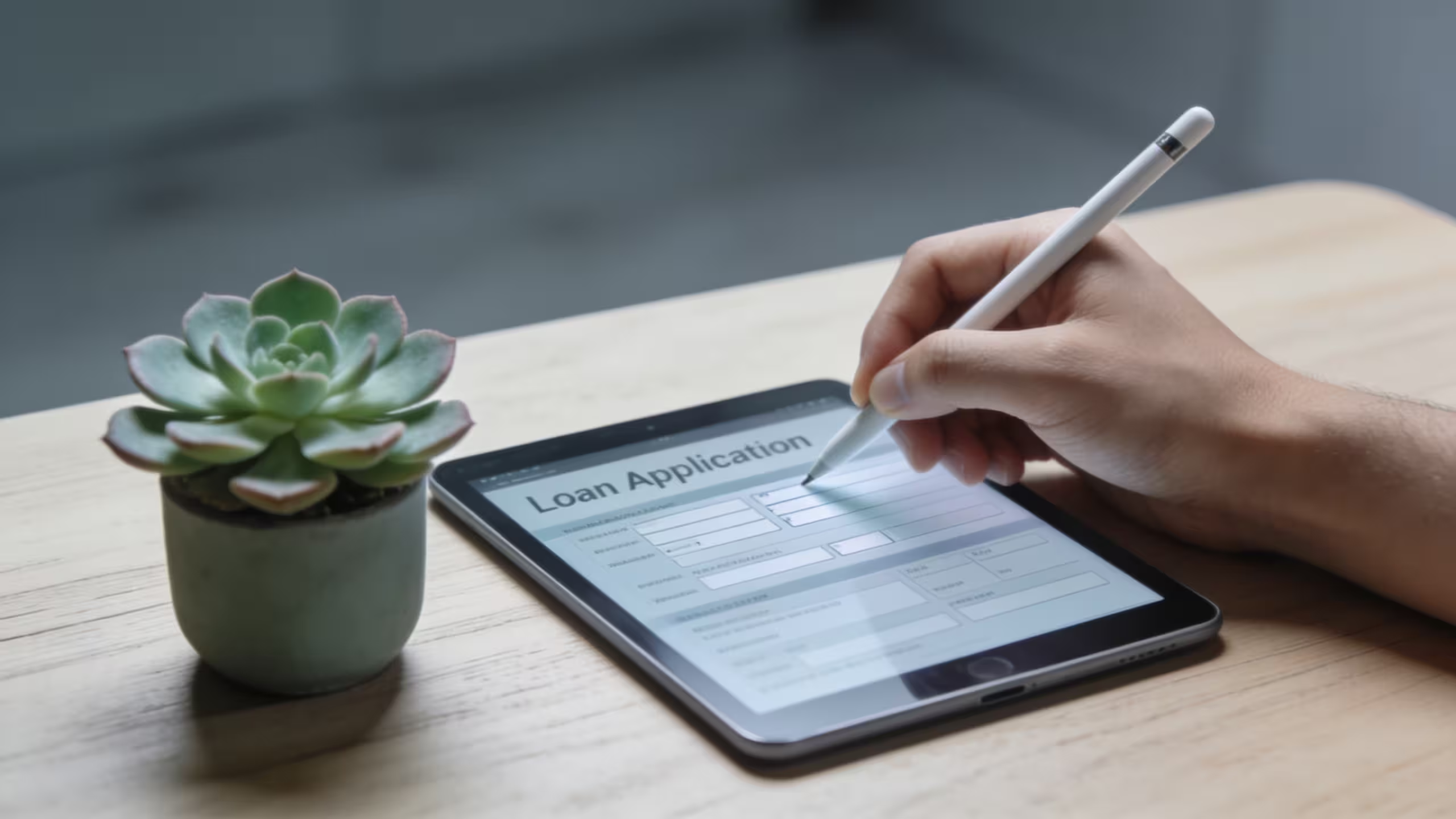
The process from application to funded account follows a clear sequence. Knowing each stage helps you move through it confidently.
- Check your credit report. Review your report for free at AnnualCreditReport.com before applying. Errors on your report can lower your score and cost you a higher rate.
- Prequalify with multiple lenders. Most lenders offer a soft-pull prequalification that shows your estimated rate without affecting your credit score. Compare at least two or three offers.
- Submit a formal application. Once you choose a lender, you will provide documents such as pay stubs, bank statements, and a government-issued ID. A hard credit inquiry occurs at this stage.
- Review and sign the loan agreement. Before signing, note the APR, the loan term, any origination fee deducted from your proceeds, and whether a prepayment penalty applies.
- Receive your funds. After final approval, the lender deposits funds into your bank account. Timing varies by lender.
- Make monthly payments until paid off. Payments typically begin within about 30 days of funding.
Understanding Amortization
Each monthly payment covers two things: a share of the principal (the amount you borrowed) and the interest charged on the remaining balance. Early in the loan, more of each payment goes toward interest. As your balance falls, more goes toward principal. This schedule is called amortization.
Amortization matters because paying off a loan early reduces your total interest cost. The Consumer Financial Protection Bureau explains amortization and other personal loan basics on its personal loans consumer tools page.
What Does a Personal Loan Cost?
Interest is the most visible cost, but it is not the only one. Review every line of a loan offer before you accept.
| Cost Component | What It Is | When You Pay It |
|---|---|---|
| Interest (APR) | Annual cost of borrowing as a percentage of your balance | Each month, included in your payment |
| Origination fee | Processing charge deducted from your loan proceeds at funding | At funding (reduces the amount you receive) |
| Late payment fee | Penalty for a payment that arrives after the due date | When a payment is late |
| Prepayment penalty | Fee for paying off the loan before the term ends | If you pay early (not all lenders charge this) |
The Monthly Payment vs. The Total Cost
In practice, many borrowers compare only the monthly payment when evaluating loan offers. A lower monthly payment can actually cost more in total if it comes with a longer term. Before you accept any offer, use this rule: multiply the monthly payment by the number of months in the term. Then subtract the amount you borrowed. That difference is your total interest cost.
If that figure surprises you, shop at least two more lenders before signing. The Federal Reserve publishes average consumer credit rates, including personal loan averages, so you have a benchmark for what is competitive in the current market.
When to Use a Personal Loan (and When to Think Twice)
A personal loan works well in certain situations and poorly in others. Here is a straightforward way to frame the choice.
A personal loan tends to make sense when:
- You need a defined, one-time sum rather than an open-ended line of credit
- The rate you are offered is lower than your current credit card APR
- You are consolidating multiple high-interest balances into one payment
- You want a fixed repayment schedule so you know exactly when you will be debt-free
Pause before borrowing when:
- You are not sure how much you will need in total
- Your current monthly budget is already stretched
- You could pay the expense off within 30 days using a card before any interest accrues
What Happens to a Personal Loan If You Lose Your Job?
Losing your income does not eliminate the loan obligation. Missing payments will be reported to the credit bureaus, which can lower your credit score. After a series of missed payments, the lender may charge off the account and sell it to a collections agency, or pursue legal action to recover the balance.
The most important step is to contact your lender before you miss a payment. Some lenders offer hardship programs, temporary payment deferrals, or modified payment plans for borrowers who reach out early. Waiting until you are already delinquent reduces your options. The Federal Trade Commission has practical guidance on managing debt and dealing with collectors if a situation escalates.
If your concern is qualifying without a traditional paycheck, our guide on getting a personal loan without a job covers the income documentation and lender types most relevant to that situation.
How Your Credit Score Affects Your Loan Terms
Your credit score is one of the first factors a lender evaluates. A stronger credit profile typically results in a lower interest rate, a higher loan amount, and more lender options. Lenders set their own minimum requirements, which they rarely publish, so prequalifying across several lenders is the most reliable way to see what you can access.
- Payment history: whether you have paid past bills on time, the most heavily weighted factor
- Credit utilization: the share of your available revolving credit you are currently using
- Length of credit history: older accounts generally signal stability to lenders
- Recent hard inquiries: applying for multiple accounts in a short window can temporarily lower your score
Checking Your Rate Without Hurting Your Score
Most lenders offer a prequalification step that uses a soft credit pull, which does not appear on your credit report the way a formal application does. A soft pull gives you an estimated rate and loan amount you can use to compare. Trigger a hard inquiry only when you have chosen a lender and are ready to apply.
The CFPB’s personal loan resource page is a useful starting point if you want to understand your rights as a borrower before you shop. If your credit history is limited or your score is lower than you would like, our guide on getting a personal loan with bad credit covers the lenders and strategies most relevant to your profile.
Personal Loans and Your Broader Financial Picture
Understanding how personal loans work is a starting point. Three related topics worth knowing are your debt-to-income ratio, the basics of debt consolidation, and the difference between secured and unsecured borrowing. Each one shapes how lenders view your application and what options are open to you.
What most people miss when comparing loan offers is how a new payment fits inside their overall monthly budget, not just whether they can cover it in a normal month. Before you borrow, make sure the payment leaves enough room for emergencies. A loan that looks manageable today can become difficult if an unexpected expense appears later in the term.
For a broader look at personal loan options across different borrower situations, visit the 1TopLife personal loan resource center.
FAQ: How Personal Loans Work
What is the difference between a personal loan and a credit card?
A personal loan gives you a fixed lump sum that you repay over a set term with equal monthly payments. A credit card gives you a revolving line of credit you can draw from repeatedly up to your limit, and the minimum payment changes based on your balance. Personal loans typically carry lower interest rates than credit cards and are better suited for large, one-time expenses. Credit cards offer more flexibility for smaller or ongoing purchases, especially if you plan to pay the balance off each month before interest accrues.
How does taking out a personal loan affect your credit score?
Applying for a personal loan triggers a hard credit inquiry, which can lower your score by a few points temporarily. Once you have the loan, making on-time payments each month can improve your payment history, which is the most heavily weighted factor in most credit score models. Paying off the loan in full closes the account, which may slightly reduce the average age of your credit accounts. Over time, responsible repayment of a personal loan generally helps rather than hurts your credit profile.
Can you pay off a personal loan early?
Yes, most lenders allow early repayment, and paying off a loan ahead of schedule reduces the total interest you pay. However, some lenders charge a prepayment penalty to compensate for the interest they will not collect over the remaining term. Before you sign a loan agreement, check whether a prepayment penalty applies and calculate whether the penalty offsets the interest savings. If no prepayment penalty exists, paying extra toward your principal each month is one of the most effective ways to reduce the total cost of the loan.
What do lenders look at when you apply for a personal loan?
Lenders evaluate several factors when reviewing a personal loan application. Your credit score and payment history signal how reliably you have repaid past debt. Your debt-to-income ratio, which is your total monthly debt payments divided by your gross monthly income, shows whether you have room in your budget for a new payment. Most lenders also verify your employment status and income using documents such as pay stubs or tax returns. A strong combination of credit history, stable income, and a low debt-to-income ratio typically results in better loan terms.
How long does it take to get a personal loan?
Timing varies by lender and by how quickly you provide the required documents. The prequalification step, which uses a soft credit pull, typically takes a few minutes online. A formal application and approval decision can range from the same day to several business days, depending on the lender’s review process and the complexity of your financial profile. Once approved, lenders usually deposit funds directly to your bank account, sometimes within one to two business days, though that timing is not guaranteed and depends on your bank as well. Always confirm the expected timeline with your lender before finalizing your application.