How Small Business Loan Repayment Works
By Laurel C. Yazzie | Last reviewed: September 2026
Taking out a small business loan is only half the process. Understanding how you pay it back is just as important as getting approved. The repayment structure determines your monthly cash flow, your total cost of borrowing, and the financial flexibility your business has while the loan is active.
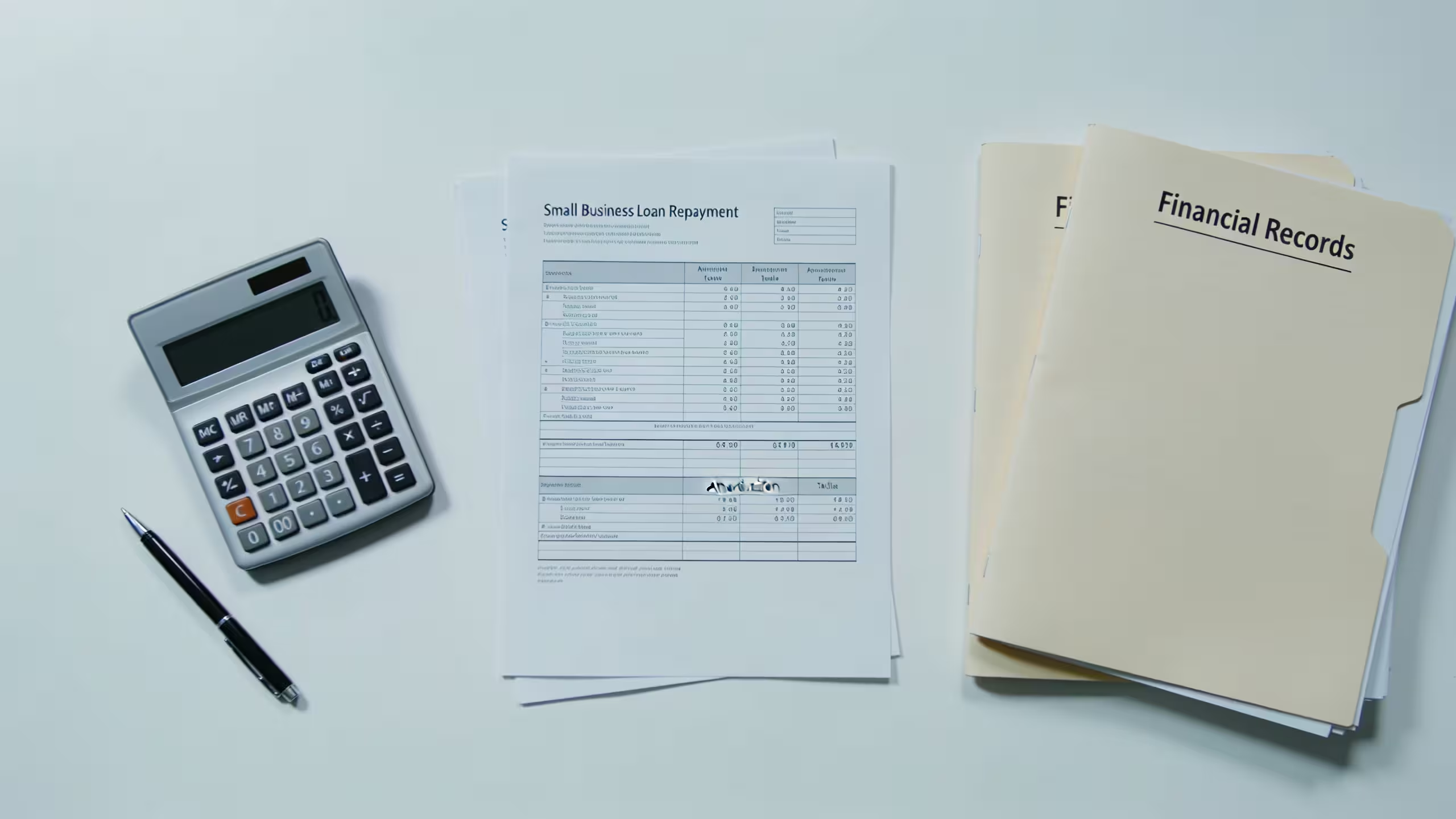
Small business loan repayment works by dividing the amount you borrowed, plus interest and any fees, into regular scheduled payments over a set term. Each payment covers a portion of the principal (the amount borrowed) and the interest charged on the remaining balance. Most term loans require monthly payments, though some lenders bill weekly or even daily.
How Small Business Loan Repayment Is Structured
In reviewing hundreds of loan applications over a decade in consumer lending, the detail most borrowers miss is how much of their early payments goes toward interest rather than paying down the actual balance. This is how amortization works, and it affects your total repayment cost more than most business owners realize.
Every standard term loan payment is split between two components:
- Principal: The portion of each payment that reduces your actual loan balance
- Interest: The cost the lender charges for making the funds available, calculated on the remaining unpaid balance
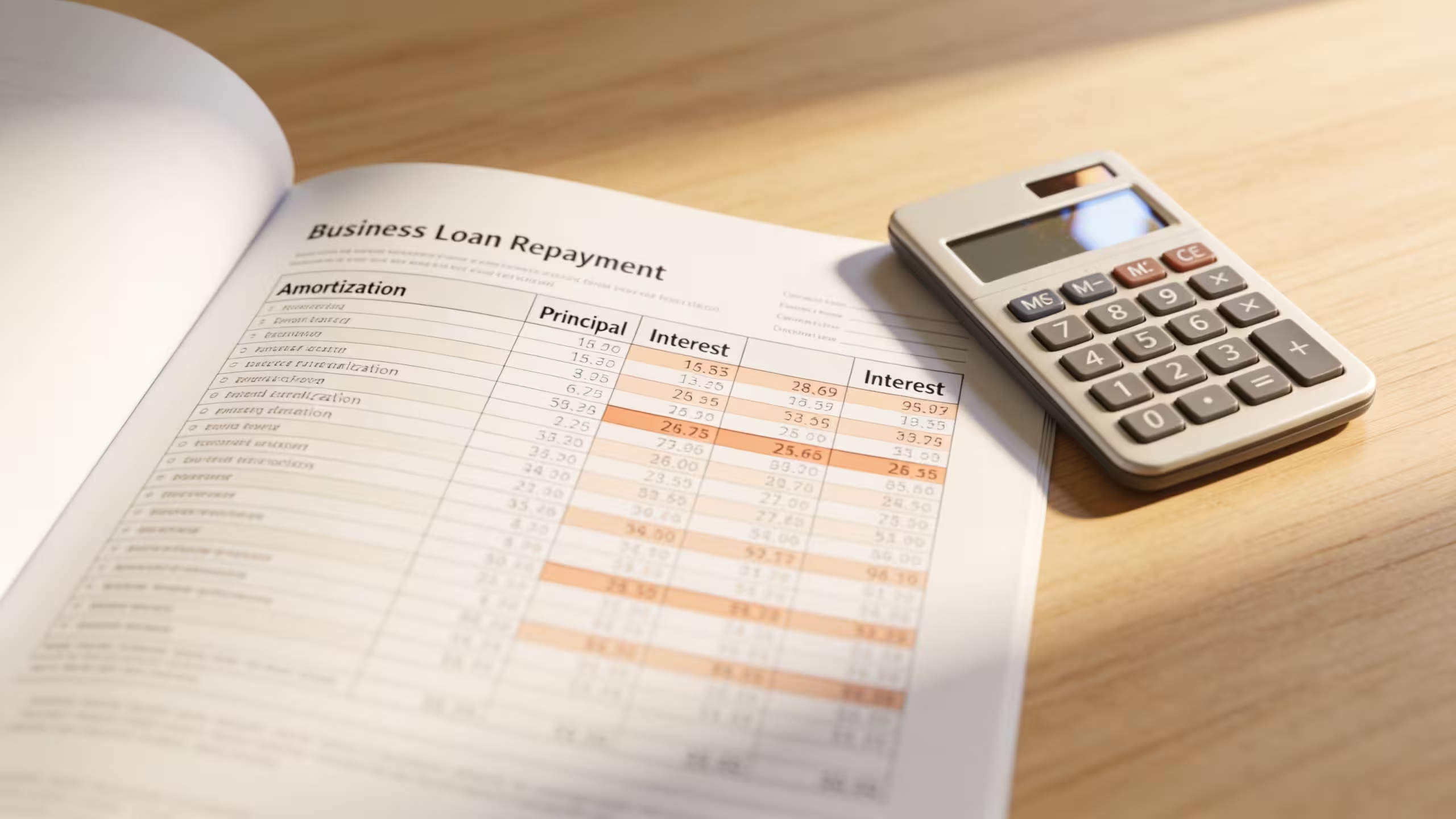
In the early months of repayment, a larger share of each payment goes to interest because your balance is still high. As the balance falls, more of each payment shifts to principal. This pattern is called amortization, and it is the standard structure for most small business term loans.
According to the U.S. Small Business Administration, most SBA-backed term loans are repaid with regular monthly payments covering both principal and interest, calculated on the outstanding balance at each payment date.
How Your Monthly Payment Amount Is Calculated
Your monthly payment is determined by three factors: the loan amount, the interest rate, and the repayment term. A higher loan amount or a higher interest rate means larger payments. A longer repayment term spreads payments over more months, which reduces the amount due each month but increases the total interest paid over the life of the loan.
| Factor | Effect on Monthly Payment | Effect on Total Interest Paid |
|---|---|---|
| Higher loan amount | Increases payment | Increases total interest |
| Higher interest rate | Increases payment | Increases total interest |
| Longer repayment term | Decreases payment | Increases total interest |
| Shorter repayment term | Increases payment | Decreases total interest |
To understand how lenders determine the interest component of your loan, see our guide to business loan interest rates and how they vary by loan type and borrower profile.
Fixed vs. Variable Rate Repayment Schedules
A fixed-rate loan keeps the same monthly payment for the entire term. This makes budgeting straightforward because the amount due never changes. A variable-rate loan ties the interest rate to a benchmark rate, so your payment can shift when the benchmark moves. Many SBA 7(a) loans carry variable rates, meaning your monthly payment can adjust over time as market rates change. If you are considering a variable-rate loan, ask your lender how often the rate adjusts and what the maximum adjustment can be.
Repayment Term Lengths by Loan Type
Repayment terms vary by loan type and intended use. Loans for short-term working capital generally carry shorter terms than loans used to purchase commercial real estate or long-lived equipment. The U.S. Small Business Administration publishes maximum repayment terms for each of its loan programs, and participating lenders structure terms within those limits.
| Loan Type | Maximum Term (SBA Guidelines) | Typical Use |
|---|---|---|
| SBA 7(a): Working capital | Up to 10 years | Payroll, inventory, operating costs |
| SBA 7(a): Real estate | Up to 25 years | Commercial property purchase or renovation |
| SBA Microloans | Up to 6 years | Startup costs, small equipment purchases |
| Conventional term loans | Varies by lender and use of funds | Equipment, expansion, working capital |
Term lengths for conventional (non-SBA) loans are set by each lender individually. Always confirm the repayment term and the total cost of the loan in writing before signing.
- If your monthly cash flow is tight or seasonal: choose a longer term. Monthly payments will be lower, preserving cash for operations — though you will pay more in total interest over the life of the loan.
- If your revenue is steady and predictable: choose a shorter term. Each payment is higher, but you pay less total interest and become debt-free faster.
- If you plan to pay off the loan early: confirm there is no prepayment penalty before you sign. The section below explains what to look for.
How Repayment Schedules Differ by Loan Type
Not every small business loan follows a monthly repayment schedule. The payment frequency depends on the type of financing you use. In practice, many borrowers are surprised to find that online lenders and alternative financing products collect payments daily or weekly, which can create cash flow strain if your revenue is uneven.
- Term loans (banks, SBA): Repaid in fixed monthly installments over the loan term. This is the most common structure for conventional and SBA-backed loans.
- Business lines of credit: Repayment is revolving. You draw funds as needed, pay interest only on what you use, and available credit restores as you repay. Learn more about how business loans work and the key differences between loan products.
- Short-term loans from online lenders: Often repaid on a weekly or daily basis, automatically deducted from a linked business bank account. The convenience comes at the cost of higher total interest and frequent deductions that can be difficult to plan around.
- Merchant cash advances (MCAs): Not technically loans, MCAs are repaid as a fixed percentage of daily or weekly card sales. Payments fluctuate with revenue. They use a factor rate rather than an interest rate, which makes it harder to compare the true cost against a traditional loan.
What Happens If You Pay Off a Small Business Loan Early?
Paying off your loan ahead of schedule can reduce the total interest you pay, especially in the first half of the loan term when the remaining balance is still high. But some loan agreements include a prepayment penalty, a fee the lender charges to recover the interest income lost when you pay early.
Prepayment penalties are structured differently by each lender. Common formats include a flat fee, a percentage of the remaining balance, or a declining scale that decreases year by year. Before making extra principal payments or paying off a balance in full, check your loan agreement for any prepayment provisions. If there is a penalty, calculate whether the interest savings from early payoff outweigh the fee.
- Paying off early saves the most money in the first third of the loan term, when the remaining balance, and therefore future interest charges, is still substantial.
- In the final months of a loan, the remaining interest owed is minimal. Early payoff at that stage saves very little and may not be worth a penalty fee.
- SBA loans with terms of less than 15 years generally do not carry prepayment penalties, according to SBA program guidelines.
What Happens If You Miss a Small Business Loan Payment?
Missing a payment triggers a sequence of consequences that escalate with time. Most lenders charge a late fee once a payment is overdue, typically after a short grace period spelled out in your loan agreement. If the payment remains unpaid for a longer period, the lender may report the delinquency to business credit bureaus, which can affect your ability to obtain financing in the future.
Prolonged default puts any collateral tied to the loan at risk of seizure. For SBA-backed loans, the SBA can step in to pay the guaranteed portion to the lender, but the borrower remains responsible for repaying the SBA. The Consumer Financial Protection Bureau provides guidance on your rights as a borrower when dealing with lenders and debt collectors if a loan falls into default.
If you anticipate difficulty making an upcoming payment, contact your lender before the due date. Many lenders offer hardship accommodations, payment deferrals, or temporary modified schedules for borrowers who communicate early. Waiting until the account is delinquent limits your options significantly.
For a full overview of your financing options and how different loan products compare, visit our small business loan guides.
FAQ: How Small Business Loan Repayment Works
Tap any question to expand the answer.
What is included in a small business loan payment?
Each payment on a standard term loan covers two components: principal (the portion that reduces your actual balance) and interest (the cost the lender charges for providing the funds). In the early months of a loan, a larger share of each payment goes to interest because the remaining balance is still high. As the balance decreases over time, more of each payment shifts to principal. This pattern is called amortization and is standard for most small business term loans.
How long do you have to repay a small business loan?
Repayment terms vary by loan type and intended use. According to the U.S. Small Business Administration, SBA 7(a) loans for working capital carry terms of up to 10 years, while SBA 7(a) loans used for commercial real estate can extend to 25 years. SBA Microloans have a maximum term of 6 years. Conventional loans from banks and online lenders set their own term lengths based on the loan purpose and your business financials. Always confirm the exact term in your loan agreement before signing.
Can you pay off a small business loan early?
Yes, but some loan agreements include a prepayment penalty, a fee charged when you pay off the loan before the scheduled end date. Prepayment penalties compensate the lender for the interest income they lose when you pay early. They are commonly structured as a flat fee, a percentage of the remaining balance, or a declining scale that decreases year by year. SBA loans with terms under 15 years generally do not carry prepayment penalties. Always check the prepayment provisions in your loan agreement before making extra payments or paying off the full balance.
What happens if you miss a payment on a small business loan?
Missing a payment typically triggers a late fee after a short grace period specified in your loan agreement. If the payment remains unpaid, the lender may report the delinquency to business credit bureaus, which can affect your ability to borrow in the future. Continued non-payment can put any collateral tied to the loan at risk. If you foresee trouble making a payment, contact your lender before the due date. Many lenders will work with borrowers who reach out early, offering deferrals or temporary modified schedules.
Do all small business loans have monthly payments?
No. While most traditional and SBA term loans require monthly payments, many online lenders collect payments weekly or even daily via automatic bank debits. Business lines of credit use a revolving repayment structure where you pay down what you use and credit becomes available again. Merchant cash advances are repaid as a percentage of daily sales, so payments fluctuate with your revenue. The repayment frequency is always disclosed in your loan or financing agreement before you accept funds.