Credit Union Loan vs Payday Loan: Which One Is Right for You?
By Laurel C. Yazzie | Last reviewed: August 2026
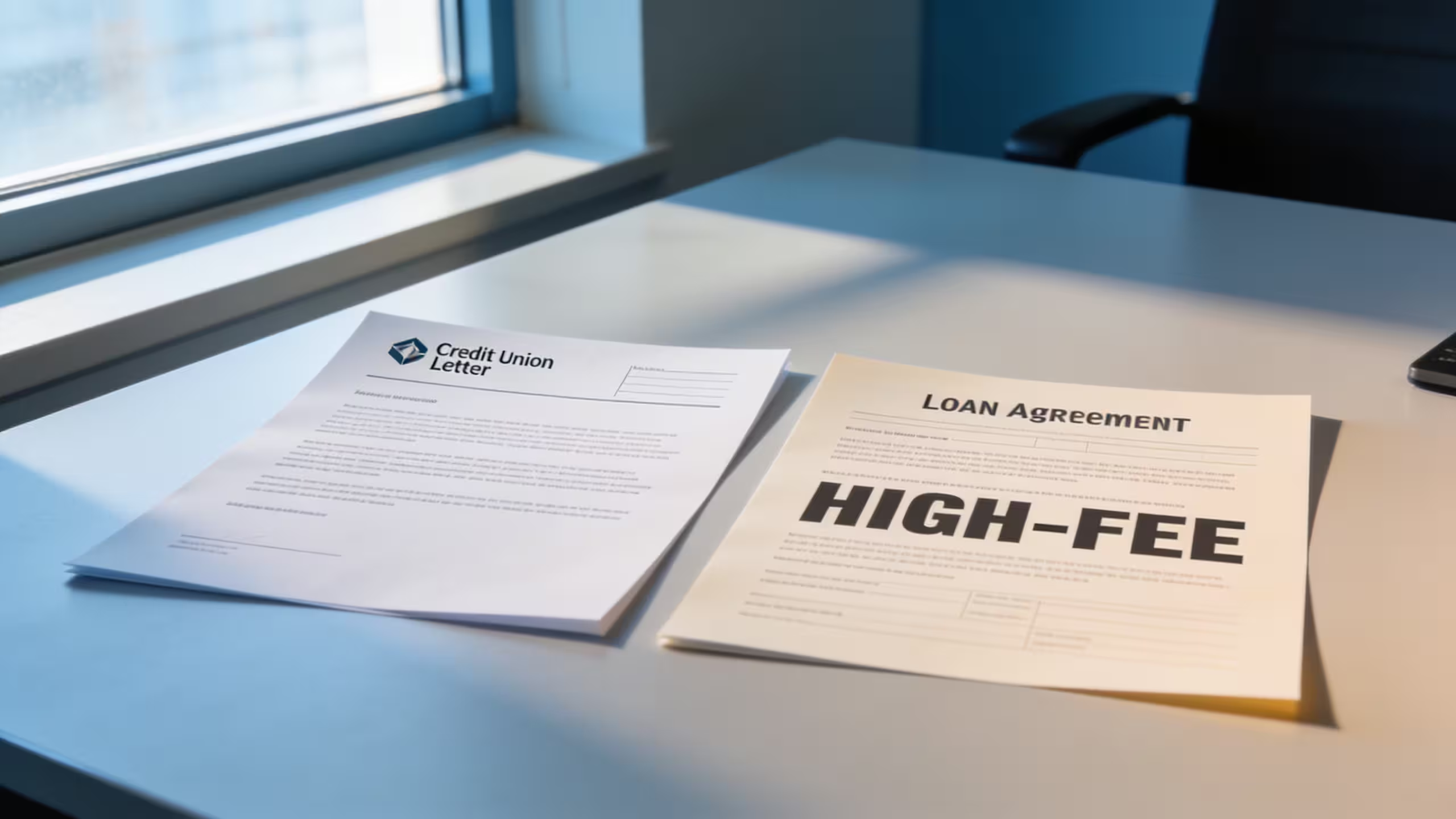
When an unexpected bill hits and your bank account is short, two options often come up at the same time: a credit union loan or a payday loan. Comparing a credit union loan vs a payday loan is not as simple as pointing to the lower interest rate. The two products are structured differently, regulated differently, and designed for different situations.
In reviewing hundreds of loan applications over a decade in consumer lending, the detail most borrowers miss is that a payday loan and a credit union loan are not competing versions of the same product. They operate under entirely different rules, and the wrong choice can compound a short-term problem into a months-long debt cycle.
What Is a Credit Union Loan?
A credit union is a nonprofit financial institution owned and operated by its members. Because credit unions are not driven by profit, they typically offer lower interest rates and more flexible repayment terms than payday lenders and other for-profit short-term lenders.
Federal credit unions offer several types of loans for members who need quick cash. The most directly relevant to this comparison is the Payday Alternative Loan, or PAL. The PAL program is regulated by the National Credit Union Administration (NCUA) and was specifically created to give members a lower-cost, regulated option instead of turning to a payday lender.
- Payday Alternative Loans (PALs): Short-term, small-dollar loans with interest capped at 28% APR under NCUA rules. Two versions exist: PAL I and PAL II.
- Personal installment loans: Larger amounts, longer terms, and potentially lower rates. The NCUA caps standard federal credit union personal loan rates at 18% APR.
- Secured loans: Backed by collateral such as a savings account or vehicle, often at even more favorable rates and with easier approval for members with limited credit history.
PAL I vs PAL II: Key Differences
There are two federally regulated versions of the Payday Alternative Loan. Which one applies to your situation depends largely on how long you have been a credit union member — a detail that matters most if you need money quickly.
| Feature | PAL I | PAL II |
|---|---|---|
| Loan amount | $200 to $1,000 | Up to $2,000 |
| Repayment term | 1 to 6 months | 1 to 12 months |
| Maximum APR | 28% | 28% |
| Maximum application fee | $20 | $20 |
| Membership waiting period | 1 month minimum | None |
| Rollovers permitted | No | No |
Source: MyCreditUnion.gov (NCUA)
What Is a Payday Loan?
A payday loan is a short-term, high-cost loan typically for $500 or less. The borrower receives cash quickly and agrees to repay the full amount, plus fees, by their next paycheck, usually within two weeks. No credit union membership is required, and most payday lenders do not perform a hard credit check.
According to the Consumer Financial Protection Bureau (CFPB), a two-week payday loan with a typical fee structure of $15 per $100 borrowed carries an annual percentage rate of nearly 400%. That fee does not reduce the amount you owe. If you cannot repay the loan in full when it comes due, many lenders offer a rollover, which adds another round of fees without reducing your principal balance at all.
- No membership or long approval process required
- Funds often available the same day or the next business day
- Full repayment due at your next paycheck, typically within two weeks
- Rollover fees can compound quickly if the loan cannot be repaid on time
- Payday loans are banned in some states; check your state’s rules before applying
To understand exactly why those fees add up so quickly, see our in-depth guide on why payday loans cost so much.
Credit Union Loan vs Payday Loan: Side-by-Side Comparison
The most important difference between a credit union loan and a payday loan is not just the interest rate. It is the entire structure of the loan: how long you have to repay it, whether it can be rolled over, and what consumer protections apply to your borrowing.
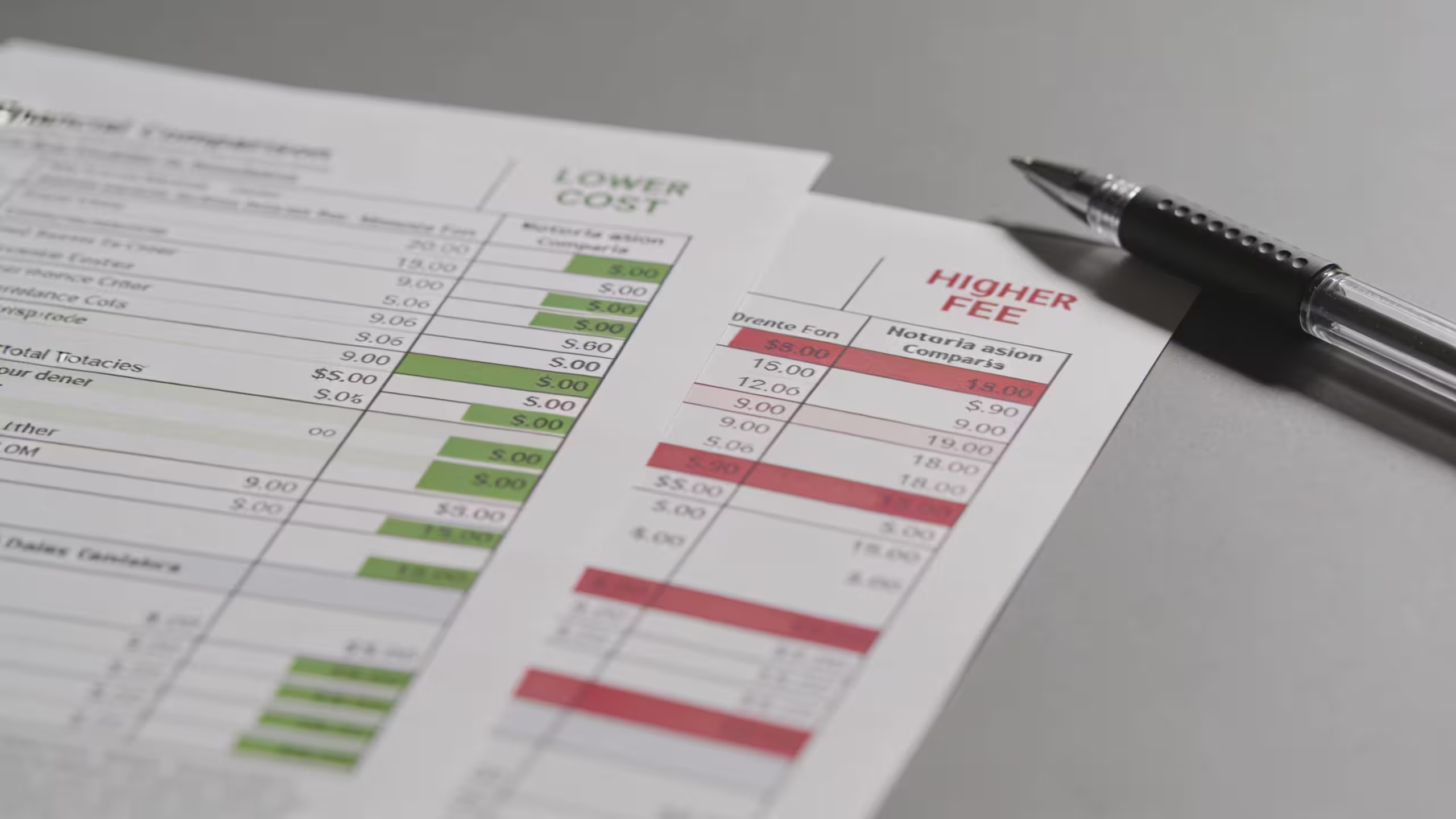
What most people miss when comparing loan offers is that a payday loan locks you into a two-week repayment window, while a credit union PAL gives you one to twelve months depending on the product. That extended window dramatically reduces the risk of coming up short on repayment day and falling into a rollover cycle.
| Feature | Credit Union PAL | Payday Loan |
|---|---|---|
| Maximum APR | 28% (NCUA cap) | Near 400% typical (CFPB) |
| Loan amount range | $200 to $2,000 | Typically $500 or less |
| Repayment term | 1 to 12 months | About 2 weeks |
| Membership required | Yes | No |
| Hard credit check | Varies by credit union | Usually not required |
| Rollovers allowed | No — prohibited by NCUA rule | Often yes, where state law permits |
| Maximum application fee | $20 (NCUA rule) | Included in the fee charged per cycle |
| May build credit history | Yes, if reported to bureaus | Typically no |
Sources: MyCreditUnion.gov; Consumer Financial Protection Bureau
For a broader look at how installment-style lending compares to payday products, see our guide on personal loans vs payday loans.
Which Loan Is Right for You? A Simple Decision Framework
In practice, many borrowers face this decision in the middle of a financial emergency, which is exactly when thinking clearly is hardest. A simple framework based on your current situation can help you decide before the pressure is on.
If you are already a credit union member: Apply for a PAL or a personal loan before considering a payday lender. The 28% APR cap, no-rollover rule, and structured repayment schedule make it the safer choice in almost every case.
If you joined a credit union today: Ask specifically about PAL II. Unlike PAL I, PAL II has no one-month waiting period. Some credit unions process these loans quickly after membership is established.
If you cannot access a credit union and need cash in the next 24 hours: A payday loan may be your only immediate option. If you take one, borrow only the exact amount you can repay in full on your next payday. Do not roll it over.
If you already have a payday loan you are struggling to repay: Contact a credit union about a PAL. A PAL can sometimes replace an existing payday loan at a far lower cost, converting a high-fee cycle into a structured monthly repayment plan.
What If You Are Not a Credit Union Member Yet?
This is the scenario that most comparison articles skip entirely, and it is the one where borrowers are most likely to default to a payday loan unnecessarily.
PAL I requires you to have been a credit union member for at least one month before applying. If you are in a financial emergency today and have not yet joined, PAL I will not help you in time. The better path is PAL II. Introduced by the NCUA in 2019, PAL II removed the one-month membership wait. According to MyCreditUnion.gov, you may be eligible for a PAL II as soon as your membership is established. Not every credit union offers PAL II, so call ahead before joining to confirm availability.
If no credit union near you offers PAL II and your need cannot wait, explore whether an employer paycheck advance, a local community assistance program, or a nonprofit lending circle is available first. For a full overview of payday loan alternatives and how to access them, visit our payday loans overview.
How to Get a Credit Union Loan: Step by Step
The process is more straightforward than many borrowers expect. Most credit unions allow you to join and apply online, often in the same session. Funding timelines vary by credit union, so ask about turnaround time when you call to confirm PAL II availability.
- Find a credit union you qualify for. Many credit unions serve specific employers, geographic areas, or professional groups, but a large number are open to anyone in the United States. Use the credit union locator at MyCreditUnion.gov to find a federally insured option near you.
- Open a membership share account. Most credit unions require a small deposit, often as low as five dollars, to establish membership. This is what makes you a member and makes you eligible to borrow.
- Ask about PAL availability. Not every federal credit union offers PALs. Ask directly whether the credit union offers PAL I, PAL II, or both, and confirm eligibility before completing an application.
- Submit your loan application. You will typically need to provide proof of income, a government-issued ID, and your membership account number. Under NCUA rules, the application fee cannot exceed $20.
- Review the repayment schedule before signing. Confirm the monthly payment amount, the total loan term, and the APR. Because PAL rollovers are prohibited under federal rules, verify that you can meet each scheduled payment before committing.
Loan Cost Comparison Calculator
See the estimated cost difference between a credit union PAL and a payday loan. PAL calculation uses the 28% maximum APR set by the NCUA. Payday loan calculation uses the $15-per-$100 fee structure described by the CFPB as typical. Results are estimates for illustration purposes only. Actual costs vary by lender, state, and credit profile.
$400
6 weeks
Credit Union PAL
Estimated total repaid:
—
28% APR max (NCUA)
Payday Loan
Estimated total repaid:
—
$15 per $100 per cycle
Estimated savings with a credit union PAL: —
PAL estimate uses simple interest at 28% APR. Payday estimate assumes loan rolled over each two-week cycle for the full period (principal not reduced between cycles). Both figures represent total amount repaid, including fees. Source: CFPB; MyCreditUnion.gov.