Small Business Loan Collateral Explained: What Lenders Actually Want
By Laurel C. Yazzie | Last reviewed: September 2026
When you apply for a business loan, one of the first things a lender will ask is what you can offer as security. Understanding how small business loan collateral works, which assets qualify, and how lenders decide what those assets are actually worth to them can change how you prepare your application and which loan type you pursue.
Small business loan collateral explained: Collateral is an asset you pledge to a lender to back a business loan. If you default, the lender can seize and sell that asset to recover its losses. Common forms include real estate, equipment, inventory, and accounts receivable. Pledging collateral can improve your chances of approval and help you qualify for better loan terms.
In reviewing hundreds of loan applications over a decade in consumer lending, the detail most borrowers miss is how a lender values their collateral. The number on your balance sheet is almost never the number the lender uses, and that gap catches many business owners off guard during underwriting.
What Is Collateral for a Small Business Loan?
Collateral is any asset you give a lender the legal right to claim if you stop making payments. When a secured loan is approved, the lender files a legal document called a UCC lien with the appropriate state office. This filing creates a public record that the asset is pledged to the lender. You keep using the asset while the loan is in good standing, but the lender holds priority rights to it if you default.
Collateral serves two purposes for both parties in a loan agreement:
- For the lender: It reduces the financial risk of extending credit and gives the lender a clear path to recover funds if the borrower cannot repay.
- For the borrower: Pledging collateral can make it easier to qualify for a loan, unlock larger amounts, or secure a lower interest rate than an unsecured loan would offer.
Not every business loan requires collateral. Loans that require it are called secured loans; loans that do not are called unsecured loans. Which type fits your situation depends on what assets your business owns, your credit profile, and the amount you need.
Which Assets Can You Use as Collateral?
Lenders generally accept a range of assets, but they prefer assets that hold their value well and can be converted to cash relatively quickly if needed. The most commonly accepted forms of collateral for a small business loan include:
- Commercial real estate: Property the business owns outright, such as a warehouse, office building, or retail space. This is one of the most accepted forms because real estate tends to retain value.
- Business equipment and machinery: Manufacturing equipment, commercial vehicles, specialized tools, or technology hardware. The equipment must be owned free and clear, or with sufficient equity to collateralize.
- Inventory: Products held for sale. Lenders look closely at inventory quality, how quickly it sells, and whether there is a verifiable resale market.
- Accounts receivable: Outstanding invoices owed to your business by customers. Lenders typically only count invoices that are current and not in dispute.
- Personal real estate: Your home or other personal property, often used when business assets alone are not sufficient to meet collateral requirements.
- Financial assets: Business savings accounts, certificates of deposit, or investment accounts. These are considered the strongest form of collateral because they carry the least uncertainty for the lender.
Some loan products are self-collateralizing. Equipment financing, for example, uses the equipment you purchase as its own security. If payments stop, the lender repossesses the equipment directly, and no separate asset pledge is typically required.
How Lenders Value Your Collateral
What most people miss when comparing loan offers is that lenders do not use the market value of your collateral when deciding how much to lend. They apply what is called an advance rate: a percentage of the asset’s value they are willing to count toward the loan. This discount accounts for the time, cost, and uncertainty of seizing and selling an asset after a default. According to the U.S. Small Business Administration, all assets financed with SBA loan proceeds must be included as collateral, and valuation standards apply throughout the loan term.
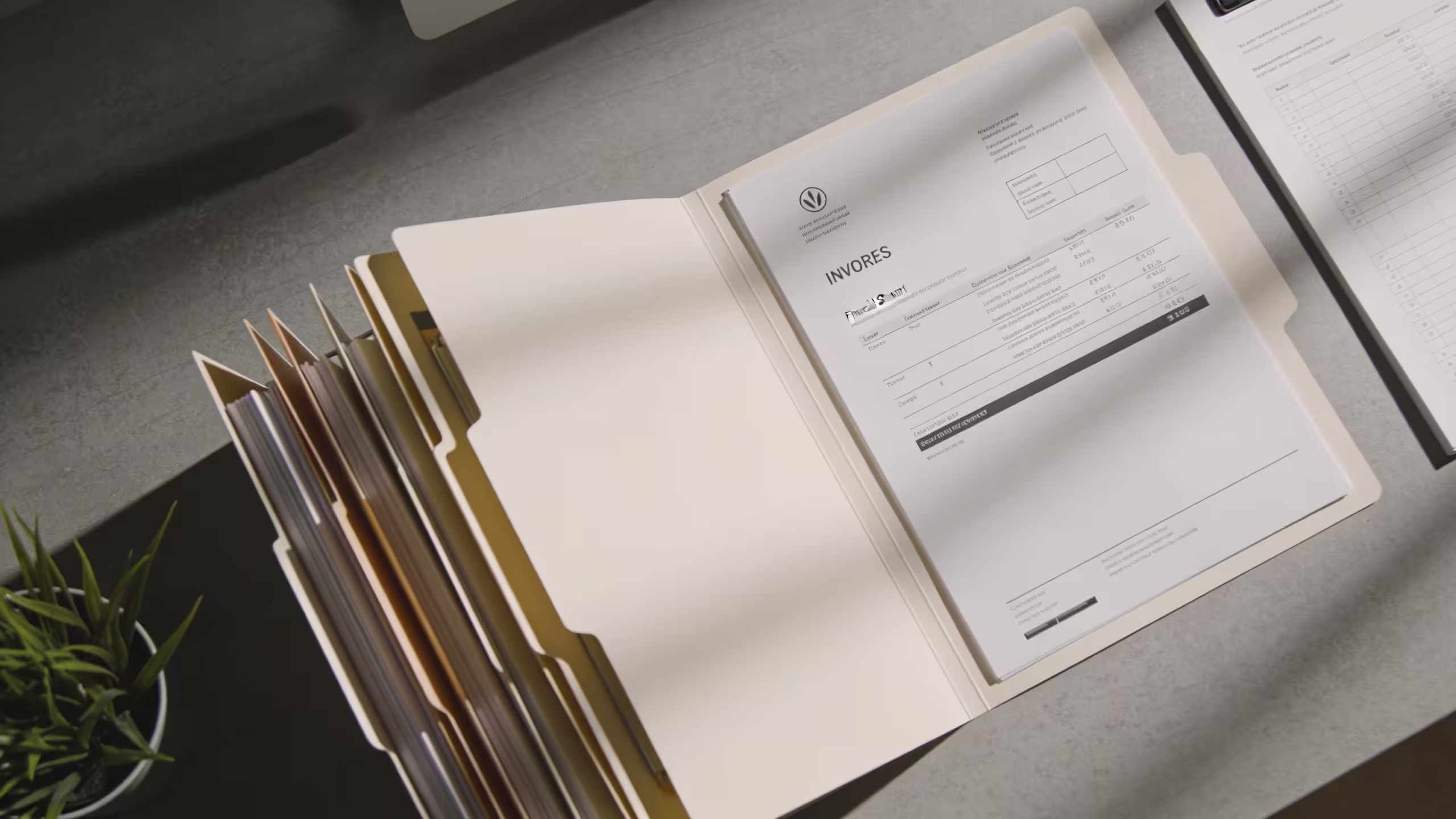
Different asset types are treated very differently. The table below shows how lenders generally rank collateral by quality and what drives their valuation decisions. Actual advance rates vary by lender, loan program, and your overall credit profile. Always ask your lender exactly how they plan to value your specific assets before applying.
| Collateral Type | Lender Preference | Key Factors That Drive Discounting |
|---|---|---|
| Cash or savings accounts | Highest — minimal discount applied | Virtually no uncertainty; lender can access funds immediately |
| Commercial real estate | High — moderate discount from market value | Foreclosure takes time; market values can shift before sale |
| Accounts receivable | Moderate to high — only eligible invoices count | Disputed or overdue invoices are excluded; customer payment risk applies |
| Business equipment | Moderate — discount varies by type and age | Depreciation rate; specialized equipment is harder to resell quickly |
| Inventory | Lower — heavier discount applied | Perishable, seasonal, or specialized goods carry the highest risk for lenders |
One condition to verify before applying: if another lender has already filed a lien on an asset you own, that asset may not be available to use as collateral for a new loan. Review your existing loan agreements and any prior UCC filings before approaching additional lenders.
Small Business Loan Collateral Explained: When Do Lenders Require It?
Whether a lender requires collateral depends on the loan type, the amount requested, and your credit profile. As a general rule, larger loan amounts and borrowers with limited credit history are more likely to face a collateral requirement. Here is how requirements typically break down by loan type:
- SBA 7(a) loans: The U.S. Small Business Administration generally requires collateral for 7(a) loans above $50,000. The SBA states it will not decline an otherwise qualified loan application solely because a borrower cannot fully collateralize the requested amount.
- Traditional bank term loans: Banks commonly require full or near-full collateral coverage, meaning the lender-adjusted value of your pledged assets should cover the loan amount.
- Equipment financing: The equipment purchased serves as its own collateral. No separate asset pledge is typically required, making this one of the more accessible secured loan types.
- Unsecured business loans and lines of credit: No collateral pledge is required. Lenders instead scrutinize credit scores, annual revenue, and time in business more closely. These options are covered in our guide to business loans without collateral.
What Happens When Your Collateral Falls Short?
If the lender-adjusted value of your pledged assets does not fully cover the loan amount, you have a few paths. The lender may reduce the loan amount to match what your collateral supports, ask you to pledge additional assets, or request a personal guarantee to cover the gap. In practice, many borrowers end up with two or even all three of these conditions applied at once. Understanding this before you apply, rather than during underwriting, gives you more room to negotiate. The Consumer Financial Protection Bureau encourages small business borrowers to carefully review all terms, including collateral requirements and any guarantee language, before signing a loan agreement.
Collateral vs. Personal Guarantee: Two Different Commitments
One of the most common misconceptions about secured business loans is that pledging collateral eliminates your personal liability. It does not. A personal guarantee is a separate legal commitment, and lenders often require both on the same loan. Collateral is an asset the lender can seize through the UCC lien process. A personal guarantee is an agreement that you, as an individual, will repay the debt if the business cannot.
The distinction matters most when a default occurs and the collateral sale does not fully cover the loan balance:
- Any unpaid balance remaining after the lender sells the collateral is called a deficiency balance.
- If you signed a personal guarantee, the lender can pursue your personal assets, including personal real estate or savings, to collect that deficiency balance.
- If you did not sign a personal guarantee, your liability after a collateral sale may be limited to business assets only, depending on your business structure and state law.
- Before closing on any secured loan, confirm in the loan documents whether a personal guarantee is also required and what the deficiency terms are if collateral proceeds do not cover the full balance owed.
For a deeper look at how lenders structure collateral alongside UCC lien filings, see our article on secured business loans and UCC liens.
Is a Personal Guarantee Always Required?
Not always, but it is common across both secured and unsecured loan types. In practice, many borrowers find that even unsecured loans carry a personal guarantee requirement, because the lender has no pledged asset to fall back on. Whether a guarantee is required depends on the lender’s policies, the loan amount, and the financial strength of the business. Always read the full loan agreement before signing, and confirm exactly what personal commitments are included alongside any collateral pledge.
For a complete overview of small business financing options, visit the small business loan resource hub.
FAQ: Small Business Loan Collateral Explained
Tap any question to expand the answer.
What is collateral for a small business loan?
Collateral is an asset you pledge to a lender to secure a business loan. If you fail to repay the loan, the lender can seize and sell that asset to recover its losses. The lender records its claim on the collateral through a legal filing called a UCC lien. Common examples include commercial real estate, business equipment, inventory, accounts receivable, and personal real estate. Not all business loans require collateral, but secured loans, which do require it, often come with better rates and higher borrowing limits than unsecured alternatives.
Do all small business loans require collateral?
No. Secured loans require collateral; unsecured loans do not. Whether a lender requires collateral depends on the loan type, the loan amount, and your credit and revenue profile. Equipment financing is self-collateralizing, using the purchased equipment as its own security. Some online lenders offer unsecured business loans and lines of credit that require no pledged assets, though these typically have stricter credit and revenue requirements than their secured counterparts.
How do lenders decide how much my collateral is worth?
Lenders apply an advance rate, which is a percentage of an asset’s value they are willing to count toward the loan. The advance rate accounts for the time and cost of seizing and selling the asset if you default. This means the lender’s valuation of your collateral is almost always lower than its market value. Real estate and cash accounts receive the smallest discounts; inventory and specialized equipment receive the largest. Always ask your lender how they plan to value your specific assets before submitting an application, since advance rates vary by lender and loan program.
What is the difference between collateral and a personal guarantee?
Collateral is a specific asset the borrower pledges to the lender, secured through a UCC lien filing. A personal guarantee is a separate legal commitment in which the business owner agrees to repay the loan personally if the business cannot. Lenders can, and often do, require both at the same time. If the collateral sale after a default does not cover the full balance owed, the remaining shortfall is called a deficiency balance. If a personal guarantee is in place, the lender can pursue the borrower’s personal assets to collect that deficiency. Read the loan agreement carefully to confirm whether a personal guarantee is required alongside any collateral pledge.
Can I use my home as collateral for a small business loan?
Yes, personal real estate, including your primary residence, can be used as collateral for a small business loan. This is common when a business does not own assets of sufficient value on its own. Using your home as collateral carries significant personal risk: if the business defaults and collateral proceeds are insufficient, the lender can foreclose on the property. Before pledging personal real estate, confirm the full deficiency terms in the loan agreement and consider consulting a licensed financial adviser or attorney to understand the full range of personal exposure.