Compare Auto Insurance Quotes: A Step-by-Step Guide
By Laurel C. Yazzie | Last reviewed: November 2026
Shopping for auto insurance means collecting quotes from multiple insurers and making sense of them. Getting the quotes is the easy part. Knowing how to compare auto insurance quotes accurately, so you are actually looking at the same product across every offer, is where most drivers go wrong.
Having worked directly with clients on auto insurance decisions and policy renewals, the most common misconception I encountered was that the cheapest quote is automatically the best one. It rarely is, and understanding why takes about five minutes to learn.
This guide covers everything: what information to gather before you start, how to read quotes side by side, and what to look for once the prices are in front of you.
Why Comparing Auto Insurance Quotes Matters
Auto insurance pricing is not standardized across companies. Each insurer uses its own algorithm to assess risk based on its claims data, underwriting guidelines, and target customer base. The result is that two drivers with identical records, vehicles, and ZIP codes can receive meaningfully different rates from the same set of insurers.
The Insurance Information Institute recommends comparing quotes from multiple insurers when shopping for auto insurance, noting that premiums for the same coverage can vary widely based on how each company weights individual rating factors.
- Rates for the same driver profile can vary significantly between insurers, even for identical coverage
- An insurer that offered you a competitive rate last year may have adjusted its pricing model since your last renewal
- Auto insurance quotes are free and typically take 10 to 20 minutes each to complete online
- Life changes, such as moving to a new ZIP code, getting married, or buying a different vehicle, can shift which insurer prices you most favorably
What You Need Before You Start Getting Quotes
Before requesting your first quote, gather the information every insurer will ask for. Having it ready in advance lets you complete multiple quote requests quickly and, more importantly, ensures each quote is built on the same inputs.
- Driver information: Full legal name, date of birth, driver’s license number, and how long each driver on the policy has been licensed
- Vehicle information: Year, make, model, VIN (found on the dashboard near the windshield or on the driver’s door jamb), estimated annual mileage, and primary use of the vehicle
- Driving history: Any at-fault accidents, moving violations, or insurance claims from the past three to five years for all drivers on the policy
- Current policy details: Your existing coverage limits and deductibles, so you can request matching coverage from each new insurer and compare like-for-like
- Desired coverage level: Decide before you start whether you want liability only or full coverage, and what deductible amount you could comfortably pay out of pocket after a claim
Having this checklist ready before you open the first quote tool eliminates one of the most common sources of error: submitting different inputs to different insurers and receiving quotes that cannot be compared.
How to Compare Auto Insurance Quotes Step by Step
The single most important principle in comparing auto insurance quotes is this: price is the last thing to evaluate, not the first. Two quotes can only be compared on price after you have confirmed they describe identical coverage. Here is the full process.
- Choose a specific coverage setup before you begin: a liability limit structure, a collision deductible, and a comprehensive deductible. Write these down.
- Request that exact coverage setup from at least three insurers. Use direct insurer websites, a licensed agent, or a comparison tool that lets you specify your own limits.
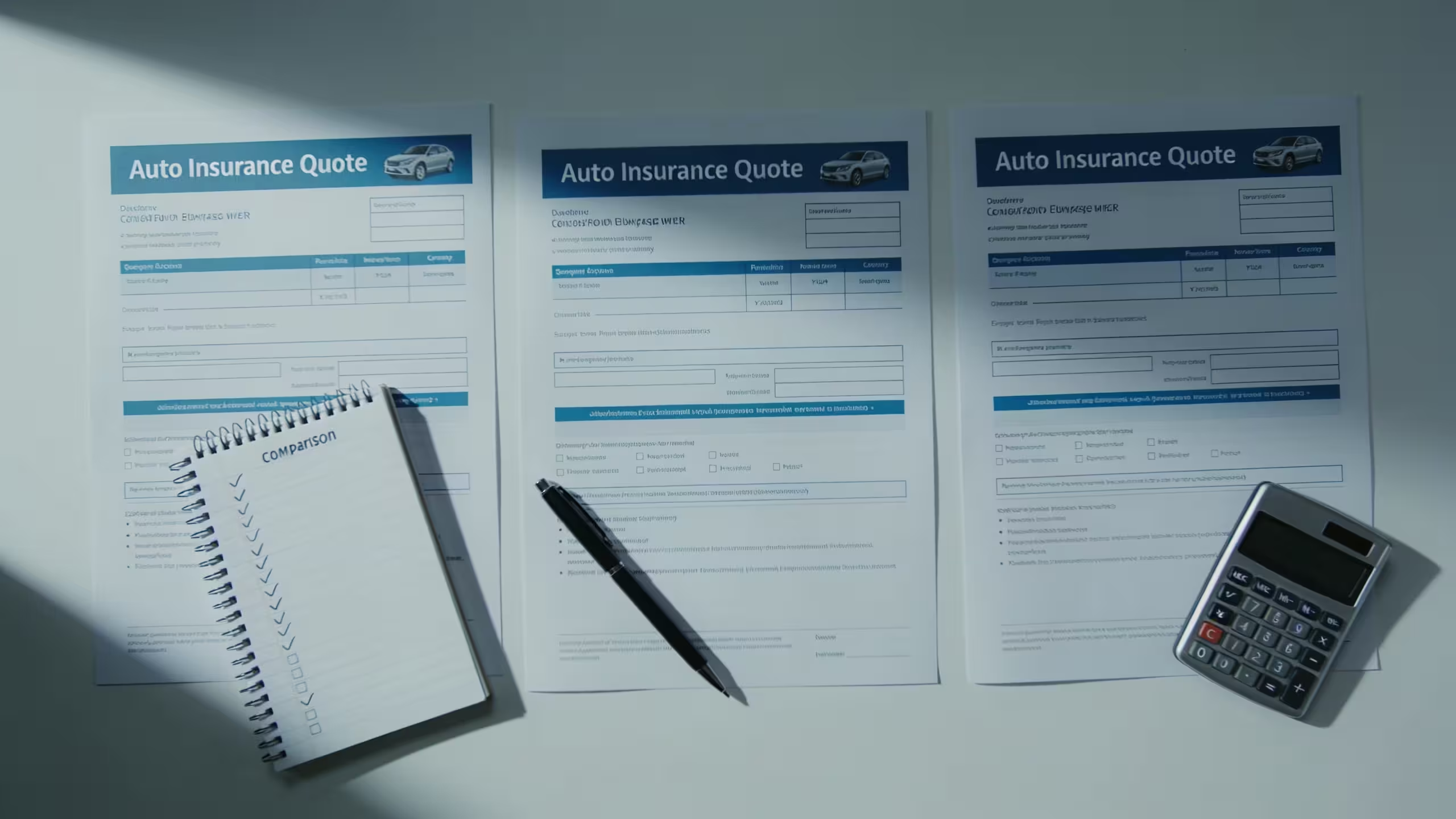
- Collect each quote in writing or as a downloadable summary. A verbal estimate from a phone representative is not reliable for comparison purposes.
- Place the quotes side by side and read them line by line. Compare coverage elements before looking at the total premium.
- Verify that collision and comprehensive deductibles are identical across every quote you are reviewing.
- Ask each insurer what discounts were applied and whether any additional ones, such as a safe driver or multi-policy discount, could apply to your situation.
The Coverage-Match Method: Making Quotes Comparable
Before any price comparison is meaningful, you need to confirm that all quotes cover the same things. This is the Coverage-Match Method, a three-step check to run before you look at a single dollar figure.
The Coverage-Match Method
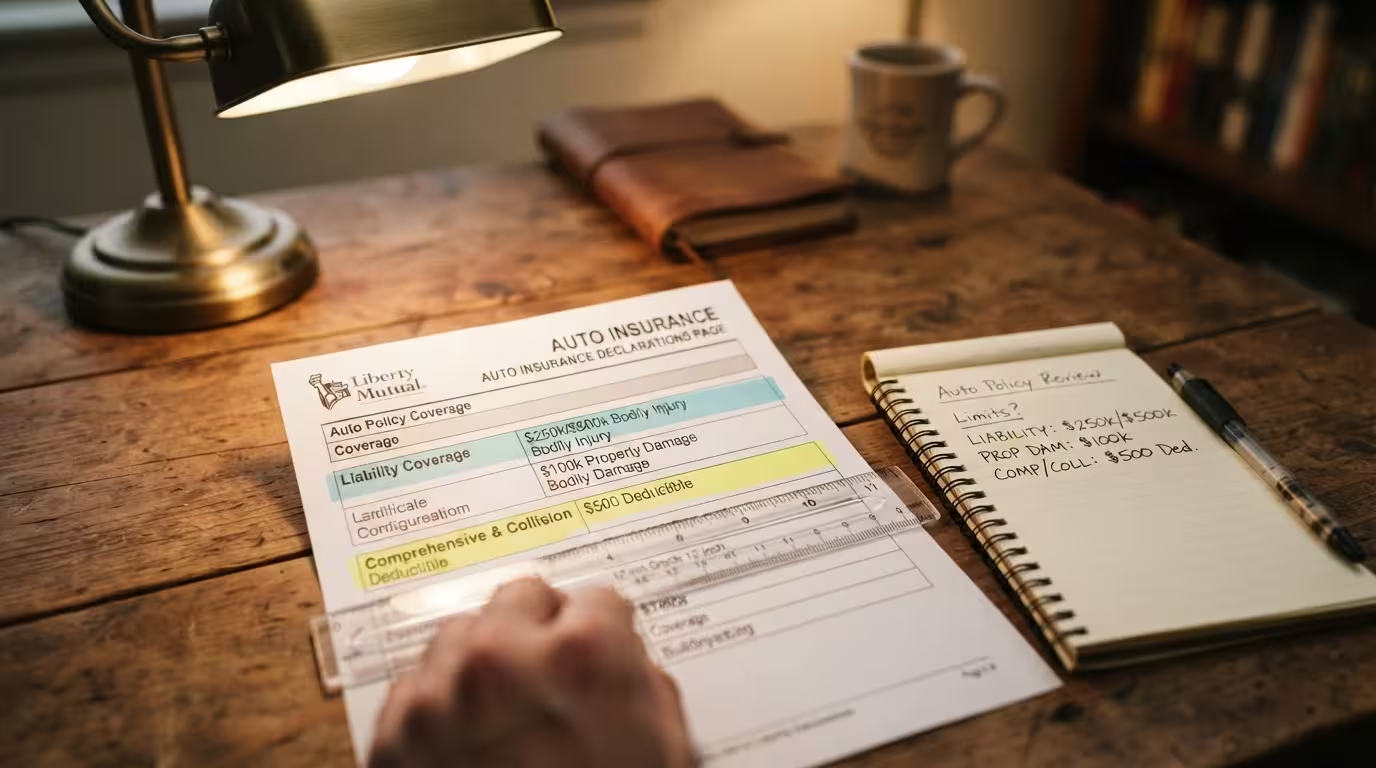
Step 1: Match liability limits. Bodily injury per person, bodily injury per accident, and property damage limits must be identical across all quotes. A common structure is expressed as three numbers, such as 100/300/100. If one quote uses 50/100/50 and another uses 100/300/100, the lower-priced quote is offering a fundamentally different product.
Step 2: Match deductibles. A quote with a $500 collision deductible costs more than one with a $1,000 deductible because the insurer takes on more of the risk. If deductibles differ, the cheaper quote may simply be shifting more cost onto you in the event of a claim.
Step 3: Match included coverages. Check whether each quote includes uninsured motorist protection, medical payments coverage, rental reimbursement, or roadside assistance. These add-ons raise the premium, and their presence or absence makes quotes incomparable if they differ.
From a practical standpoint, insurers do not always mirror your requested limits exactly. A quote tool may auto-populate with state minimum limits if your preferred coverage was not entered precisely. Always read the coverage summary on each quote document, not just the total price at the top.
When reviewing liability and full coverage options, settling that question before you start collecting quotes will keep your comparison focused and apples-to-apples from the first request.
What to Look for Beyond the Price
Once your quotes reflect identical coverage, price becomes a valid comparison point. But it should not be the only one. The table below covers the six factors worth evaluating before making a final decision.
| Comparison Factor | What to Check |
|---|---|
| Annual premium | Compare the full-year cost, not just the monthly payment. Some insurers charge installment fees that raise the effective cost of paying monthly. |
| Deductibles | Confirm collision and comprehensive deductibles are identical across every quote before any price comparison is valid. |
| Liability limits | Higher limits cost more but protect your personal assets if you are found at fault in a serious accident. State minimums are often lower than advisable. |
| Discounts applied | Ask each insurer what discounts are already included and whether any others, such as telematics, good student, or bundling discounts, could apply. |
| Insurer complaint record | The NAIC Consumer Information Source publishes complaint index data for every licensed insurer in the United States. A high complaint ratio for claims handling is a meaningful signal. |
| Claims process | Ask how claims are filed, whether the insurer uses its own repair network, and whether a rental vehicle is covered while your car is being repaired. |
How Often Should You Compare Auto Insurance Quotes?
Most drivers set their policy at renewal and do not revisit it until the next renewal notice arrives. By that point, rates may have shifted in your favor or against you. Shopping at the right moments can prevent paying more than necessary.
Comparing quotes makes sense at these points:
- At every policy renewal, typically every six or twelve months
- After a major life event: moving to a new address, getting married, adding a driver, or purchasing a different vehicle
- After a ticket, at-fault accident, or claim falls off your motor vehicle record, usually three to five years after the incident
- If your premium increased significantly at renewal without a clear explanation from your insurer
- After improving your credit score, which many states allow insurers to use as a rating factor
Understanding what affects your auto insurance rate helps you predict when shopping is most likely to yield a better result. Factors like your ZIP code, vehicle garaging location, and annual mileage all shift over time, and they all affect what insurers charge.
What If Your Quotes Are Very Different From Each Other?
A large price gap between quotes is almost always explained by one of three things: a coverage mismatch, a discount difference, or how a particular insurer’s model prices your specific profile. Run the Coverage-Match Method first. If all coverage elements are identical and a significant gap still exists, the difference is real.
A price gap when coverage matches means one insurer simply views your risk profile more favorably than the others. That is a legitimate reason to switch, provided the insurer’s complaint record and financial strength ratings are satisfactory. If one quote is dramatically lower than all others with matching coverage, confirm the details in writing before binding the policy. Quote tool errors do occur and are typically corrected at the application stage.
For a complete look at how auto insurance pricing works and what your policy should include, visit our auto insurance resource hub.
Auto Insurance Quote Comparison Tool
Enter the details from up to three quotes and click Compare Quotes to run the Coverage-Match check and see your annual costs side by side.
| Coverage Factor | Quote 1 | Quote 2 | Quote 3 |
|---|---|---|---|
| Insurer | |||
| Monthly Premium ($) | |||
| Liability Limits | |||
| Collision Deductible | |||
| Comp. Deductible |
For comparison purposes only. Always obtain formal written quotes from licensed insurers before making a coverage decision.