Does Auto Insurance Cover Windshield Replacement?
By Laurel C. Yazzie | Last reviewed: June 2026
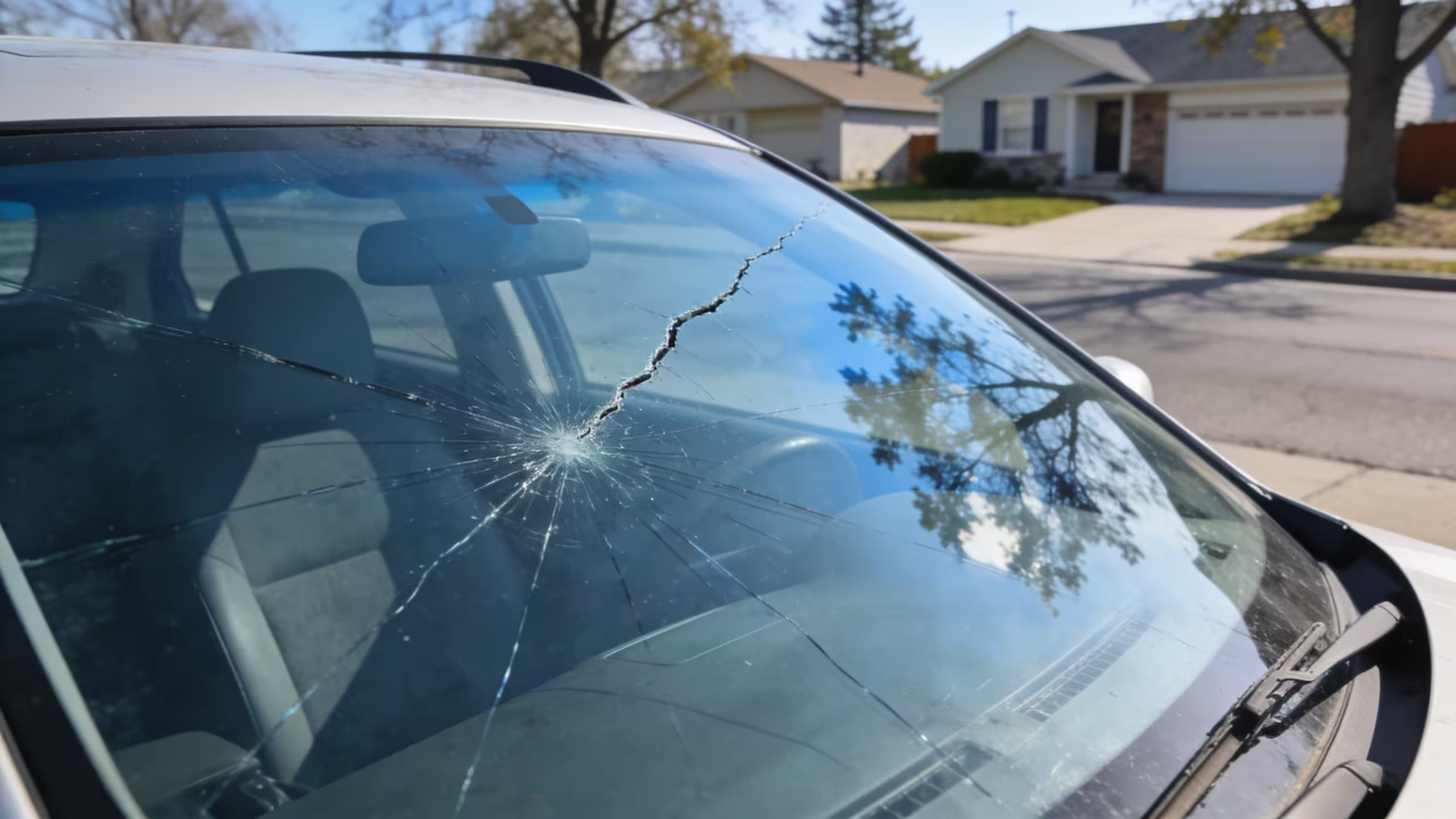
A rock hits your windshield on the highway and leaves a crack spreading across your line of sight. The first question most drivers ask is whether their insurance will pay for it. The answer depends on which coverages you carry, how your deductible compares to the repair cost, and in some cases, which state you live in.
Having worked directly with clients on auto insurance policy reviews, the most common misconception I encountered was that glass damage is automatically covered under any policy. Many drivers carry only minimum liability coverage, which pays nothing toward their own vehicle.
Does auto insurance cover windshield replacement: Yes, if you carry comprehensive coverage. Comprehensive insurance pays for windshield damage caused by rocks, hail, falling objects, vandalism, and other non-collision events. You typically pay your deductible first, and your insurer covers the rest. In Florida, Kentucky, and South Carolina, the deductible is waived by law.
Does Auto Insurance Cover Windshield Replacement?
The coverage that handles most windshield claims is comprehensive insurance. Comprehensive is an optional add-on that covers damage to your own vehicle from events other than a driving collision: weather, theft, vandalism, falling objects, and animals. A cracked windshield from a highway pebble is exactly the kind of claim it is designed for.
Collision insurance also applies, but in a narrower situation. If your windshield was damaged in an accident where your car struck another vehicle or a fixed object, collision coverage responds. Most windshield claims, however, are not crash-related and fall under comprehensive.
- Comprehensive coverage: Covers windshield damage from rocks, hail, falling objects, fire, vandalism, and animals
- Collision coverage: Covers windshield damage only if it occurred during a crash
- Standalone glass coverage: An optional endorsement some insurers offer with a lower or waived deductible for glass claims specifically
- Liability-only (minimum coverage): Does not cover your windshield or any other damage to your own vehicle
If you carry only the minimum liability coverage your state requires, your policy will not pay for your windshield regardless of how the damage happened. Liability insurance covers damage you cause to others, not repairs to your own car. For a clear breakdown of what each coverage type does, see our guide on types of auto insurance coverage.
Comprehensive vs. Collision: Which Coverage Applies to Your Windshield?
The distinction between comprehensive and collision comes down to what caused the damage, not where the glass is located on your vehicle.
| Cause of Damage | Coverage That Applies | Your Out-of-Pocket Cost |
|---|---|---|
| Rock chip, hail, vandalism, falling object, animal strike | Comprehensive | Your comprehensive deductible |
| Crash with another vehicle or a stationary object | Collision | Your collision deductible |
| Any cause (liability-only policy) | None | Full replacement cost |
According to the Insurance Information Institute, comprehensive coverage is not required by law in any state, but lenders and leasing companies almost always require it when a vehicle is financed or leased. If your car is paid off, carrying comprehensive is your decision, but going without it means a windshield replacement comes entirely out of pocket.
What If Your Deductible Is Higher Than the Replacement Cost?
This is the scenario most coverage guides skip, and it is the one most likely to affect a real decision at the moment of a claim.
Windshield replacement costs vary by vehicle make and model. Vehicles with advanced driver assistance systems (ADAS), such as lane-departure warning or automatic emergency braking, often require camera and sensor recalibration after the glass is replaced, which adds to the total bill. If your comprehensive deductible is higher than the complete replacement and recalibration cost, you will pay the full amount yourself even if you file a claim, and that filing will still appear in your claims history.
The rule is straightforward: get a written estimate from a glass shop first, then compare it to your deductible. If the estimate is lower than your deductible, pay out of pocket. If the estimate is higher, file the claim and pay only the deductible amount.
One added consideration: many insurers cover windshield chip repairs at no cost even when a full-replacement deductible would apply. A small chip repaired early can stop the kind of spreading crack that requires a full replacement. Ask your insurer specifically whether chip repair is covered separately before authorizing any work.
Should You File a Windshield Claim or Pay Out of Pocket?
Before calling your insurer, work through this decision framework:
- Get a written repair or replacement estimate from a glass shop.
- Find your comprehensive deductible amount on your declarations page.
- If the estimate is less than your deductible: pay out of pocket. Do not file a claim.
- If the estimate exceeds your deductible: file a claim. You pay the deductible; your insurer pays the difference.
- If you live in Florida, Kentucky, or South Carolina and carry comprehensive coverage: file a claim. Your deductible is waived by state law regardless of the replacement cost.
- If the damage is a small chip, not a full crack: ask your insurer whether chip repair is covered at no cost before committing to a full replacement.
Filing a single windshield replacement claim generally does not raise your insurance premium. Comprehensive glass claims are typically classified as not-at-fault losses, and most insurers do not apply a surcharge for a single glass claim. The National Association of Insurance Commissioners advises consumers to always confirm their specific policy terms with their insurer, because practices do vary by company and state. Filing multiple claims in a short period can affect your rate regardless of fault, so that context matters too.
Zero-Deductible Glass States: Florida, Kentucky, and South Carolina
Three states legally require insurers to waive the deductible for windshield replacement when the policyholder carries comprehensive coverage. These are commonly called zero-deductible glass states or free windshield replacement states.
- Florida: Insurers must waive the deductible for windshield claims filed under comprehensive coverage. The zero-deductible requirement applies to windshields only, not all auto glass.
- Kentucky: Insurers must waive the deductible for all auto glass replacement when comprehensive coverage is in place, including side and rear windows.
- South Carolina: Insurers must cover all safety glass replacement without a deductible when the policyholder carries comprehensive coverage.
If you live in one of these states and have comprehensive coverage, a windshield replacement claim costs you nothing at the time of the claim beyond your regular premium. The term “free” refers to the waived deductible, not the elimination of the premium you pay each month for comprehensive coverage.
Drivers in other states may still be able to add standalone glass coverage as a policy endorsement that carries a lower or waived deductible for glass claims only. Check your declarations page or ask your insurer directly whether this option is available.
How to File a Windshield Replacement Claim
The process is simpler than most insurance claims because there is no fault determination and no other party involved. In practice, many drivers discover the shop handles the insurer paperwork for them once the claim is opened.
- Document the damage. Take clear photos of the crack or chip before any repair work begins.
- Check your coverage. Pull up your declarations page to confirm you carry comprehensive coverage and note your deductible amount.
- Get a written estimate. Contact a glass repair shop for a quote. Compare it to your deductible before deciding whether to file.
- Contact your insurer. Most insurers have a dedicated glass claims line or allow you to open a claim online or through their mobile app.
- Choose a repair facility. Your insurer may direct you to a preferred network shop or allow you to choose your own. Many offer mobile repair services that come to your home or workplace.
- Pay your deductible at the shop. If one applies, you pay it directly to the repair facility. Your insurer settles the remaining balance with the shop directly.
- Confirm ADAS recalibration is included. If your vehicle has camera-based safety features mounted behind the windshield, confirm with both your insurer and the shop that recalibration is included in the covered work before the job begins.
Understanding what your policy covers is only part of the picture. There are also situations where an insurer will decline a windshield claim, such as damage that predates the current policy or pre-existing conditions not disclosed at the time of purchase. For a full look at common exclusions, see what auto insurance does not cover. For a complete overview of how auto policies are built from the ground up, the auto insurance overview is a useful starting point.
FAQ: Does Auto Insurance Cover Windshield Replacement?
Does auto insurance cover windshield replacement if I only have liability coverage?
No. Liability-only coverage pays for damage you cause to other drivers and their vehicles, not repairs to your own car. To have your windshield covered, you need comprehensive coverage, which is an optional add-on. If you are unsure what your current policy includes, check your declarations page or call your insurer and ask specifically whether comprehensive coverage is active on your policy.
Will filing a windshield replacement claim raise my insurance rates?
A single windshield replacement claim typically does not raise your premium because comprehensive glass claims are generally classified as not-at-fault losses. Windshield damage is considered an unavoidable event, and most insurers do not penalize policyholders for a single glass claim. However, filing multiple comprehensive claims within a short period can affect your rate, so it is worth asking your insurer directly before filing if you have had other recent claims.
Does my deductible apply to windshield replacement?
In most states, yes. Your comprehensive deductible applies to a windshield replacement claim, meaning you pay that amount first and your insurer covers the rest. If your deductible is higher than the replacement cost, filing a claim does not make financial sense. Three states, Florida, Kentucky, and South Carolina, require insurers to waive the deductible for windshield replacement when you carry comprehensive coverage, so drivers in those states pay nothing out of pocket at claim time.
What is the difference between windshield repair and windshield replacement for insurance?
Windshield repair involves filling in a chip or small crack with a resin compound to stop it from spreading, while replacement means removing the entire damaged pane and installing a new one. For insurance purposes, many insurers cover chip repairs at no cost to the policyholder, even when a standard deductible would apply to a full replacement. If the damage is minor, asking your insurer about repair-only coverage before scheduling a replacement can save you from paying a deductible at all.
Does comprehensive coverage always include windshield replacement?
Comprehensive coverage is the standard way windshield replacement is covered, and glass damage is a covered peril under most comprehensive policies. However, some policies include exclusions or have separate glass sublimits, particularly for higher-end or specialty vehicles. Reading the declarations page and the policy exclusions section, or calling your insurer to confirm that glass damage is explicitly covered, is the most reliable way to know for certain before a claim situation arises.