Can You Get Student Loans with Bad Credit?
By Laurel C. Yazzie | Last reviewed: May 2026
If your credit history is less than ideal, you might assume that paying for college is off the table. That assumption stops many students from even applying. The reality is that your credit score matters far less for student loans than it does for almost any other type of borrowing, and for most undergraduates, it does not matter at all.
Student Loans with Bad Credit: Yes, you can get student loans with bad credit. Federal Direct Subsidized and Unsubsidized Loans do not require a credit check, making them available to nearly all eligible students regardless of credit history. Private student loans typically require good credit, but adding a creditworthy cosigner can improve your approval odds significantly.
Understanding how federal and private loans differ is the key to finding the right path forward. If you are new to this topic, our guide on how student loans work for beginners is a helpful place to start before going further.
Can You Get Student Loans with Bad Credit?
Yes, and for most students the answer is simpler than expected. The federal student loan system was built to make college accessible, which means credit scores are not the central eligibility factor. Your enrollment status, school participation in federal programs, and financial need (for subsidized loans) matter far more than your credit report.
Here is how the major student loan types line up against credit requirements:
- Direct Subsidized Loans: For undergraduates with demonstrated financial need. No credit check required.
- Direct Unsubsidized Loans: For undergraduates and graduate students regardless of financial need. No credit check required.
- Direct PLUS Loans (Graduate/Professional): For graduate or professional students. Requires no adverse credit history, not a traditional credit score review.
- Parent PLUS Loans: For parents of dependent undergraduates. Requires no adverse credit history on the parent borrower’s record.
- Private Student Loans: From banks, credit unions, and online lenders. These lenders set their own rules and typically require a credit check. A cosigner with good credit can improve approval odds.
What “Adverse Credit History” Actually Means for PLUS Loans
This is where many guides fall short. For Direct Subsidized and Unsubsidized Loans, your credit history simply does not come into play. But PLUS Loans use a specific standard that is different from a credit score cutoff.
The Department of Education reviews for defined “adverse credit” events: a recent bankruptcy, foreclosure, repossession, tax lien, wage garnishment, default on a federal debt, or accounts 90 or more days delinquent. A low credit score alone, without one of these specific events on record, does not automatically disqualify you from a PLUS Loan. This distinction is one that most borrowers and even some financial aid counselors overlook.
Federal Student Loans: The Best Starting Point
In reviewing hundreds of loan applications over a decade in consumer lending, the detail most borrowers miss is this: federal student loans almost always offer better protections and terms than private loans, and they are the only type of student loan where a low credit score is essentially irrelevant for most borrowers. Applying for federal aid first is not just conventional wisdom. It is the move that protects you from higher-cost debt.
According to the Consumer Financial Protection Bureau, federal student loans provide protections that private loans typically do not, including income-driven repayment options and loan forgiveness programs.
To access any federal student loan, follow these steps:
- Create a free account at studentaid.gov and complete the FAFSA (Free Application for Federal Student Aid). It opens each October for the following academic year.
- Review your Student Aid Report (SAR) carefully for any errors. Mistakes can reduce your aid amount.
- Review your school’s financial aid offer. Accept grants and scholarships first, then work-study, then loans.
- Complete entrance counseling online at studentaid.gov and sign your Master Promissory Note (MPN) to finalize your loan.
What Happens If Your PLUS Loan Is Denied?
If the Department of Education finds an adverse credit event and denies a PLUS Loan, you are not out of options. You can appeal the decision with documentation of extenuating circumstances, or apply with an endorser who does not have an adverse credit history. An endorser serves a similar role to a cosigner.
There is also a lesser-known benefit: if a parent is denied a Parent PLUS Loan, the dependent undergraduate student may become eligible for higher annual limits on Direct Unsubsidized Loans. Your school’s financial aid office can explain exactly how much additional borrowing this unlocks for your specific situation.
Private Student Loans with Bad Credit: What to Expect
Private student loans come from banks, credit unions, and online lenders. Unlike federal loans, these lenders set their own eligibility rules. Most run a credit check before approving you, and a thin or negative credit history typically results in denial or a higher cost of borrowing.
In practice, many borrowers with bad credit find that the most effective path to a private loan is applying with a creditworthy cosigner. A parent or close relative with good credit who agrees to share legal responsibility for the loan reduces the lender’s risk and often results in better terms for the borrower.
If a cosigner is not available, our article on getting student loans without a cosigner covers what your alternatives are and which lenders offer more flexible underwriting for independent borrowers.
- Most private lenders run a hard credit inquiry, which may cause a small, temporary dip in your credit score.
- Lenders set their own minimum requirements and rarely publish specific credit score thresholds. The only way to know is to check your rate, ideally through a soft-pull prequalification where available.
- Some credit unions offer student loan programs with more flexible underwriting than large national banks. It is worth checking with any credit union you or your family already have a relationship with.
- Interest rates on private loans are not set by Congress and vary based on the lender’s assessment of your creditworthiness.
A Decision Framework for Bad Credit Borrowers
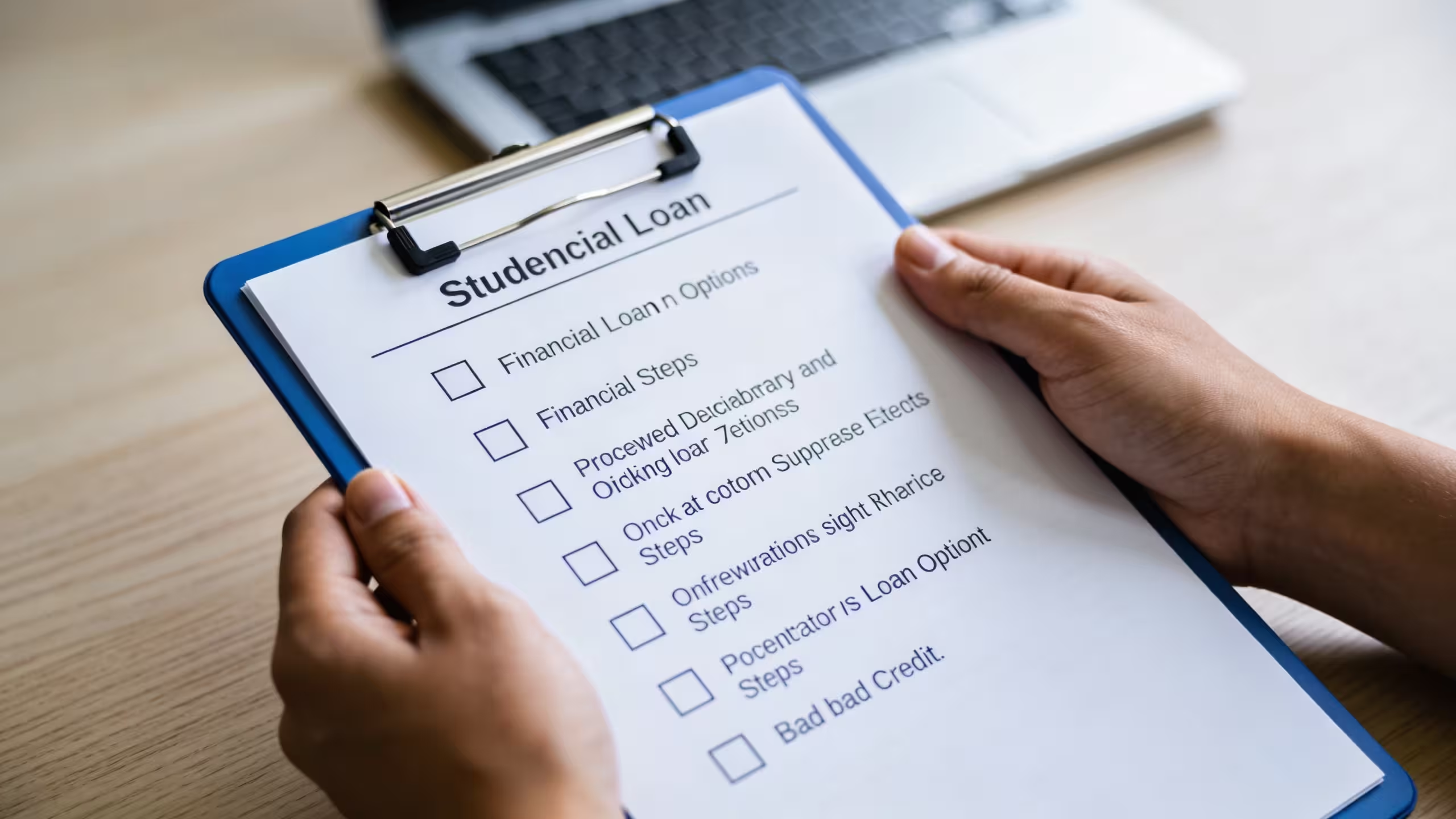
Choosing where to start can feel overwhelming when tuition deadlines are looming. This four-step framework helps you move through your options in the right order, from lowest-cost to highest-cost borrowing.
Bad Credit Student Loan Decision Framework
Step 1 — Complete the FAFSA. If you qualify for Direct Subsidized or Unsubsidized Loans, accept them first. No credit check. No exceptions needed.
Step 2 — Check PLUS Loan eligibility. If federal loans do not cover your full costs, find out whether you or your parent qualifies for a PLUS Loan. Remember: a low score is not the same as an adverse credit event.
Step 3 — Find a creditworthy cosigner. If you still need more funding and your credit is poor, a cosigner on a private loan can dramatically improve your approval odds and borrowing terms.
Step 4 — Exhaust grants and scholarships first. If no cosigner is available and private loan terms are unfavorable, prioritize free money over high-cost debt. Work-study and institutional scholarships are worth pursuing before taking on additional private borrowing.
Related topics that can strengthen your financial position include understanding your debt-to-income ratio before taking on any loan, knowing the difference between secured and unsecured borrowing, and building a credit improvement plan for graduate school if you plan to borrow again. The student loans resource hub covers these topics in detail.
How to Check and Build Your Credit Before Applying
Even if your plan is to rely entirely on federal loans, knowing your credit standing matters. It affects whether you qualify for private loans in the future, including borrowing for graduate school. Checking before you apply gives you time to correct errors that may be dragging your score down for no valid reason.
You are entitled to a free credit report from all three major bureaus through AnnualCreditReport.com, the only federally authorized source for free credit reports. Reviewing your report and disputing inaccuracies, such as accounts that are not yours or incorrectly reported late payments, can improve your credit without taking on any new debt.
- Pay all current bills on time, even at the minimum payment level. Payment history is the single largest factor in most credit scoring models.
- Keep credit card balances as low as possible relative to each card’s limit. High utilization drags scores down quickly.
- Avoid opening multiple new credit accounts in the months before applying for private student loans.
- Dispute any inaccuracies directly through each bureau’s online dispute portal. The bureaus are required by law to investigate disputes within 30 days.
Does Applying for Student Loans Hurt Your Credit?
Completing the FAFSA and accepting federal student loans does not trigger a hard credit inquiry and will not reduce your credit score. Federal loans for undergraduates have no credit review at all, and PLUS Loan checks are not reported as traditional hard inquiries in the same way private lender checks are.
Private student loan applications typically do involve a hard inquiry. If you are rate-shopping with multiple private lenders, try to submit all applications within a short window. Many credit scoring models treat multiple loan inquiries within a 14 to 45-day period as a single inquiry, which limits the impact on your score.
FAQ: Student Loans with Bad Credit
Do any federal student loans require a credit check?
Direct Subsidized and Direct Unsubsidized Loans, the two most common types for undergraduates, require no credit check at all. PLUS Loans, available to graduate students and parents of undergraduates, do involve a review of your credit history, but the standard used is whether you have specific adverse events on record, not your credit score. Completing the FAFSA is the required first step for all federal loan types.
Can I get a private student loan with bad credit and no cosigner?
It is possible but uncommon. Most private lenders approve borrowers with poor credit histories only when a creditworthy cosigner is added to the application. Without a cosigner, you may face denial or significantly higher interest rates. Some credit unions and community banks offer student loan programs with more flexible underwriting, so it is worth researching lenders beyond the largest national banks before assuming no options exist.
What specific events count as “adverse credit history” for PLUS Loans?
The Department of Education defines adverse credit history as having one or more of the following on your credit report: accounts that are 90 or more days delinquent, a recent bankruptcy filing or discharge, foreclosure, repossession, tax lien, wage garnishment, or a default on a federal debt. A credit score that is simply low, without any of those specific events, does not automatically disqualify you. If a PLUS Loan is denied, you may appeal with documentation or apply with an endorser.
Will applying for student loans hurt my credit score?
Completing the FAFSA and borrowing federal Direct Loans does not involve a hard credit inquiry, so your credit score is not affected by accessing federal loans. Private student loan applications do typically result in a hard inquiry, which may cause a small, temporary score dip. If you plan to compare rates across multiple private lenders, submitting applications within a short window, generally 14 to 45 days, allows many credit scoring models to treat those inquiries as a single event.
How long does it take to improve my credit before applying for private loans?
The timeline depends on what is causing your score to be low. Disputing and removing an inaccurate negative item from your credit report can show results within 30 to 45 days after the bureau completes its investigation. Reducing credit card balances can improve your score within one to two billing cycles. Building a consistent on-time payment history takes longer, typically six to twelve months of clean activity before lenders see a meaningful improvement. Checking your free report at AnnualCreditReport.com is the best first step to identifying what needs to change.