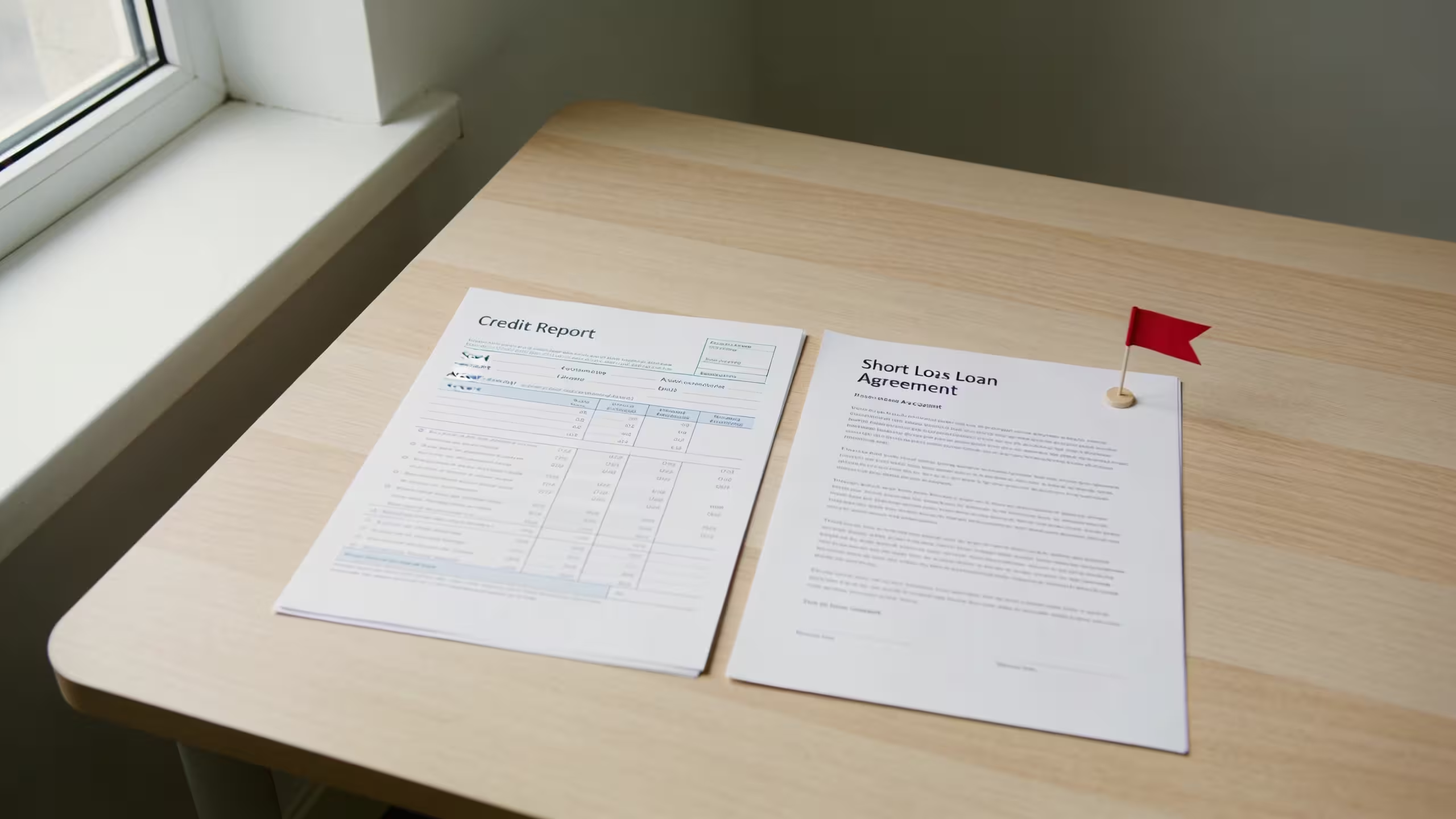
Can Payday Loans Hurt Your Credit Score?
By Laurel C. Yazzie | Last reviewed: June 2026
If you are considering a payday loan or have already taken one, you may be wondering whether it will show up on your credit report. The answer depends on whether you repay on time and whether your specific lender reports to the credit bureaus. Most do not, but that protection has a sharp limit that most articles never fully explain.
Can Payday Loans Hurt Your Credit: Payday loans usually do not appear on your credit report, so paying one off on time will not help your score. However, if you miss a payment and the lender sells your account to a debt collector, that collection entry can seriously damage your credit score and remain on your report for up to seven years.
Can Payday Loans Hurt Your Credit? The Core Answer
Having worked directly with clients on loan applications for short-term borrowing, the most common mistake I saw was assuming that because a payday loan was not visible on a credit report when taken out, a default also would not appear. That assumption is wrong and it carries a real cost.
According to the Consumer Financial Protection Bureau, payday loans are generally not reported to the three major national credit reporting companies, so they are unlikely to impact your credit scores or help you build credit. That “unlikely to impact” cuts both ways: no benefit when you repay, but no protection when you default.
There are four specific situations in which a payday loan can cause real credit damage:
- Default followed by collections: If you miss your repayment and the lender sells your debt to a collection agency, the collector can report that account to the major credit bureaus. A collection entry is one of the most damaging marks a credit report can carry.
- A civil judgment against you: Some lenders sue to recover unpaid balances. If the lender wins in court, that judgment may appear on your credit report and lower your score.
- A hard credit inquiry at application: A minority of payday lenders run a full credit check when you apply. A hard inquiry temporarily lowers your score by a few points and stays visible on your report for two years.
- Specialty bureau reporting: Some lenders report to alternative databases such as Teletrack and ChexSystems. A negative entry there can block you from opening bank accounts or qualifying for other short-term products, even if your traditional FICO score looks fine.
In practice, many borrowers focus only on the fee and the due date when weighing a payday loan. The credit risk question rarely gets asked until after something has gone wrong.
Do Payday Loans Show Up on Your Credit Report?
Whether a payday loan appears on your credit report depends on what your specific lender does, not on any industry-wide rule. Most lenders skip routine reporting because they do not use the major bureaus to approve applications. Some lenders do report regularly. Almost all lenders report when a loan defaults, goes to collections, or results in a lawsuit.
Before you apply, ask the lender directly: “Do you run a hard credit check? Do you report loan activity to Experian, Equifax, or TransUnion?” If the lender cannot answer clearly, assume the worst-case scenario applies and plan accordingly.
The Three Major Bureaus vs. Specialty Databases
Experian, Equifax, and TransUnion are the three bureaus that generate the FICO scores most lenders rely on. However, payday lenders often use a separate layer of specialty databases that track short-term borrowing and banking history. The two most common are Teletrack and ChexSystems.
A negative entry in these databases does not lower your FICO score directly. But it can prevent you from opening new checking accounts or qualifying for other short-term loans, even when your traditional credit report is clean. That is a real, practical consequence most credit score articles never explain.
What If a Payday Lender Changes Its Reporting Policy After You Borrow?
A lender can legally update which bureaus it reports to after your loan is funded. A loan that was invisible on your credit report at origination could later appear because the lender changed its reporting practices or sold the account to a servicer that does report. This is not a rare edge case: lenders sell loan portfolios regularly, and the servicer who buys the account may have different reporting practices than the original lender.
The only reliable way to catch this is to check your credit report regularly. Under federal law, you are entitled to a free report from each of the three major bureaus, accessible at AnnualCreditReport.com. If a payday loan entry appears that you did not expect, you have the right to dispute inaccurate information directly with the reporting bureau.
Hard Pull vs. Soft Pull: What Happens When You Apply
Most payday lenders verify income and banking history rather than pulling a traditional credit report. A soft credit check, if used, does not affect your score at all. A hard inquiry is less common but possible, and it does carry a small, temporary impact. Know which type your lender uses before you apply.
| Check Type | Appears on Report? | Affects Your Score? | How Long It Stays |
|---|---|---|---|
| No credit check | No | No | N/A |
| Soft inquiry | Visible to you only | No | Up to 2 years (not scored) |
| Hard inquiry | Yes, visible to lenders | Yes, small temporary dip | 2 years (score impact fades after ~12 months) |
How Long Does Payday Loan Damage Stay on Your Credit Report?
If a payday loan does cause credit damage, the duration on your report depends on how that damage was recorded. Under the Fair Credit Reporting Act, there are limits on how long negative entries can remain. According to the Consumer Financial Protection Bureau, most negative entries stay on your report for seven years from the date of the original delinquency.
| Type of Negative Entry | How Long It Stays on Your Report |
|---|---|
| Hard inquiry | Up to 2 years |
| Late payment (if lender reports) | Up to 7 years |
| Collection account | Up to 7 years |
| Charge-off (lender writes off the debt) | Up to 7 years |
| Civil judgment | Up to 7 years |
Note: Civil judgment reporting practices changed in 2017 when the three major bureaus voluntarily removed most civil judgment records from consumer credit files. A court judgment related to an unpaid payday loan may still affect your ability to obtain credit or open accounts, but it is less likely to appear on a standard Experian, Equifax, or TransUnion report than it was before 2017. Check the Consumer Financial Protection Bureau for current guidance.
A collection account from a defaulted payday loan can follow a borrower for seven years. That is a long-running consequence for what often starts as a loan of a few hundred dollars. To understand how the fees compound before you even reach that point, see our guide to why payday loan fees add up.
How to Check Your Credit Report for Payday Loan Activity
You do not need to wait for a lender to notify you if a payday loan has appeared on your report. Federal law gives every American the right to request a free credit report from each of the three major bureaus through AnnualCreditReport.com. Checking proactively is the only reliable way to catch unexpected entries before they cause further damage.
- Go to AnnualCreditReport.com and request your report from all three bureaus: Experian, Equifax, and TransUnion.
- Search each report for any account related to a payday lender or a collection agency you do not recognise.
- Check for hard inquiries you did not knowingly authorise when you applied for the loan.
- If you find an entry that is inaccurate or does not belong to you, file a dispute with the bureau that is reporting it. The bureau is required to investigate within 30 days.
- If a collection account is accurate and you want to resolve it, contact the collection agency directly. The Consumer Financial Protection Bureau publishes guidance on your rights under the Fair Debt Collection Practices Act, including what collectors can and cannot do.
What to Do If a Payday Loan Is Damaging Your Credit
If a payday loan has already caused credit damage, the path forward depends on the type of entry. Collection accounts and charge-offs cannot be removed simply by paying them, but paying in full and requesting a “pay-for-delete” agreement in writing, or disputing genuinely inaccurate information, can help. The most important first step is knowing exactly what is on your report before taking any action.
- Inaccurate entry: Dispute it with the reporting bureau. The bureau must investigate.
- Accurate collection account: Contact the collection agency. Ask in writing whether they will delete the entry upon payment. Not all will agree, but some do.
- Accurate charge-off: Pay what you owe, update your records, and let time reduce the entry’s impact. Charge-offs hurt most in the first year or two and fade as the account ages toward the seven-year mark.
What Happens If a Payday Lender Sues You?
When repayment is missed for an extended period, some lenders pursue a lawsuit to recover the balance. If the lender wins, the resulting civil judgment may appear on your credit report as a separate negative entry, carrying the same seven-year reporting window. Ignoring a court summons is one of the most damaging responses a borrower can make. If you receive a lawsuit notice related to a payday loan, seek legal advice promptly before the response deadline passes.
Rebuilding Credit After a Payday Loan Default
If a payday loan default has already damaged your credit, recovery follows the same path as any collection or charge-off situation: make every other payment on time, reduce balances on revolving accounts, and let time work in your favour. A single collection entry hurts most in the first one to two years and loses impact progressively after that. Avoiding future payday loans is also part of the strategy. Exploring safer alternatives to payday loans reduces the risk of repeating the cycle.
The Safer Path Forward
The cleanest way to protect your credit from payday loan risk is to avoid the loan entirely when a viable alternative exists. Payday loans are a one-way street for credit: they almost never help your score, and they carry a realistic risk of serious, long-lasting damage if repayment becomes impossible.
From a practical standpoint, the question to ask before signing is not just “can I afford the fee?” It is: “What happens to my credit if I cannot repay this on my next payday?” Three questions worth asking before any payday loan decision:
- Does this lender run a hard credit check or a soft check? (Ask in writing.)
- Does this lender report loan activity to Experian, Equifax, or TransUnion?
- Is there a lower-cost option, such as a credit union emergency loan or a paycheck advance from my employer, that I have not yet tried?
For a full overview of every payday loan topic, including cost breakdowns and alternatives, visit our payday loan guide library.
FAQ: Can Payday Loans Hurt Your Credit?
Can a payday loan help build my credit score?
In most cases, no. Most payday lenders do not report payment activity to Experian, Equifax, or TransUnion, so even a perfectly repaid payday loan will not add positive payment history to your credit file. A small number of lenders do report to the major bureaus, in which case on-time repayment could add a minor positive entry. Before taking a loan to build credit, ask the lender specifically whether they report to the three major bureaus, and consider whether a credit-builder loan from a credit union would serve that goal more reliably and at lower cost.
What happens to my credit if I default on a payday loan?
If you default and the lender sells your account to a debt collection agency, that collector can report the debt to the major credit bureaus. According to the Consumer Financial Protection Bureau, this type of collection account can significantly lower your credit score. The entry can remain on your credit report for up to seven years from the date of the original delinquency. In some cases, the lender may also file a lawsuit to recover the unpaid balance, and a court judgment against you could appear on your credit report as a separate negative entry with its own seven-year window.
Do payday lenders run credit checks when you apply?
It depends on the lender. Many payday lenders skip traditional credit checks entirely and instead verify your identity, income, and bank account status. Some lenders run a soft credit inquiry, which does not affect your score and is not visible to other lenders. A smaller number run a hard inquiry, which does appear on your report, can lower your score by a few points, and stays visible for up to two years. Ask the lender in writing which type of check they use before you submit an application, since once a hard inquiry is on your report, it cannot be removed until its two-year window expires.
How do I dispute a payday loan collection entry on my credit report?
Start by pulling your free credit reports from all three major bureaus at AnnualCreditReport.com. If you find an entry that is inaccurate, incomplete, or does not belong to you, file a dispute directly with the bureau reporting it. Each bureau has an online dispute process and is legally required to investigate within 30 days. If the entry is accurate but you want to attempt removal through payment, contact the collection agency directly and ask in writing whether they will delete the entry in exchange for payment in full. This “pay-for-delete” arrangement is not guaranteed, but some agencies agree to it.
Can a payday loan affect my ability to open a bank account?
Yes, in some cases. Many payday lenders report to specialty consumer databases such as ChexSystems and Teletrack, which are separate from the three major credit bureaus. Banks and credit unions often check ChexSystems before opening a new checking account. A negative entry in these databases, such as an unpaid payday loan or a history of bounced checks, can lead a bank to deny a new account application even if your FICO credit score appears healthy. If you are having trouble opening a bank account, ask any prospective bank which consumer database they check, and request your ChexSystems report to review what it contains.