How Much Renters Insurance Do I Need?
By Laurel C. Yazzie | Last reviewed: May 2026
Figuring out how much renters insurance to buy can feel overwhelming when policies list so many options. The good news is that the answer comes down to three questions: How much are your belongings worth? How much liability protection do you need? And how long could you afford to pay for a hotel if you had to leave your apartment? Once you know those answers, choosing the right coverage becomes much simpler.
How Much Renters Insurance Do I Need: Most renters need personal property coverage equal to the total replacement value of their belongings, at least $100,000 in liability protection, and additional living expenses coverage included in their policy. Your exact amount depends on the value of your possessions, your lifestyle, and where you live in the United States.
What Does Renters Insurance Cover?
Before deciding how much coverage to buy, it helps to understand what a standard renters policy includes. Most policies bundle three core protections together, and each one has its own coverage limit. Knowing what each one does makes it easier to figure out where to set your amounts.
- Personal property coverage: Pays to repair or replace your belongings, such as furniture, clothing, and electronics, if they are damaged or stolen due to a covered event like fire or theft.
- Liability coverage: Pays your legal fees and any damages if someone is injured in your home or if you accidentally damage someone else’s property.
- Additional living expenses (ALE): Covers the cost of a hotel, meals, and other temporary housing costs if your rental unit becomes uninhabitable after a covered loss.
For a full breakdown of which events and perils each type covers, see our guide on what renters insurance covers and what it does not.
How Much Personal Property Coverage Do You Need?
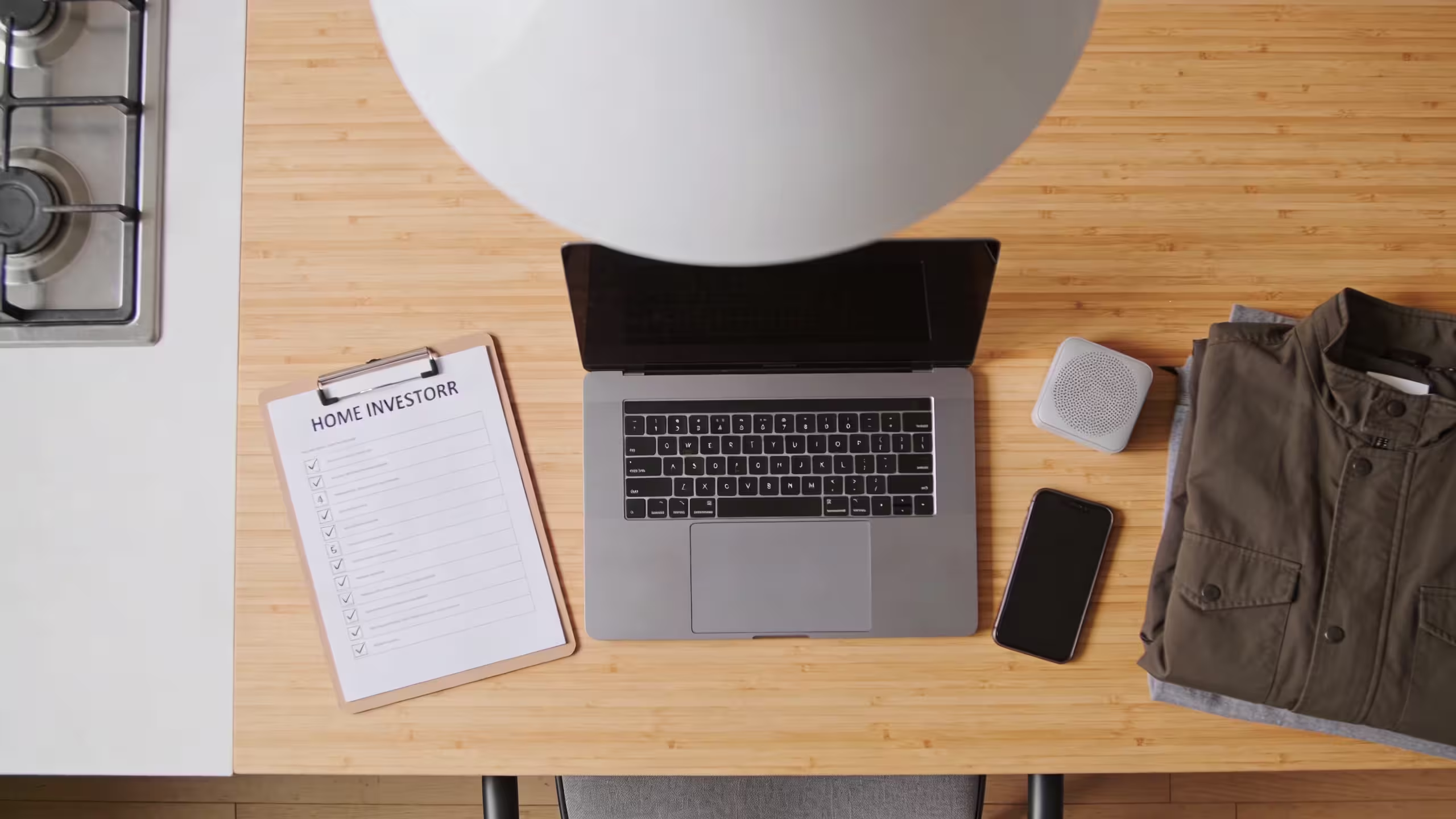
Personal property coverage is usually the most important coverage decision you will make. The right amount equals the total cost to replace everything you own at today’s prices, if it were all damaged or stolen at once. Most renters underestimate this number by a significant margin.
In practice, many renters discover their belongings are worth far more than they expected once they go room by room. A laptop, a television, a few pieces of furniture, a wardrobe, and kitchen appliances can add up to $15,000 or more even in a modest apartment, before you account for anything sentimental or specialized.
A home inventory is the most reliable way to arrive at an accurate figure. Here is how to do one:
- Go room by room and list every item you own: furniture, electronics, clothing, kitchenware, books, bicycles, musical instruments, and sports equipment.
- Note the replacement cost of each item, meaning what it would cost to buy the same or a comparable item brand new today, not its current second-hand value.
- Add up all the totals to get your minimum coverage floor.
- Round up to the nearest coverage tier your insurer offers. Many insurers allow adjustments in $10,000 increments.
Personal Property Decision Framework
- If your home inventory total is under $20,000: a policy with a $20,000 limit is likely sufficient for most renters.
- If your total falls between $20,000 and $50,000: choose a limit that matches or slightly exceeds your total.
- If your total exceeds $50,000: you may need a higher-limit policy or a scheduled personal property endorsement for valuable items that carry category sub-limits.
Replacement Cost vs. Actual Cash Value: Which Should You Choose?
This is one of the most consequential decisions in a renters policy, and many renters make it without fully understanding the difference. A replacement cost policy pays what it costs to buy a similar item new at today’s prices. An actual cash value (ACV) policy pays the depreciated value of the item, which can be significantly lower for anything more than a year or two old.
For example: if your three-year-old laptop is stolen, a replacement cost policy might pay $900 to buy the same model today. An ACV policy might pay $350 after factoring in depreciation. The monthly premium difference between the two is usually small. Replacement cost coverage is almost always the better choice if your budget allows.
- Choose replacement cost if you can afford it. It protects you from out-of-pocket shortfalls on any item that has lost value since you bought it.
- If ACV is your only option due to cost constraints, make sure your overall coverage limit is high enough to offset the depreciation gap on your most valuable items.
When Sub-Limits Leave You Short
In reviewing hundreds of policies over a decade in the industry, the detail most renters miss is that standard policies apply sub-limits to specific categories of items. Even if your overall personal property limit is $30,000, your policy may cap payouts for jewelry, firearms, fine arts, or business equipment at a much lower amount per category.
According to the Insurance Information Institute, standard renters policies routinely limit coverage for high-value categories such as jewelry and fine arts. If you own expensive items in these categories, ask your insurer about a scheduled personal property endorsement, which insures those specific items at their full appraised or replacement value. Understanding what your policy will not pay is just as important as knowing what it covers. Our guide on what renters insurance does not cover explains the most common exclusions and limits in detail.
How Much Liability Coverage Do You Need?
The standard starting point for liability coverage is $100,000, and most basic renters policies include at least this amount. For many renters, $100,000 is sufficient. But certain situations call for more protection, and increasing your liability limit is often less expensive than renters expect.
Liability Coverage Decision Framework
- If you own a dog, especially a larger breed: consider increasing to $300,000. Dog bite claims are one of the most common liability events for renters.
- If you regularly host guests or entertain at your rental: consider $200,000 to $300,000 to account for the increased risk of a visitor injury.
- If your total savings and assets exceed $100,000: your liability limit should be at least equal to your total assets. A lawsuit judgment above your policy limit comes out of your own pocket.
- If you are a student or have limited assets: $100,000 is typically sufficient as a starting point.
The National Association of Insurance Commissioners provides consumer resources on renters insurance that can help you understand your state’s options and evaluate coverage decisions. It is a useful starting point if you want to compare your coverage against general guidance before speaking with a licensed agent.
How Much Renters Insurance Do I Need?
Here is a practical summary of the coverage levels most renters should consider as a starting point. These figures are guidelines based on standard policy structures, not guarantees. Your actual needs will depend on your specific belongings, lifestyle, and location.
| Coverage Type | Minimum Starting Point | When to Go Higher |
|---|---|---|
| Personal Property | Equal to your home inventory total | You own high-value electronics, instruments, jewelry, or collectibles |
| Liability | $100,000 | You own a dog, entertain guests frequently, or hold significant savings or assets |
| Additional Living Expenses | Set by your insurer as a percentage of your property limit (verify your declarations page) | You live in a high-cost city where temporary housing is expensive |
What Does Renters Insurance Cost?
Once you know how much coverage you need, cost is the natural next question. According to the Insurance Information Institute, the average annual renters insurance premium was $171 based on the most recent data available from the National Association of Insurance Commissioners. Your actual rate will depend on several factors specific to you and your rental.
- Coverage limits chosen: higher personal property limits increase your premium.
- Location: renters in states with higher rates of severe weather or theft typically pay more.
- Deductible amount: choosing a higher deductible lowers your monthly premium but increases your out-of-pocket cost at claim time.
- Claims history: prior claims can raise your rate at renewal.
- Bundling discounts: purchasing renters and auto insurance from the same carrier often reduces the total cost of both policies.
For a full breakdown of what drives renters insurance pricing by state and coverage level, see our guide on how much renters insurance costs.
FAQ: How Much Renters Insurance Do I Need?
Is $100,000 in liability coverage enough for most renters?
For most renters without significant assets, $100,000 in liability coverage is a reasonable starting point. If you own a dog, host guests regularly, or have savings and other assets that exceed $100,000, you should consider increasing your limit to $200,000 or $300,000. The goal is to make sure your liability limit is at least equal to the total value of your assets, so that a judgment against you in a lawsuit does not exceed your coverage and come out of your own pocket. Speak with a licensed insurance agent if you are unsure where your assets stand relative to your current limit.
What is the difference between replacement cost and actual cash value coverage?
Replacement cost coverage pays what it costs to buy a comparable item brand new at today’s prices, without factoring in depreciation. Actual cash value (ACV) coverage pays the depreciated value of the item at the time of the loss, which can be substantially lower for older electronics, appliances, or furniture. For example, a laptop purchased three years ago for $1,000 might have a replacement cost payout of $900 but an ACV payout of only $350 after depreciation. Replacement cost coverage typically costs a small amount more per month but provides significantly stronger protection, especially for belongings that lose value quickly.
Do I need extra coverage for expensive jewelry or electronics?
Standard renters insurance policies apply sub-limits to certain categories of items, including jewelry, fine arts, firearms, and sometimes electronics. These sub-limits may be far lower than your overall personal property limit. For example, a renter with a $30,000 overall limit might find that their policy only covers up to $1,500 for jewelry, regardless of the actual value of their pieces. If you own high-value items in these categories, ask your insurer about a scheduled personal property endorsement, which covers those specific items at their full appraised or replacement value. Review your policy’s declarations page carefully to understand what category caps apply.
How do I figure out how much personal property coverage I need?
The most reliable method is to create a home inventory by going room by room and listing every item you own along with its replacement cost, which is what it would cost to buy the same item new today. This process typically takes an hour or two and produces a total that becomes your minimum personal property coverage floor. Once you have that number, choose a policy limit that matches or slightly exceeds it. Many insurers let you adjust limits in $10,000 increments, so round up to the nearest tier to give yourself a buffer if prices rise.
Does renters insurance cover my belongings if they are stolen outside my apartment?
Most standard renters insurance policies include off-premises coverage, meaning your personal property is protected against theft even when your belongings are not at home. This typically covers items stolen from your car, a hotel room, or a storage unit, though coverage for off-premises theft is often subject to its own sub-limit that is lower than your main property limit. Always check your policy’s off-premises coverage cap before assuming full protection applies. For more detail on this specific scenario, see our guide on whether renters insurance covers theft outside your home.
Back to the complete renters insurance guide library.