Fixed vs Variable Personal Loan Rates: Which Should You Choose?
By Laurel C. Yazzie | Last reviewed: July 2026
When you apply for a personal loan, the interest rate you receive will be one of two types: fixed or variable. Most borrowers focus on getting the lowest number possible, but understanding how your rate type works is just as important as the number itself. Choosing between fixed vs variable personal loan rates shapes your monthly payment, your total borrowing cost, and how manageable the loan feels over its entire term.
In reviewing hundreds of loan applications over a decade in consumer lending, the detail most borrowers miss is that variable-rate personal loans are far less common in the United States than most people expect. If you have been shopping for a personal loan and have only seen fixed-rate offers, that is not a coincidence, and it matters for how you interpret this comparison.
Fixed vs Variable Personal Loan Rates: Side-by-Side Comparison
The table below covers the key differences at a glance. Use this as a starting point, then read the sections below to understand why each row matters to your borrowing decision.
| Feature | Fixed Rate | Variable Rate |
|---|---|---|
| Interest rate over time | Stays the same for the full loan term | Can rise or fall based on a market benchmark index |
| Monthly payment | Predictable, never changes | Can change when the benchmark index moves |
| Starting rate vs. fixed | Often slightly higher at origination | Often starts lower than a comparable fixed rate |
| Budget planning | Easy. Same payment every month | Harder. Payments can increase without warning |
| Rate cap protection | Not needed. Your rate is locked | Some products include caps. Always ask the lender |
| Best for | Longer terms, tight budgets, risk-averse borrowers | Short-term borrowing when rates are likely to fall |
| Availability for personal loans | Very common. Most US personal loans are fixed rate | Rare. More commonly found on personal lines of credit |
What Is a Fixed Personal Loan Rate?
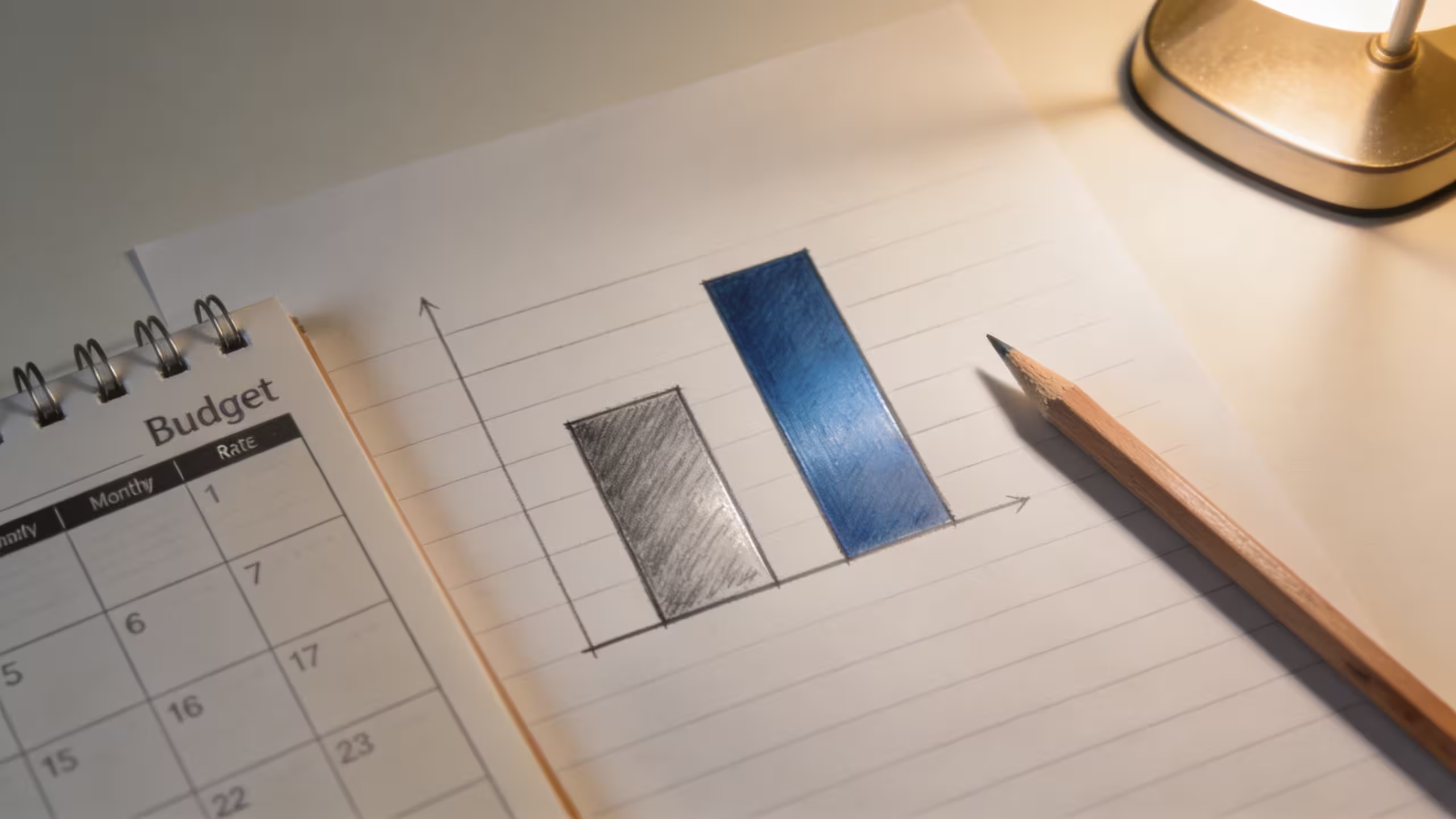
A fixed rate means your interest rate is set when you sign the loan agreement and does not change for the entire loan term. Your lender uses that rate to calculate a set monthly payment, and that payment stays exactly the same from month one through to the final payment.
This predictability is the core reason fixed-rate personal loans are the dominant product in the US market. According to the Consumer Financial Protection Bureau, personal loans are commonly used for debt consolidation, major purchases, and unexpected expenses. All three of those uses benefit from knowing your exact payment in advance.
- Your payment never increases, even if the Federal Reserve raises benchmark interest rates during your loan term.
- You know your total interest cost upfront, which makes long-term budgeting straightforward.
- Fixed rates are easy to compare across lenders because the number you are quoted is the number you will pay.
- The one trade-off: if market rates fall significantly after you borrow, you stay locked into your original rate unless you refinance into a new loan.
What Is a Variable Personal Loan Rate?
A variable rate is tied to a benchmark market index. When that benchmark moves up or down, your loan rate follows. The two benchmarks US consumers encounter most often are the Prime Rate and the Secured Overnight Financing Rate (SOFR). The Federal Reserve publishes selected interest rates, including the benchmarks that lenders use to price variable-rate products.
Variable-rate products often start with a lower interest rate than a comparable fixed-rate loan. That lower initial rate can save money in the short term, but it carries the risk of higher payments later if the benchmark rises. The Federal Reserve has raised and lowered its federal funds rate multiple times in recent years, which directly flows through to variable-rate loan pricing.
- Starting rates are often lower than fixed alternatives at the time of origination.
- Payments can rise if the benchmark index increases, sometimes significantly.
- Some variable products include a rate cap, which limits how high your rate can go over the life of the loan. Always ask any lender whether a cap exists before accepting variable-rate terms.
- Shorter loan terms reduce the window for a large rate swing, which lowers, but does not eliminate, the risk.
How Market Benchmarks Drive Your Variable Rate
When the Federal Reserve adjusts the federal funds rate, banks and credit unions respond by adjusting the Prime Rate, which moves in lockstep. Most variable-rate consumer loan products are priced as “Prime Rate plus a margin.” If the Prime Rate rises by one percentage point, your variable loan rate typically rises by the same amount at the next adjustment period.
Your loan contract will specify how often your rate can adjust (monthly, quarterly, annually) and whether a rate cap limits the total increase over the loan’s life. Read that section of any variable-rate offer carefully before signing.
The Truth About Variable-Rate Personal Loans in the US
Here is something most comparison articles skip over: true variable-rate personal loans are rare in the United States. The standard personal loan is a closed-end installment product with a fixed rate, a fixed term, and equal monthly payments. That is the product most consumers find when they shop with banks, credit unions, and online lenders.
Variable interest rates are far more common on personal lines of credit, which function more like a credit card. You draw funds as needed, repay them, and draw again, with a rate that floats with the market. The two products are meaningfully different:
| Feature | Personal Loan (Installment) | Personal Line of Credit (Revolving) |
|---|---|---|
| Rate type | Usually fixed | Usually variable |
| Repayment structure | Equal monthly payments over a set term | Draw, repay, and redraw as needed |
| End date | Fixed. Loan is fully paid off by the term end | Open-ended during the draw period |
| Best for | One-time, defined expenses | Ongoing or unpredictable funding needs |
What most people miss when comparing loan offers is this distinction. If you find a lender advertising a variable-rate “personal loan,” examine the product closely. It may actually be a line of credit. Before you decide which rate type suits you, make sure you are comparing the same type of product. For a full overview of how installment personal loans work, see our guide on how personal loans work.
Which Should You Choose? Fixed vs Variable Personal Loan Rates
From a practical standpoint, most US borrowers end up with a fixed-rate personal loan simply because that is predominantly what the market offers. But if you do have a genuine choice between fixed and variable terms, the right answer depends on your loan term, your budget flexibility, and the direction of interest rates.
Decision Framework: Fixed vs Variable Personal Loan Rates
Choose FIXED if:
- Your loan term is longer than 24 months. More time means more exposure to rate swings.
- You are on a tight monthly budget and could not absorb a higher payment if rates rise.
- You are using the loan for debt consolidation and want a clear, predictable payoff date.
- Market interest rates are currently low or widely expected to rise in the near term.
Choose VARIABLE if:
- Your loan term is short (12 months or fewer) and the rate has limited time to increase significantly.
- You have strong financial flexibility and could absorb a higher monthly payment without stress.
- Market interest rates are elevated and widely expected to fall, meaning your rate could decrease.
- The variable product includes a written rate cap that limits your maximum exposure.
What Happens If Interest Rates Rise After You Borrow?
This is the most important scenario for anyone considering a variable-rate product. If you take out a variable-rate loan and the Federal Reserve raises benchmark rates, your lender can increase your rate at the next adjustment period specified in your loan contract. That adjustment may happen monthly, quarterly, or annually depending on the terms.
A borrower who takes a variable-rate loan when rates are already near historic highs has limited room to benefit from further increases and takes on full downside risk if rates climb further. A borrower who takes a variable-rate loan at a peak in the rate cycle may benefit if rates fall, but that prediction is difficult to make with confidence.
With a fixed-rate loan, this entire scenario does not apply. Your rate is locked at signing, regardless of what the Federal Reserve does during your repayment period. For borrowers who value certainty over the possibility of a lower rate, that protection is the central reason to choose fixed.
How Your Credit Score and Loan Term Affect Your Rate
Whether you choose a fixed or variable product, your credit profile is the biggest factor in what rate a lender actually offers you. Lenders set their own minimum credit score requirements, which they rarely publish publicly. Checking your rate with multiple lenders through a soft-pull pre-qualification will not affect your credit score and gives you real numbers to compare.
The key factors lenders weigh when pricing a personal loan include:
- Credit score: Higher scores typically qualify for lower rates on both fixed and variable products. A borrower with strong credit may find the gap between their fixed and variable rate offers is small, making the certainty of fixed more appealing.
- Debt-to-income ratio: Lenders compare your total monthly debt obligations to your gross monthly income. A lower ratio signals lower default risk and can improve the rate offered.
- Loan amount and term: Larger loan amounts and longer repayment terms often carry different rate pricing than smaller, shorter loans. Longer terms mean more exposure time for a variable rate to move.
- Origination fees: Some lenders charge an upfront origination fee that adds to the true cost of borrowing beyond the stated rate. See our guide on personal loan origination fees to understand how these affect your total cost.
You can review your credit report for free at AnnualCreditReport.com before applying. If your score is lower right now, you are more likely to be offered a higher rate regardless of which rate type you choose. Our article on personal loans with bad credit covers what options remain available and how to strengthen your application.
Key Takeaways
- A fixed rate stays the same for the entire loan term. Your monthly payment never changes.
- A variable rate moves with a market benchmark such as the Prime Rate. Your payment can rise or fall.
- True variable-rate personal loans are rare in the US. Most personal loan products are fixed rate. Variable rates appear more often on personal lines of credit.
- Variable rates often start lower but carry the risk of rising. The longer your loan term, the more that risk compounds.
- For most borrowers with loan terms over 24 months, a fixed rate offers better budget certainty.
- Always ask about rate caps before accepting any variable-rate product, and verify whether you are signing an installment loan or a revolving line of credit.
- Your credit score, debt-to-income ratio, and loan term all influence the specific rate you are offered, regardless of type.
Fixed vs Variable Loan Payment Estimator
Enter your loan details to compare estimated costs under a fixed rate versus a variable rate that rises over time. This is a planning tool only.
Fixed Rate
Variable Rate (estimated)
Variable rate estimates assume a linear rate increase from starting APR to ending APR over the loan term. Actual changes depend on your lender’s adjustment schedule and the benchmark index. This tool is for comparison purposes only and does not reflect any specific lender’s offer. The Federal Reserve publishes consumer credit rate data that reflects real market averages.