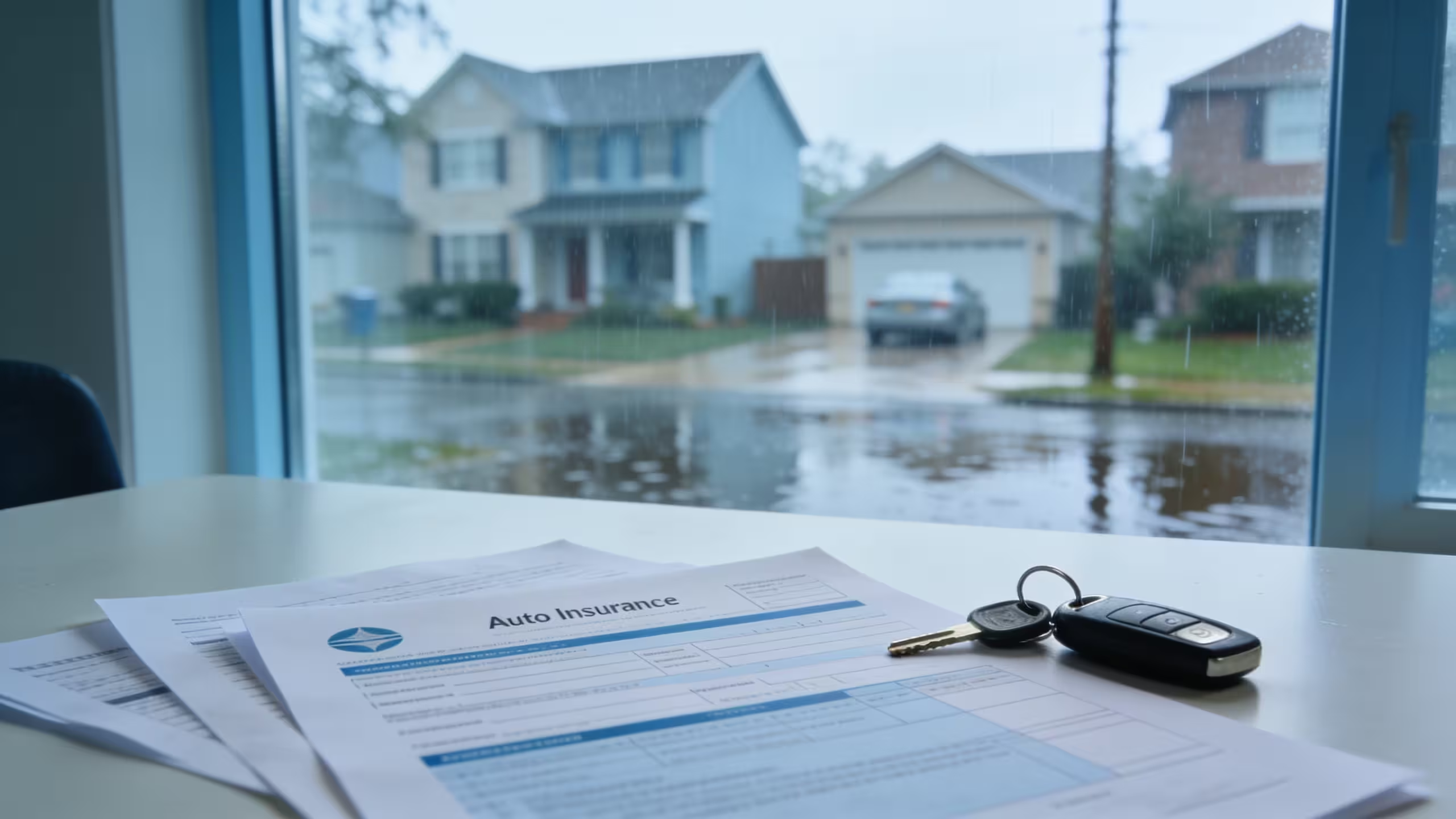
Does Auto Insurance Cover Flood Damage?
By Laurel C. Yazzie | Last reviewed: July 2026
When a storm rolls in and floodwaters rise, one of the first questions drivers ask is whether their auto insurance will cover the damage. The answer depends entirely on which coverages are active on your policy before the water arrives. Not all auto policies are built the same, and the coverage that matters most in a flood is one that millions of drivers have never added.
Having worked directly with clients on auto insurance policy reviews, the most common misconception I encountered was that any car insurance policy protects the vehicle itself. It does not always work that way, and the gap becomes clear only after a flood claim is denied.
Does Auto Insurance Cover Flood Damage: Flood damage to your car is covered only if you carry comprehensive coverage on your policy. Standard liability coverage does not pay for damage to your own vehicle, including floods. Comprehensive is an optional add-on, though lenders typically require it if your vehicle is financed or leased.
Does Auto Insurance Cover Flood Damage?
The direct answer is: it depends on your coverage type. Auto insurance is not a single blanket policy. It is a collection of separate coverages, each designed to respond to a specific type of event. Flood damage falls under comprehensive coverage, which is optional in most states. If that coverage is not on your policy, a flood claim will be denied regardless of how long you have been a customer or how much you have paid in premiums.
According to the Insurance Information Institute, comprehensive coverage is the only standard auto policy component that protects your vehicle from weather-related events. Liability coverage, the minimum required by law in most states, only pays for damage you cause to other people and their property. It offers no protection for your own car.
Use this quick framework to see where you stand:
| Your Coverage | Flood Damage Covered? | What It Actually Pays |
|---|---|---|
| Liability only | No | Damage you cause to others — not your own vehicle |
| Collision only | No | Damage from a vehicle impact — not weather events |
| Comprehensive | Yes | Flood, hail, fire, theft, and other non-collision events |
| Full coverage (comp + collision) | Yes | Flood damage plus collision repairs, minus your deductible |
What Comprehensive Coverage Pays For After a Flood
Comprehensive coverage is designed to protect your car from events outside of your control. When a flood qualifies as a sudden, unforeseeable weather event, comprehensive typically covers the cost to repair or replace your vehicle, minus your deductible. The deductible is the fixed amount you pay first before your insurer covers the remaining cost.
According to the National Association of Insurance Commissioners, comprehensive coverage responds to non-collision losses, including storm damage, falling objects, fire, theft, and contact with animals. Flooding triggered by severe weather falls within this category under standard policy language.
Flood-related losses that comprehensive typically covers include:
- Water damage to your engine, transmission, and electrical systems from rising floodwaters
- Interior damage from water entering through door seals or body openings during a storm
- Hail damage that accompanies a severe weather event
- Total loss if the cost to repair your vehicle exceeds its actual cash value
- Mold and corrosion resulting directly from flood exposure (coverage terms vary by insurer)
What Flood Scenarios Are Not Covered Even With Comprehensive
What most people miss when reading their policy is that comprehensive is not a blank check for any water damage. There are specific situations where a flood-related claim will still be denied, even if comprehensive is active.
- Intentionally driving into floodwater: If you deliberately drove through deep water and caused engine damage, your insurer may classify this as a preventable act and deny the claim. Hydrostatic lock, where water enters the engine during a deliberate crossing, is one of the more common flood-related denial reasons.
- Water entry from a window you left open: A window left down during a rainstorm is typically treated as negligence rather than an unexpected weather event. Most policies will not cover resulting interior damage in this scenario.
- Personal belongings inside the vehicle: A laptop, camera, or other personal items destroyed by floodwater are not covered by your auto policy. Auto policies cover the vehicle, not its contents. Your renters or homeowners policy may cover these items under personal property protection, though sub-limits and a deductible apply.
- Non-factory installed equipment: Aftermarket electronics and accessories added after purchase may not be covered under standard comprehensive terms unless your policy includes a custom parts or equipment endorsement.
For a complete picture of what standard auto policies exclude in situations like these, the breakdown of common auto insurance exclusions covers the full list of gaps that well-covered drivers regularly overlook.
The Timing Problem: You Cannot Add Coverage Once a Storm Is Announced
This is the detail that surprises drivers the most, and one that most articles skip entirely. Insurance companies impose what are called binding restrictions when a named storm or major weather event becomes publicly forecast. Once a storm warning is issued or widely reported, most insurers will not allow you to add, change, or upgrade your comprehensive coverage. Any policy change made after the restriction period begins will not apply to damage caused by that storm.
The window to act is before storm season, not the night a hurricane is approaching. Drivers who carry only liability coverage and live in flood-prone areas have one reliable option: add comprehensive during a normal, non-emergency period and confirm the effective date of the coverage before assuming it is active.
- Pull your current declarations page and confirm whether comprehensive is listed as an active coverage
- If it is not listed, contact your insurer or licensed agent during a routine, non-emergency period
- Ask about deductible options — a higher deductible lowers your premium but increases your out-of-pocket cost when you file
- Get written confirmation of the effective date before assuming the coverage is in force
What to Do After Your Car Is Flooded
If your car has already been flooded, the steps you take in the first hours affect both the extent of the damage and the outcome of your claim. Acting quickly and correctly protects the vehicle and establishes a clear record of the loss.
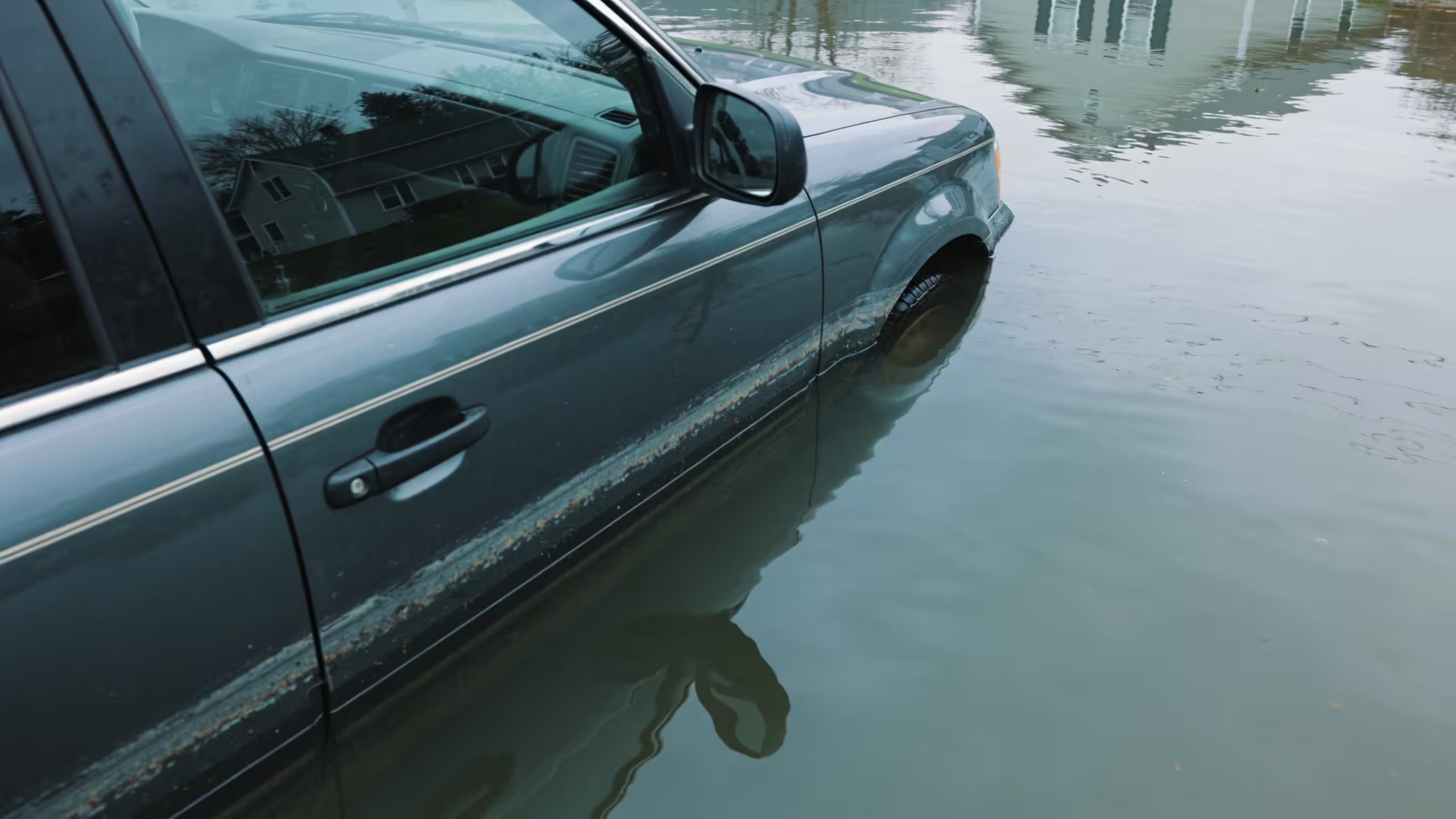
- Do not start the engine. Starting a flooded vehicle can cause permanent damage through hydrostatic lock. Have a mechanic or your insurer’s preferred facility assess it first.
- Document everything before touching the vehicle. Take photos and video of the car’s exterior, the water line visible on the interior and exterior, and the surrounding environment. This visual record establishes the cause of loss for your adjuster.
- Contact your insurer as soon as it is safe to do so. Prompt reporting keeps the claim on track and allows the insurer to dispatch an adjuster quickly. Delays can complicate the timeline.
- Do not dry the interior without professional guidance. Improper drying leaves moisture trapped in panels and wiring, which leads to mold and electrical failures that can exceed the original flood damage in cost.
- Follow your insurer’s instructions on moving the vehicle. Towing an improperly secured flooded vehicle can cause additional mechanical damage. Ask before you move it.
What Happens If Your Car Is Declared a Total Loss?
If the cost to repair your flooded vehicle exceeds its actual cash value, your insurer will declare it a total loss and pay you the pre-flood market value of the car, minus your deductible. Modern vehicles with extensive electronics systems can reach total loss status even when water did not reach the engine, because sensor and module replacement costs have risen significantly.
If you still owe more on your auto loan than the vehicle’s actual cash value, you are responsible for that difference out of pocket. Gap insurance is the coverage that bridges exactly that shortfall. It is typically available as an add-on from your insurer or through your lender at the time of vehicle financing.
Does Home Flood Insurance Cover Your Car?
No. This is one of the most common misconceptions after a major flood event. A federally backed flood insurance policy, issued through programs like the National Flood Insurance Program, is designed to protect your home structure and personal belongings inside the home. It does not extend to motor vehicles, regardless of where the car was parked when the water rose.
Homeowners insurance similarly does not cover flood damage to your vehicle. To protect your car from flood damage, the only path is comprehensive coverage on your auto policy. There is no separate vehicle flood policy available as a standalone product.
- NFIP flood insurance: covers your home structure and personal property indoors — not vehicles
- Homeowners insurance: covers the dwelling and belongings — does not extend to cars parked outside
- Auto comprehensive coverage: the only product that covers flood damage to your vehicle
For a full breakdown of how each auto coverage type activates across different scenarios, the auto insurance coverage guide covers policy structure, coverage decisions, and the most common gaps drivers encounter. And if you want to understand precisely which events each component responds to, the article on what comprehensive coverage includes walks through the full list in plain language.
FAQ: Does Auto Insurance Cover Flood Damage?
Tap any question to expand the answer.
Does auto insurance cover flood damage if I only have liability?
No. Liability coverage only pays for damage you cause to other people and their property. It does not protect your own vehicle from any event, including flooding. To receive a payout for flood damage to your car, you need comprehensive coverage on your policy. If your declarations page does not list comprehensive, you are not covered for weather-related vehicle damage of any kind.
Can I add comprehensive coverage right before a hurricane or flood hits?
In most cases, no. Insurance companies impose binding restrictions once a named storm or severe weather event is publicly forecast. During these restriction periods, insurers will not allow new policies to be issued or existing policies to be changed. Any comprehensive coverage added after a restriction is in place will not apply to damage from that specific storm. The time to add comprehensive is during a normal, non-emergency period—not the day before a weather warning is issued.
Does home flood insurance or NFIP flood insurance cover my car?
No. Federal flood insurance policies issued through the National Flood Insurance Program protect your home structure and personal belongings inside the home. They do not cover motor vehicles. Homeowners insurance also does not extend coverage to your car, regardless of where it was parked. The only coverage that protects your vehicle from flood damage is comprehensive coverage on your auto policy. There is no standalone vehicle flood insurance product available as a separate purchase.
What happens if I drove through floodwater and my engine is damaged?
If you intentionally drove through deep floodwater and your engine sustained hydrostatic lock, your insurer may deny the claim even if you carry comprehensive coverage. Comprehensive covers sudden, unforeseeable losses outside your control. Deliberately driving through visible floodwater can be classified as a preventable act or negligence, which falls outside the scope of what comprehensive is designed to cover. If you were caught in rising water while stationary or in traffic, the claim would typically qualify, since you did not choose to enter the flooded area.
My flooded car was declared a total loss. Will insurance pay off my loan?
Not automatically. If your insurer declares the vehicle a total loss, they pay you the actual cash value of the car at the time of the loss, which reflects depreciation. If you still owe more on your auto loan than that cash value, you are responsible for the remaining balance out of pocket. Gap insurance is the coverage designed to cover exactly that shortfall. It is typically available as an optional add-on through your auto insurer or through your lender at the time of vehicle financing.