Renters Insurance Cost with Bad Credit: What to Expect and How to Pay Less
By Laurel C. Yazzie | Last reviewed: May 2026
If your credit has taken a hit, you may be wondering whether you can still get renters insurance and how much it will cost. The short answer is yes, you can get covered. But in most states, your credit history plays a real role in what you pay. Understanding how that works gives you a clear path to keeping your premium as low as possible.
Renters Insurance Cost with Bad Credit: In most U.S. states, a poor credit history causes renters insurance premiums to increase substantially. Insurers use a credit-based insurance score to predict the likelihood of a claim. You can still get coverage, and several strategies, like raising your deductible and comparing quotes, can reduce what you pay.
Having worked directly with clients on renters insurance policies across a range of credit profiles, the most common misconception I encountered was that insurers check your FICO score the way a bank would. They do not, and that distinction matters more than most renters realize.
Does Bad Credit Raise Your Renters Insurance Cost?
In most states, yes. Insurance companies use credit information as one factor among several when calculating your premium. The underlying logic is statistical: insurers have found that policyholders with lower credit-based insurance scores file claims more frequently, making them more expensive to cover on average.
That said, no insurer can use your credit as the sole reason to deny you coverage. According to the National Association of Insurance Commissioners (NAIC), state laws generally prohibit insurers from refusing, canceling, or failing to renew a policy based entirely on credit information.
- If your credit is good or better: your premium is likely near the standard rate for your area. Focus on your deductible and coverage amount to save.
- If your credit is fair: some insurers will price this profile similarly to good credit. Getting at least three quotes is worthwhile.
- If your credit is poor: expect a noticeably higher premium in most states. Combine available discounts and a higher deductible to offset the increase.
The Credit-Based Insurance Score: Not the Same as Your FICO
This is the detail most people miss. When a renters insurance company reviews your credit, it does not pull your standard FICO score. It uses a separate tool called a credit-based insurance score. This score draws from the same credit report data but weighs factors differently, based on their correlation with insurance claims rather than loan repayment likelihood.
What this means in practice: someone with a mediocre FICO score could have a reasonable insurance score if the credit factors most tied to claim frequency are in decent shape. The reverse is also possible. Because the two scores are distinct, getting quotes even when you believe your credit is poor can be worth it since the actual impact on your renters insurance cost may be smaller than you expected.
According to the NAIC, when a credit-based insurance score contributes to an adverse decision, insurers are generally required by state law to notify you. That notice gives you the right to review your credit report and dispute any inaccuracies that may be dragging your insurance score down.
States Where Credit Scores Cannot Affect Your Renters Insurance Rate
If you live in one of the following states, your credit history cannot legally be used to set your renters insurance rate. According to the National Association of Insurance Commissioners, these states ban or have banned insurers from using credit-based insurance scores when determining policy rates or eligibility:
- California
- Hawaii
- Maryland
- Massachusetts
- Michigan
- Nevada
- Oregon
- Utah
If you live in one of these states, your credit score has no bearing on your renters insurance premium by law. Renters everywhere else should plan to shop strategically. State rules also evolve, so checking with your state insurance commissioner before assuming a ban applies to your situation is a smart step.
What Determines Renters Insurance Cost with Bad Credit
Credit is one piece of a larger pricing puzzle. In practice, many renters focus only on their credit score and overlook factors they can control far more easily. Here is the full picture of what goes into your premium:
- Credit-based insurance score: Affects premiums in most states. Improving your credit over time will reduce this factor at renewal.
- Location: Urban areas and ZIP codes with higher theft rates or severe weather risk typically cost more.
- Personal property coverage limit: The more coverage you select, the higher the premium. Our guide on how much renters insurance you actually need can help you choose a realistic limit rather than overinsuring.
- Deductible amount: A higher renters insurance deductible lowers your monthly premium. This is one of the fastest ways to offset a credit-related surcharge without changing your core coverage.
- Claims history: Prior claims, especially recent ones, can raise your rate regardless of credit.
- Liability limit: Higher liability limits increase cost modestly but provide significantly more protection. For context on how limits work, see our renters insurance coverage limits guide.
- Bundling discounts: Many insurers discount a renters policy when bundled with auto insurance, sometimes enough to offset part of the credit-related surcharge.
- Safety features: Smoke detectors, deadbolts, and monitored alarm systems can each qualify for a discount that is completely independent of credit.
What If My Credit Dropped Because of a Life Event?
This question comes up often and deserves a direct answer. Many renters see their credit dip after a medical emergency, job loss, or divorce, situations that have no real connection to the likelihood of filing a renters insurance claim. A number of state insurance laws, modeled on NAIC guidelines, require insurers to offer what is commonly called a “life event exception.”
Qualifying circumstances typically include a catastrophic event, serious illness or injury, death of an immediate family member, divorce, identity theft, or involuntary unemployment lasting three months or more. If one of these applies to your situation, contact your insurer in writing and ask specifically about a life event reconsideration. This is an appeal based on circumstances, not an error dispute, and it may result in a lower rate without you having to wait for your credit to recover naturally.
How to Lower Renters Insurance Cost When Your Credit Is Poor
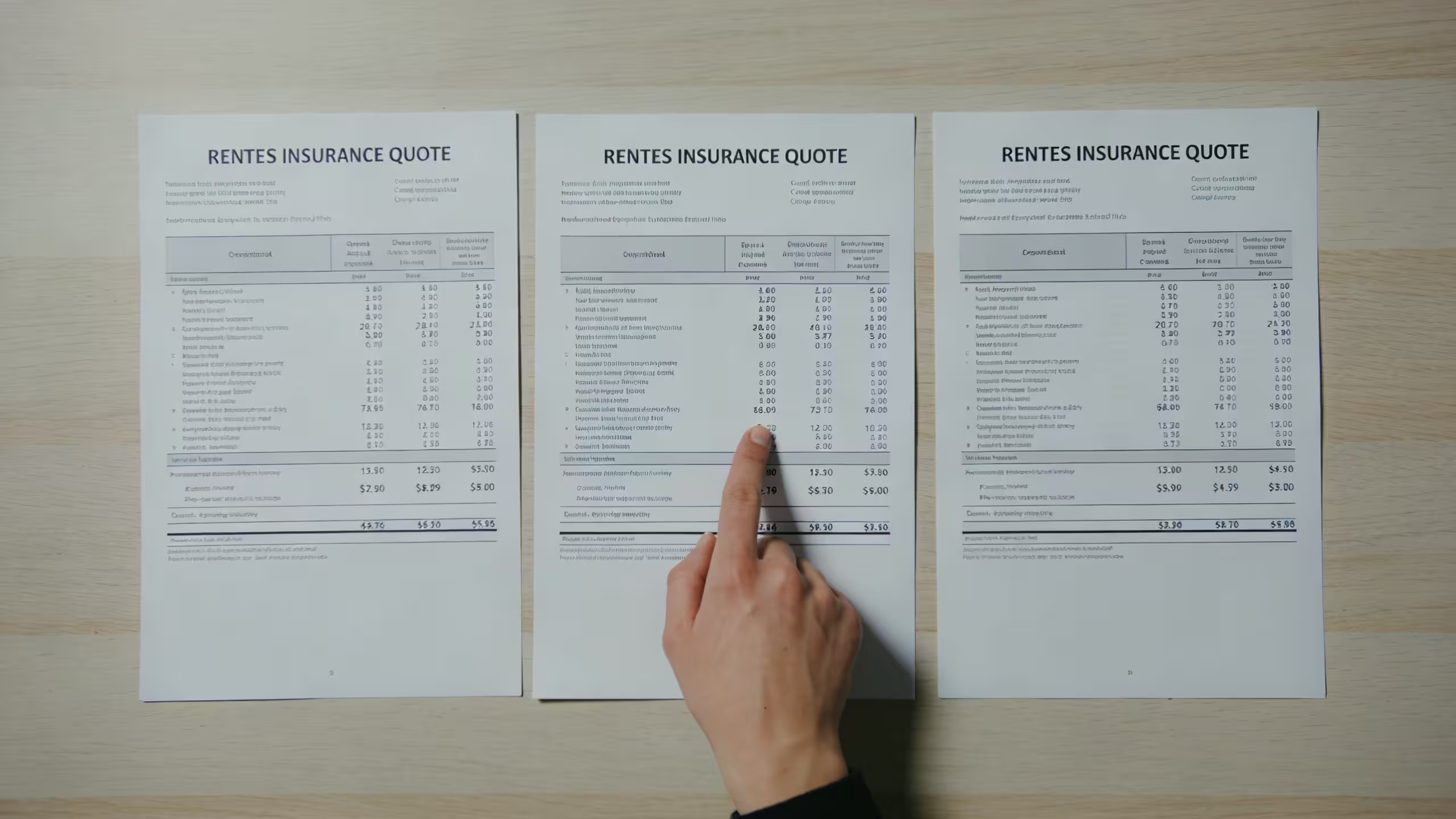
From a practical standpoint, the single most effective first move for renters with poor credit is comparing quotes across multiple insurers. Credit-based insurance scores are proprietary: one company may penalize a particular credit profile more heavily than another using the same underlying data. The gap between the highest and lowest quote for identical coverage can be significant.
- Get at least three quotes. Premium differences for the same coverage can be substantial depending on how each insurer weights your credit profile. Do not accept the first offer.
- Raise your deductible. Moving from a $500 to a $1,000 deductible often reduces your premium noticeably without changing your actual coverage.
- Bundle with your auto policy. If you carry an auto insurance policy, combining both with the same insurer commonly lowers the renters premium through a multi-policy discount.
- Ask about safety discounts. Smoke detectors, deadbolts, sprinkler systems, and monitored security alarms can each qualify for a premium reduction. None of these involve your credit.
- Calibrate your personal property limit. If you have overestimated the value of your belongings, trimming the coverage limit to a realistic figure directly lowers your cost.
- Pay annually instead of monthly. Many insurers apply a small fee for monthly billing. Paying the full annual premium upfront removes that add-on cost.
- Check your credit report for errors. Mistakes on your credit report can drag down your insurance score. You can get a free copy of your report from AnnualCreditReport.com, the federally authorized source. Correcting inaccuracies may improve your insurance score faster than building new credit history from scratch.
Should You Focus on Improving Your Credit or Shopping for a Better Rate First?
Do both at once. Shopping for quotes is free and takes less than an hour. You can lock in a lower rate today while working on your credit over a longer period. Most insurers pull a new insurance score at each annual renewal, meaning better credit will translate into a lower premium at your next renewal automatically, without any extra effort on your part.
FAQ: Renters Insurance Cost with Bad Credit
Does bad credit mean I cannot get renters insurance?
No. Insurance companies in most states cannot deny you a renters insurance policy based solely on your credit score. Credit is one factor among several in the underwriting process. According to the National Association of Insurance Commissioners, state laws generally prohibit insurers from using credit as the only reason for denial, cancellation, or non-renewal of a policy.
How much does bad credit raise my renters insurance cost?
The increase varies by insurer, state, and how your credit-based insurance score is calculated. In states where credit scoring is permitted, renters with poor credit can face meaningfully higher premiums than those with good credit for identical coverage. The best way to gauge the real impact on your specific rate is to collect quotes from at least three insurers, since each company weights credit-related factors differently in their pricing models.
Will shopping for renters insurance hurt my credit score?
No. When insurers review your credit for rating purposes, they perform a soft inquiry, which does not affect your credit score at all. This is different from the hard inquiries that lenders make when you apply for a credit card or a loan. You can collect renters insurance quotes from multiple companies without any negative impact on your credit file.
What is a credit-based insurance score, and how is it different from my FICO score?
A credit-based insurance score draws from the same credit report data as a standard FICO score, but it weights those factors differently. Lenders use FICO scores to assess the likelihood that you will repay a debt. Insurers use credit-based insurance scores to estimate the likelihood that you will file an insurance claim. Because the two scores are constructed differently, someone with a mediocre FICO can have a better-than-expected insurance score, meaning your actual renters insurance premium may be lower than you anticipate even with imperfect credit.
Can I ask my insurer to recalculate my rate if my credit dropped due to a life event?
Yes, in many states. A number of state insurance laws require insurers to offer a reconsideration when a policyholder’s credit was affected by an extraordinary circumstance such as a serious illness, job loss of three months or more, divorce, death of an immediate family member, or identity theft. If one of these situations applies to you, contact your insurer in writing and request a life event reconsideration. Keep documentation of the event ready, as insurers may ask for reasonable proof before making any adjustment.
Back to the complete renters insurance guide library.